
The Māori national anthem we're looking at today is the national anthem of New Zealand in te reo Māori, not specifically an anthem for the Māori people. Many people will have heard it, often alongside the English verse. Here, we'll look at what it is, where it came from, and how it's used today.
Key Takeaways
- Learn the first verse and all five official Māori verses of God Defend New Zealand / Aotearoa.
- Understand the English meaning of E Ihowā Atua without treating the Māori lyrics as a literal translation.
- Practise Māori vowels, macrons, syllables and other pronunciation features before singing along.
- Understand why New Zealand has two official national anthems and why Aotearoa is commonly performed alongside the English version.
- Trace the anthem from Thomas Bracken's 1876 poem through Thomas Henry Smith's Māori version to official anthem status in 1977.


Māori National Anthem Lyrics: E Ihowā Atua
Most people likely recognise the Māori national anthem lyrics as the first verse of Aotearoa. This is the Māori-language version of God Defend New Zealand. However, the complete version has five verses, all sung to the same music as the English-language anthem.²
New Zealand does not have a separate third Māori national anthem. Aotearoa is the Māori-language version of God Defend New Zealand, one of New Zealand's two official national anthems, alongside God Save the King.⁴
If you've heard the anthem before, you may have only heard the opening verse in te reo. The actual version's much longer. Later verses discuss peace, unity, strength, and New Zealand's wellbeing.
The official lyrics published by Manatū Taonga use whakarangona. Thomas Henry Smith also used whakarangona in his original 1878 Māori translation, while whakarongona appeared in later published versions of the anthem.²
verses in total.²
Verse 1 of E Ihowā Atua (Most Commonly Sung)
E Ihowā Atua,
O ngā iwi mātou rā,
Āta whakarangona;
Me aroha noa.
Kia hua ko te pai;
Kia tau tō atawhai;
Manaakitia mai
*Aotearoa.
Full Māori Lyrics
Verse 1
E Ihowā Atua,
O ngā iwi mātou rā,
Āta whakarangona;
Me aroha noa.
Kia hua ko te pai;
Kia tau tō atawhai;
Manaakitia mai
Aotearoa.
Verse 2
Ōna mano tāngata
Kiri whero, kiri mā,
Iwi Māori, Pākehā,
Rūpeke katoa,
Nei ka tono ko ngā hē
Māu e whakaahu kē,
Kia ora mārire
Aotearoa.
Verse 3
Tōna mana kia tū!
Tōna kaha kia ū;
Tōna rongo hei pakū
Ki te ao katoa
Aua rawa ngā whawhai,
Ngā tutū e tata mai;
Kia tupu nui ai
Aotearoa.
Verse 4
Waiho tona takiwā
Ko te ao mārama;
Kia whiti tōna rā
Taiāwhio noa.
Ko te hae me te ngangau
Meinga kia kore kau;
Waiho i te rongo mau
Aotearoa.
Verse 5
Tōna pai me toitū;
Tika rawa, pono pū;
Tōna noho, tāna tū;
Iwi nō Ihowā.
Kaua mōna whakamā;
Kia hau te ingoa;
Kia tū hei tauira;
Aotearoa.
English Lyrics and Meaning
Verse 1
God of Nations at Thy feet,
In the bonds of love we meet,
Hear our voices, we entreat,
God defend our free land.
Guard Pacific's triple star
From the shafts of strife and war,
Make her praises heard afar,
God defend New Zealand.
Verse 2
Men of every creed and race,
Gather here before Thy face,
Asking Thee to bless this place,
God defend our free land.
From dissension, envy, hate,
And corruption guard our state,
Make our country good and great,
God defend New Zealand.
Verse 3
Peace, not war, shall be our boast,
But, should foes assail our coast,
Make us then a mighty host,
God defend our free land.
Lord of battles in Thy might,
Put our enemies to flight,
Let our cause be just and right,
God defend New Zealand.
Verse 4
Let our love for Thee increase,
May Thy blessings never cease,
Give us plenty, give us peace,
God defend our free land.
From dishonour and from shame,
Guard our country's spotless name,
Crown her with immortal fame,
God defend New Zealand.
Verse 5
May our mountains ever be
Freedom's ramparts on the sea,
Make us faithful unto Thee,
God defend our free land.
Guide her in the nations' van,
Preaching love and truth to man,
Working out Thy glorious plan,
God defend New Zealand.
Listen to the NZ Anthem in Māori
The easiest way to hear how it sounds is by listening to someone sing it. It's good for teo reo Māori pronunciation practice, too. Follow along with the lyrics as you listen and then try them yourself.
How to Pronounce E Ihowā Atua
Māori vowels are often where learners struggle. If you want to sing along, pay particular attention to them. We've some written guidance here, but it's always best to listen closely to fluent speakers rather than relying entirely on English-style phonetic spellings.⁷ Much like flying the Māori flag, singing the te reo Māori lyrics should also be done respectfully.
Vowels
Pronounce each vowel clearly and avoid reducing Māori vowel sounds to English-style approximations.⁷
Tohutō
Macrons indicate longer vowel sounds, so words such as Ihowā, ngā and mātou should be given their full vowel length.⁷
Rhythm
Keep the words measured and syllables distinct when singing rather than rushing to match the melody.⁷
Pronunciation of the Title
Key te reo Māori Pronunciation Rules
Common Learner Mistakes to Avoid
What Does E Ihowā Atua Mean?
The Māori lyrics are about divine care, peace, unity, strength and the wellbeing of Aotearoa and its people. These themes overlap with the English version more broadly. However, the Māori version has its own wording and poetic expression.²
The Māori lyrics of Aotearoa should not be read as a word-for-word translation of Thomas Bracken’s English lyrics. Thomas Henry Smith created a Māori rendering of the anthem in 1878, so the two versions express related ideas while using different wording and poetic phrasing.²
Central Themes in the Māori Lyrics
Why the Māori Lyrics Are Not a Literal Translation
Is E Ihowā Atua New Zealand’s Official National Anthem?
This is the Māori-language version of one of New Zealand’s two official national anthems. Aotearoa is the title, with E Ihowā Atua its opening line rather than the title of a separate third anthem.⁴ New Zealand's other official anthem is God Save the King, the traditional anthem that has held national-anthem status in New Zealand alongside God Defend New Zealand since 1977.³ All are important symbols of New Zealand.
official national anthems of equal status.⁴
Why Is the Anthem Often Sung in Māori First?
History of the Māori Version of the NZ Anthem
I immediately felt like one inspired...I set to work instanter and never left my seat till the music was completely finished late on in the night.¹
John Joseph Woods
The anthem was created from Thomas Bracken's poem and John Joseph Woods' music. The first Māori version was created by Thomas Henry Smith. However, much like the national flag, the anthem took some time before gaining official status.
Creation of E Ihowā Atua
Adoption as an Official National Anthem
1876
Thomas Bracken’s five-stanza “National Hymn” was published, and John Joseph Woods later won the competition to compose music for it.¹
25 December 1876
The anthem received its first formal public performance at Queen’s Theatre in Dunedin.¹
1878
Thomas Henry Smith created the first Māori translation at the request of Sir George Grey.²
1940
God Defend New Zealand was declared New Zealand’s national song.²
1977
God Defend New Zealand became an official national anthem with equal status to God Save the Queen.⁴
1999
Hinewehi Mohi sang the anthem in te reo Māori before the All Blacks played England at the Rugby World Cup, an important moment in the development of bilingual anthem performances.⁵
When Is the Māori National Anthem Sung?
You'll find that the Māori national anthem is sung at sporting fixtures, schools, civic ceremonies, commemorations and other public occasions around New Zealand. There isn't a prescribed rule for the order. However, you'll find that bilingual performances are commonplace, and Māori lyrics are usually sung first.
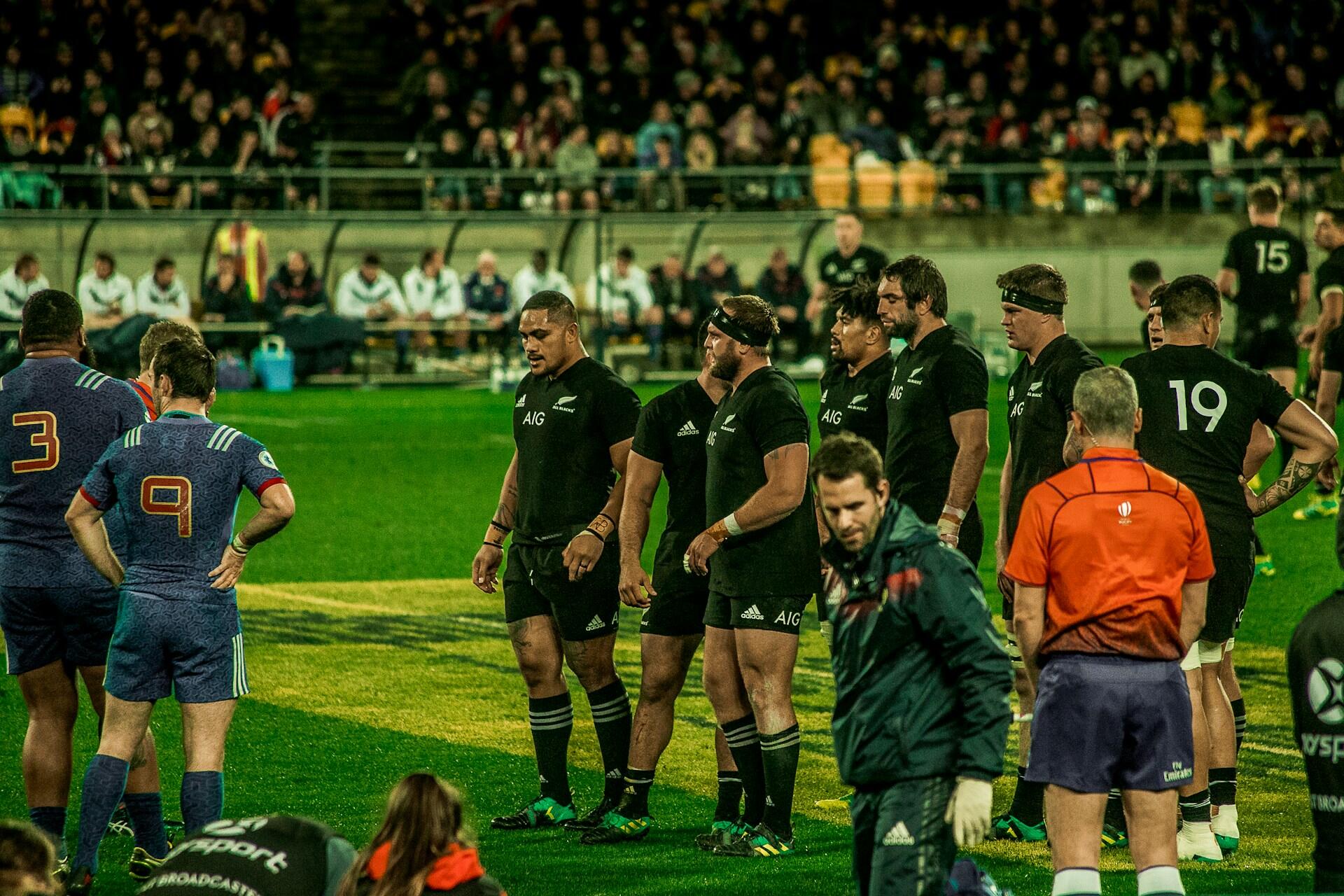
Singing the Anthem at School, Sport, or Community Events
References
- Heritage New Zealand Pouhere Taonga. “Anthem House.” Heritage New Zealand Pouhere Taonga. Accessed 20 Aug. 2026. https://www.heritage.org.nz/list-details/2242/Anthem_House
- Manatū Taonga Ministry for Culture and Heritage. “God Defend New Zealand | Aotearoa.” Manatū Taonga Ministry for Culture and Heritage. Accessed 20 Aug. 2026. https://www.mch.govt.nz/our-work/flags-anthems-and-emblems/national-anthems/god-defend-new-zealand-aotearoa
- Manatū Taonga Ministry for Culture and Heritage. “God Save The King Anthem.” Manatū Taonga Ministry for Culture and Heritage. Accessed 20 Aug. 2026. https://www.mch.govt.nz/our-work/flags-anthems-and-emblems/national-anthems/god-save-king-anthem
- Manatū Taonga Ministry for Culture and Heritage. “National Anthems.” Manatū Taonga Ministry for Culture and Heritage. Accessed 20 Aug. 2026. https://www.mch.govt.nz/our-work/flags-anthems-and-emblems/national-anthems
- Manatū Taonga Ministry for Culture and Heritage. “New Zealand’s National Anthems.” NZHistory, updated 26 Sept. 2025. Accessed 20 Aug. 2026. https://nzhistory.govt.nz/media/video/new-zealands-national-anthems
- New Zealand Parliamentary Counsel Office. Te Ture mō Te Reo Māori 2016 / Māori Language Act 2016. New Zealand Legislation. Accessed 20 Aug. 2026. https://legislation.govt.nz/act/public/2016/0017/latest/whole.html
- Ministry of Education. “Te Reo Māori.” Tāhūrangi: New Zealand Curriculum. Accessed 20 Aug. 2026. https://newzealandcurriculum.tahurangi.education.govt.nz/new-zealand-curriculum-online/learning-content-resources/te-reo-m-ori/5637157326.c
Summarise with AI:
Did you like this article? Leave a rating!

 Loading...