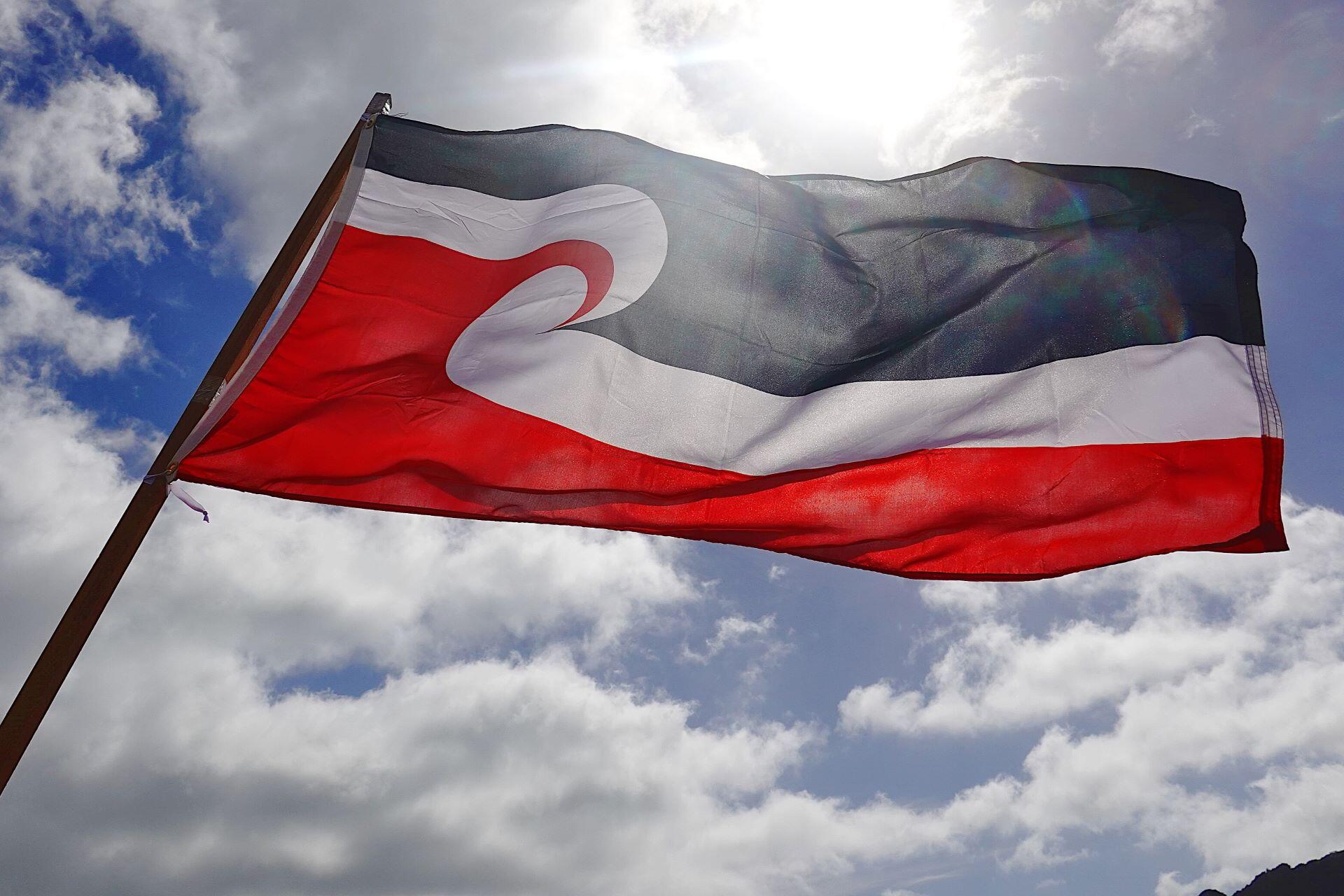

Have you seen the Tino Rangatiratanga Flag? Do you know it as the Māori Flag? Did you know there was a Māori Flag? Let's explore what you need to know about it and how it came about.
Key Takeaways
- The Māori flag most commonly refers to the red, black and white Tino Rangatiratanga flag, although many other Māori flags represent iwi, hapū, movements and historical traditions.
- Black represents Te Korekore, red represents Te Whai Ao and white represents Te Ao Mārama, while the central koru symbolises new life, renewal and hope.
- The Tino Rangatiratanga flag was developed in 1989, unveiled in 1990 and recognised by the Government in 2009 as the preferred national Māori flag. However, it does not have official status.
- Tino rangatiratanga appears in Article 2 of Te Tiriti o Waitangi and can encompass ideas such as chiefly authority, self-determination, autonomy, and sovereignty.


What Is the Māori Flag?
There isn't a single Māori flag. In fact, there are several flags that you could call the Māori flag and all could be considered symbols of New Zealand. However, most commonly, it refers to the red, black and white Tino Rangatiratanga flag.
The Tino Rangatiratanga flag is the best-known contemporary Māori flag in New Zealand. It was developed by Hiraina Marsden, Jan Dobson Smith and Linda Munn and unveiled in 1990.² Its black, white and red design represents different realms of Māori creation. In contrast, the central white koru symbolises new life, renewal and hope for the future. In 2009, the New Zealand Government recognised it as the preferred national Māori flag. However, it does not have official status and does not replace the New Zealand flag.³
Māori Flags
Māori flags can include iwi and hapū flags, historic flags, and flags associated with particular movements, beliefs, or kaupapa. Māori have used flags to express identity, mana and allegiance in many different contexts.⁵
Tino Rangatiratanga Flag
The Tino Rangatiratanga flag is a specific red, black and white design that has become a widely recognised symbol of Māori identity and aspirations. In 2009, it was recognised by the Government as the preferred national Māori flag, although it does not have official status.³
Is the Tino Rangatiratanga Flag Official?
What Do the Māori Flag Colours and Design Mean?
The Tino Rangatiratanga flag centres its design around three key colours. In these colours, there's a white koru. The colours are linked to Te Korekore, Te Whai Ao and Te Ao Mārama, while the koru introduces ideas of new life, renewal and hope for the future.³
Black represents Te Korekore, the realm of potential being. Red represents Te Whai Ao, the realm of coming into being, while white represents Te Ao Mārama, the realm of being and light. The white koru represents unfolding new life, renewal and hope for the future.³
The Red, Black and White Colours
The White Koru
History of the Tino Rangatiratanga Flag
The flag came about during the 1980s. Te Kawariki started a national flag project in 1989, where the modern design originated. In 1990, the flag was unveiled. Since then, it's been seen everywhere.

How the Flag Was Created
Government Recognition in 2009
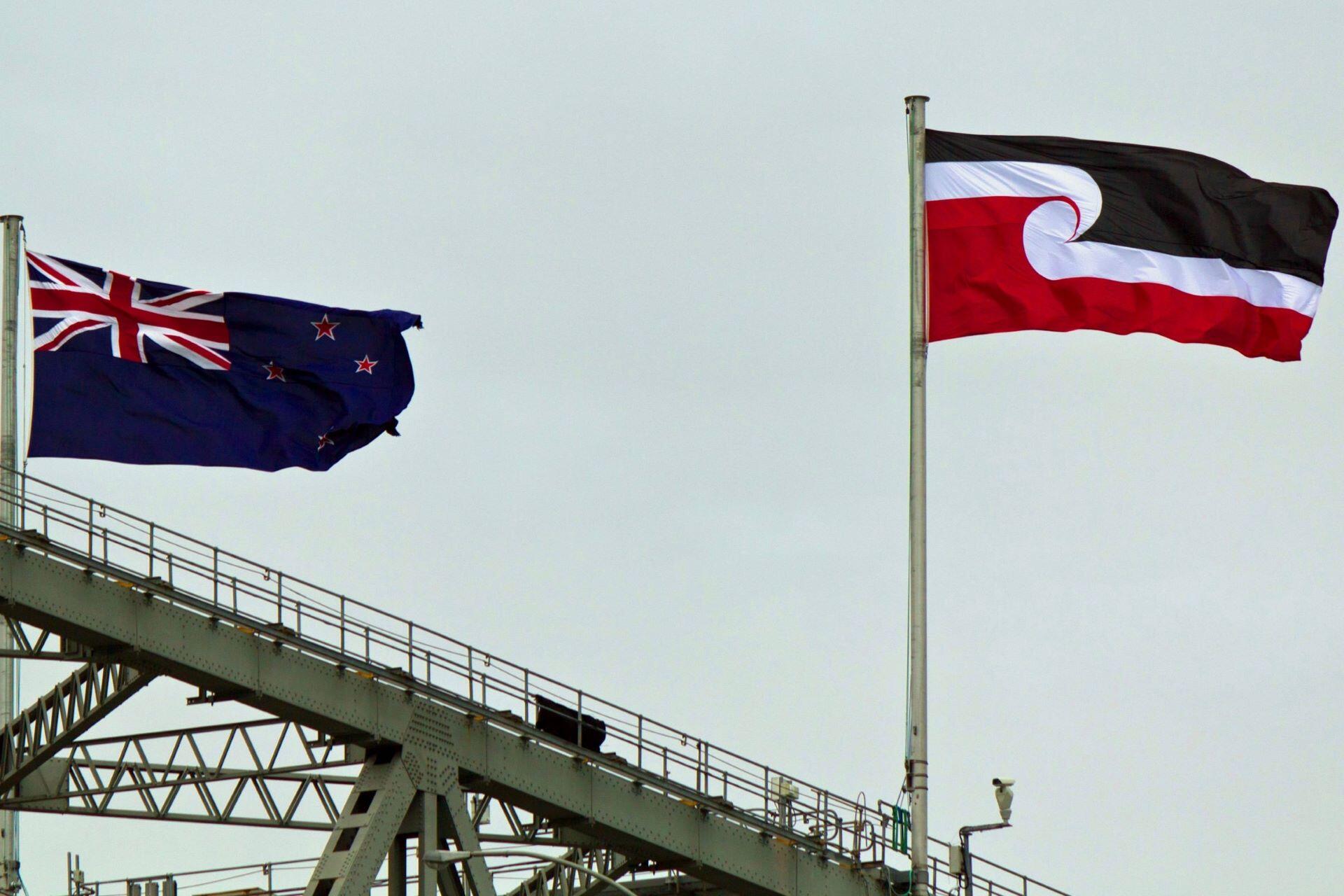
The debate over flying the Māori flag on the Auckland Harbour Bridge on Waitangi Day evolved into a broader national discussion about settling on a single design. As with the national anthem, the Government ran a consultation process with meetings with communities around the country.³ There were four possible flags.
public hui around New Zealand during the 2009 consultation to identify a preferred national Māori flag.³
People could submit their preference. As you can see from the results, there was a clear winner. Since then, the Tino Rangatiratanga flag has been seen in more and more places.
of submissions received during the 2009 consultation.³
What Does Tino Rangatiratanga Mean?
The Queen of England agrees to protect the chiefs, the subtribes and all the people of New Zealand in the unqualified exercise of their chieftainship...⁸
Professor Sir Hugh Kawharu
Tino rangatiratanga is a Māori concept. Its meanings can include determination, sovereignty, autonomy and the exercise of chiefly authority.⁴ In the same way that the Māori anthem isn't a direct translation of the English version, no single English constitutional term fully captures its Māori meaning, which can vary according to context.⁷
Tino Rangatiratanga and Te Tiriti o Waitangi
Māori Flags in New Zealand
There are more flags than just the Tino Rangatiratanga design. There are different iwi, hapū, religious movements and political causes that have chosen different flags.⁵ It's worthwhile exploring other older examples like the United Tribes flag, which was also used in similar contexts.
| Flag | Origins | Meaning or purpose | Status today |
|---|---|---|---|
| Tino Rangatiratanga flag | Developed in 1989 and unveiled in 1990² | Represents Māori identity, aspirations and tino rangatiratanga³ | Recognised by the Government as the preferred national Māori flag, but does not have official status³ |
| New Zealand flag | The present design developed from New Zealand’s colonial ensigns in the 19th century¹ | Represents New Zealand nationally¹ | Official national flag of New Zealand¹ |
| United Tribes flag | Selected by northern rangatira at Waitangi in 1834⁵ | Originally enabled New Zealand-built ships to sail under a recognised flag and later became associated with He Whakaputanga⁵ | Historic flag with continuing significance in Māori and New Zealand history⁵ |
Iwi, Hapū and Other Māori Flags
The United Tribes Flag
When and Where Is the Māori Flag Flown?
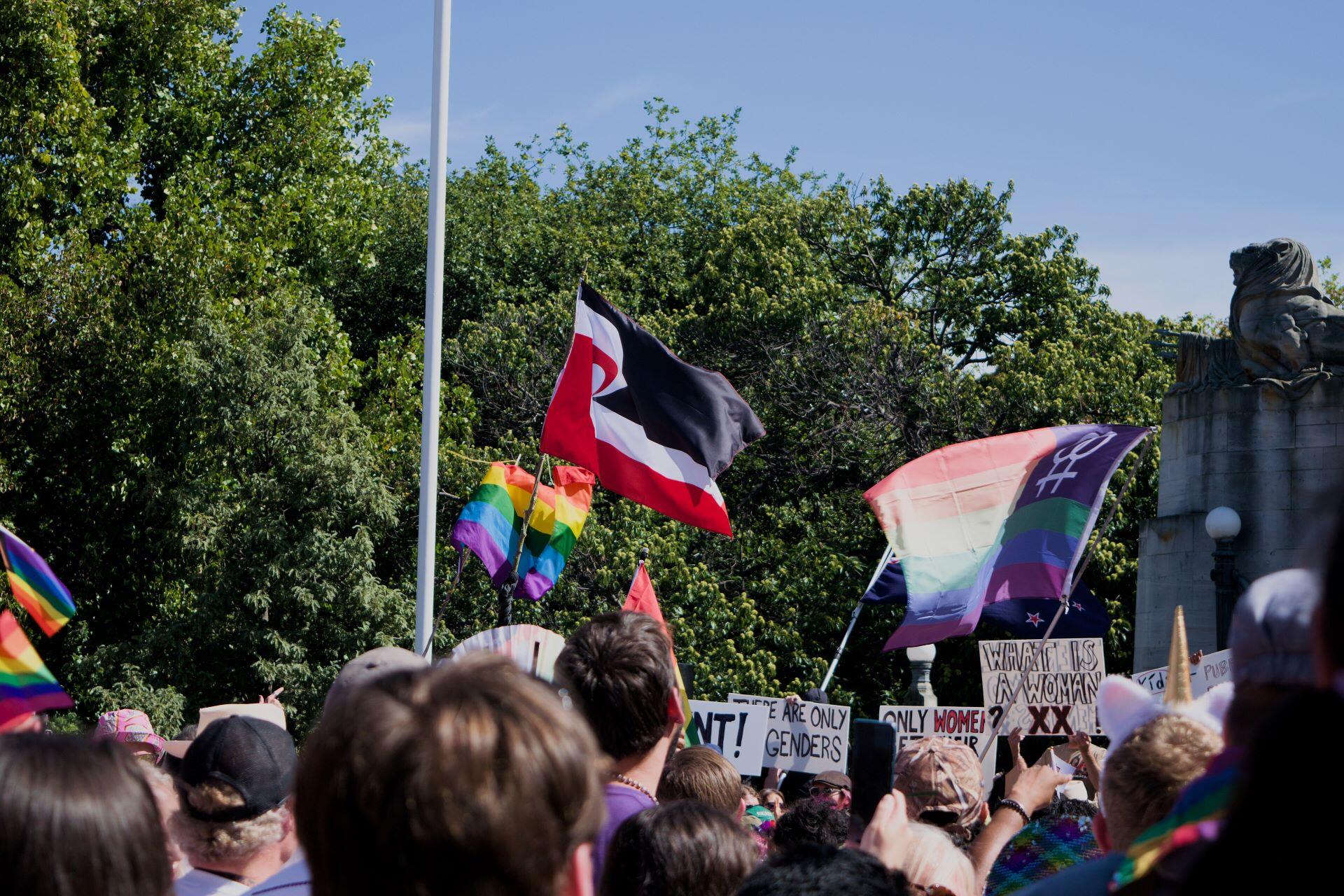
You'll see the flag at Waitangi Day commemorations, Māori gatherings, demonstrations and a range of public occasions around New Zealand. It's also flown at nationally significant sites alongside the New Zealand flag since the Government recognised it in 2009.³ Uses can vary, but it's always important that you fly it correctly and respectfully.

The Tino Rangatiratanga flag should be flown with the black section at the top and the red section at the bottom. The upper part of the white koru should be closest to the flagpole.³
How to Fly the Flag Correctly
How to Refer to the Māori Flag Respectfully
References
- Manatū Taonga Ministry for Culture and Heritage. “New Zealand Flag.” Manatū Taonga Ministry for Culture and Heritage. Accessed 20 Aug. 2026. https://www.mch.govt.nz/our-work/flags-anthems-and-emblems/new-zealand-flag
- Manatū Taonga Ministry for Culture and Heritage. “The National Māori Flag.” NZHistory, updated 28 May 2024. Accessed 20 Aug. 2026. https://nzhistory.govt.nz/politics/flags-of-new-zealand/maori-flag
- Manatū Taonga Ministry for Culture and Heritage. “Tino Rangatiratanga Flag.” Manatū Taonga Ministry for Culture and Heritage. Accessed 20 Aug. 2026. https://www.mch.govt.nz/our-work/flags-anthems-and-emblems/new-zealand-flag/tino-rangatiratanga-flag
- Moorfield, John C. “Tino Rangatiratanga.” Te Aka Māori Dictionary. Accessed 20 Aug. 2026. https://maoridictionary.co.nz/word/8124
- Mullholland, Malcolm. “Ngā Haki – Māori and Flags.” Te Ara: The Encyclopedia of New Zealand, 20 June 2012. Accessed 20 Aug. 2026. https://teara.govt.nz/en/nga-haki-maori-and-flags
- National Library of New Zealand. “United Tribes Ensign.” National Library of New Zealand. Accessed 20 Aug. 2026. https://natlib.govt.nz/records/22894200
- Waitangi Tribunal. He Tirohanga o Kawa ki te Tiriti o Waitangi: A Guide to the Principles of the Treaty of Waitangi as Expressed by the Courts and the Waitangi Tribunal. Waitangi Tribunal. Accessed 20 Aug. 2026. https://www.waitangitribunal.govt.nz/assets/Uploads/He-Tirohanga-o-Kawa-ke-te-Tiriti-o-Waitangi.pdf
- Waitangi Tribunal. “Māori and English Texts.” Waitangi Tribunal. Accessed 20 Aug. 2026. https://www.waitangitribunal.govt.nz/en/about/the-treaty/maori-and-english-versions
Summarise with AI:
Did you like this article? Leave a rating!

 Loading...