
Patterns and designs are a key part of Māori culture and are often instantly recognisable. As symbols of Māori and New Zealand culture, most are rooted in Polynesian heritage. However, these patterns are more than art and decoration; they reflect culture, spirit, and even genealogy.
Key Takeaways
- Māori patterns belong to several distinct artistic traditions rather than one universal system, so interpretation depends on cultural and artistic context.
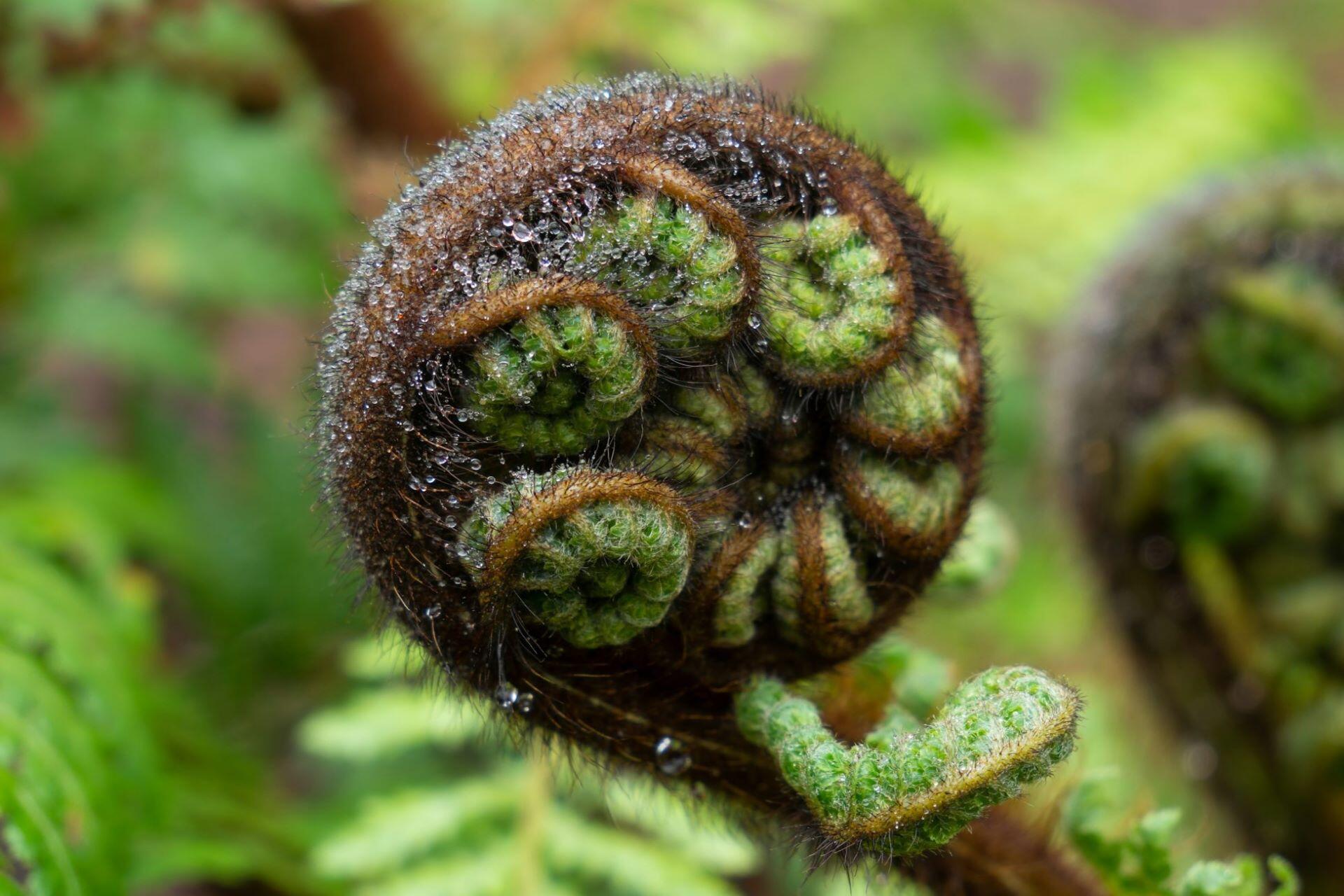
- The koru is inspired by an unfurling fern shoot and is commonly associated with ideas such as growth, renewal and new beginnings.⁵
- Kōwhaiwhai is a painted design tradition strongly associated with the heke of wharenui, while whakairo, tukutuku and tā moko are separate art forms.⁸
- Māori carving includes considerable regional variation, so forms such as unaunahi and pākati are best understood within the complete work rather than assigned one fixed meaning.²
- Tā moko can carry personal, genealogical and cultural significance and should not be treated as a collection of decorative tattoo templates.³
- Anyone using Māori imagery commercially should research its source and consider working with Māori artists or cultural advisers rather than simply copying an existing design.⁴


What Are Māori Patterns?
Māori patterns aren't limited to a single art form. From painted kōwhaiwhai and carved whakairo to weaving, tā moko and contemporary design, you can find them almost anywhere. They commonly use flowing curves, repeating forms and geometric structures, but they should not all be treated as parts of one interchangeable pattern system.
Māori patterns are not one single pattern system. Meaning, ownership and appropriate use can vary between iwi, hapū, communities, artists and individual works, so a motif should not automatically be given one universal definition. Recognition guides are useful starting points, but the maker and cultural context matter when interpreting a specific design.⁴
Māori Patterns as a Visual Language
A kōwhaiwhai pattern can tell a story of genealogy (whakapapa), nature, and the spiritual world. Specific elements within kōwhaiwhai, like the koru (spiral), can represent concepts such as growth or renewal. Kōwhaiwhai serves as a visual language that conveys stories of whakapapa (genealogy), tribal connections, and significant events.
Since Māori culture relies heavily on oral tradition, these patterns help maintain and preserve knowledge across generations. Each region and iwi developed its own unique style that reflected its history and environment. This means the same visual language can take different forms depending on where and how it is used.
Where Traditional Māori Patterns Appear
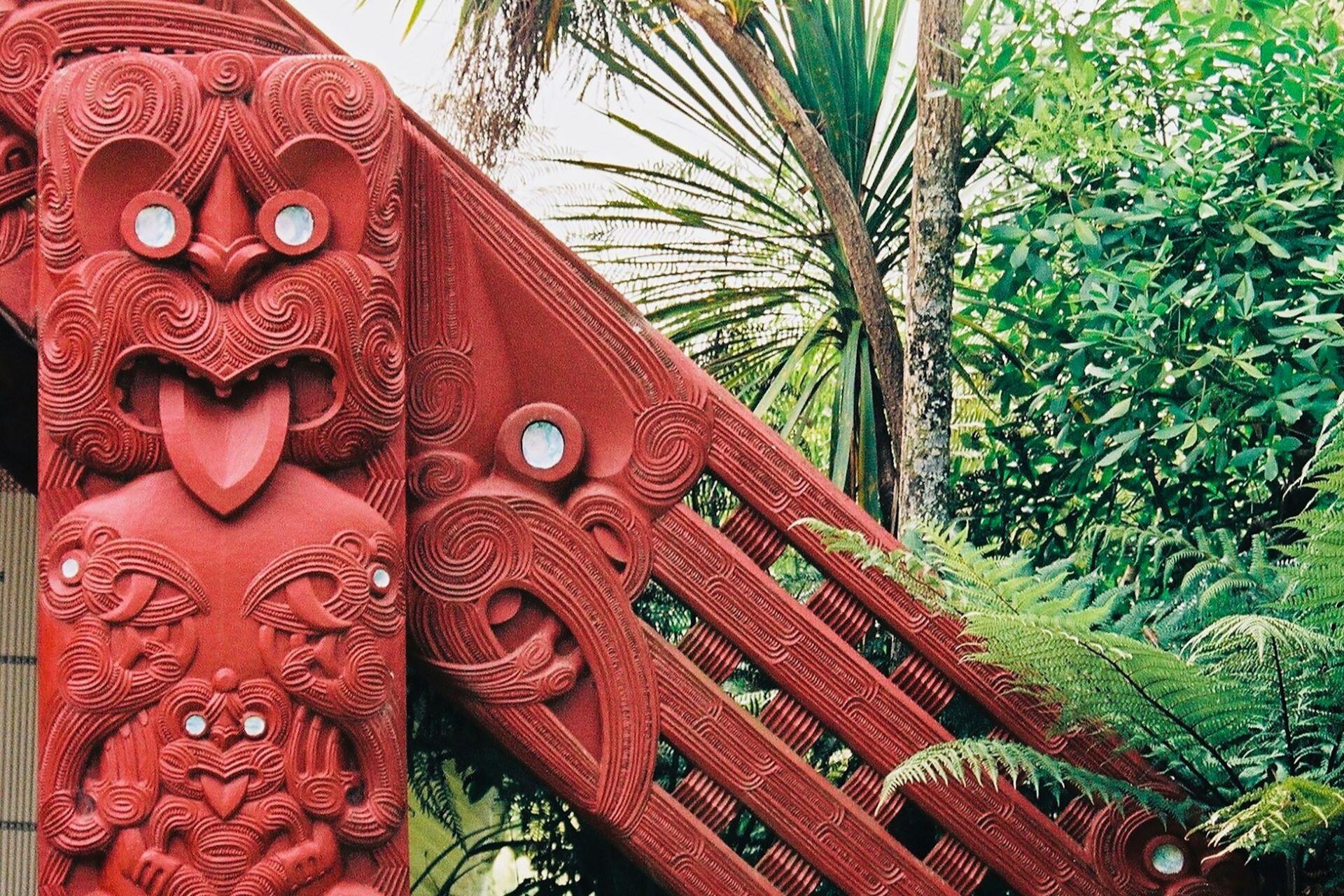
These patterns originated in early Māori carving (whakairo) and painting. Traditionally, the patterns embellished rafters (heke) and ridge poles (tāhuhu) of Māori meeting houses (wharenui).¹ They generally symbolise the heritage and identity of the tribe (iwi), but they can also be found in canoes (waka) and other objects.
Beyond their traditional roles and deep cultural significance, Māori patterns remain essential to Māori art and design. Tattoos, jewellery, architecture, fashion, and digital media have all drawn inspiration from Māori visual traditions. They remain a powerful expression of Māori identity, heritage, and storytelling.
Terms such as koru, kōwhaiwhai, whakairo and tukutuku do not all describe the same kind of thing. Koru is a recognisable motif, kōwhaiwhai is a painted design tradition, whakairo refers to carving, and tukutuku uses latticework to create patterned panels. Tā moko should also be treated separately because it is a culturally specific practice connected with identity, mana and whakapapa.³
Common Māori Patterns and Their Meanings
These Māori designs are often recognised by their flowing, symmetrical shapes. These elements and shapes carry significant meaning and symbolism. These elements generally represent concepts like nature, ancestry, and life cycles.
| Pattern | How to recognise it | Common associations or context | Often found in |
|---|---|---|---|
| Koru | Curved, unfolding spiral inspired by a young fern shoot | Growth, renewal and new life | Kōwhaiwhai, carving, contemporary art |
| Kōwhaiwhai | Flowing painted curves and repeated forms | Whare, whakapapa, community and local narratives | Heke and other parts of wharenui |
| Pītau | Fern-inspired spiral or double-spiral form | Closely related visually to other spiral forms | Carving and kōwhaiwhai |
| Unaunahi | Repeated curved forms resembling fish scales | Fish, water and resources can be contextual associations | Whakairo |
| Niho taniwha | Repeated triangular or saw-edged forms | Mythology, lineage and family houses | Tukutuku and tāniko |
| Pākati | Sharp repeated dog-tooth-like notches | Primarily a carved surface treatment rather than one fixed symbol | Whakairo |
| Manaia | Stylised figurative form, often with a distinctive profile or beak | Interpretation depends on the object and cultural setting | Whakairo |
Koru Patterns
- Visual inspiration: The koru is inspired by the unfurling frond of the native fern and appears as a spiral motif in kōwhaiwhai and carving.⁵
- Common associations: It is commonly associated with new life, beginnings, growth and renewal.
- In a composition: Single, repeated or interlocking koru can create movement and continuity within a larger design.
Kōwhaiwhai Patterns
- What they are: Kōwhaiwhai are flowing painted designs particularly associated with the heke, or rafters, of wharenui.⁸
- How they look: Curves, repeated forms and the relationship between painted and unpainted space create rhythm across the composition.
- Meaning: Interpretation can depend on the whare, community, and local tradition rather than a single universal meaning.
Pītau Patterns
- Visual form: Pītau can refer to a young fern shoot as well as spiral forms used in Māori art.¹⁰
- Koru connection: Pītau and koru can look related, but you should not automatically treat the two terms as interchangeable.
- Where it appears: Spiral pītau forms appear in carving and kōwhaiwhai compositions.
Unaunahi Patterns
- How to recognise it: Unaunahi consists of repeated curved forms resembling fish scales.
- Where it appears: The pattern is particularly documented in carving, with regional variation in how similar surface designs are named and executed.²
- Possible associations: Treat connections to fish, food resources, water, and abundance as contextual associations rather than a single fixed meaning.
Niho Taniwha Patterns
- How to recognise it: Niho taniwha uses sharp, repeated triangular or saw-edged forms resembling teeth.
- Where it appears: The design is found in art forms including tukutuku and tāniko.⁹
- Cultural context: Te Aka connects niho taniwha with mythology, particularly lineage and family houses, so it should not simply be labelled a generic “warrior” symbol.⁹
Pākati Patterns
- How to recognise it: Pākati consists of sharp, repeating notches often described visually as a dog-tooth pattern.
- In carving: These notches add texture and contrast alongside smoother curves, figures and other surface patterns.²
- Meaning: Pākati is better understood within the complete carving than assigned a universal meaning such as strength, grief or protection.
Manaia Forms
- How to recognise them: Manaia often appear as stylised figures with distinctive profile or beaked forms.
- In carving: They can be integrated with other figures and patterned surfaces within larger compositions.⁶
- Meaning: Historic forms vary, so the manaia should not be reduced to one fixed interpretation such as “guardian spirit”.
Traditional Māori Patterns in Architecture, Carving and Weaving
Māori patterns are more than isolated shapes or decorative elements because they form part of larger artistic traditions. Looking at the setting in which a design appears can therefore help explain both how it was made and how it functions. Architecture, carving and weaving each provide their own context for the patterns they contain.
Kōwhaiwhai in Wharenui
While kōwhaiwhai continue to be used on wharenui and other communal buildings, contemporary spaces like universities, museums, and government buildings have honoured Māori heritage with their use. Kōwhaiwhai patterns have also moved from traditional materials into newer architectural settings. Architects and designers have used them on materials including glass, metal, and through digital projections.
iwi and peoples represented through the contemporary poupou of Te Hono ki Hawaiki.⁸
Whakairo: Carved Māori Designs
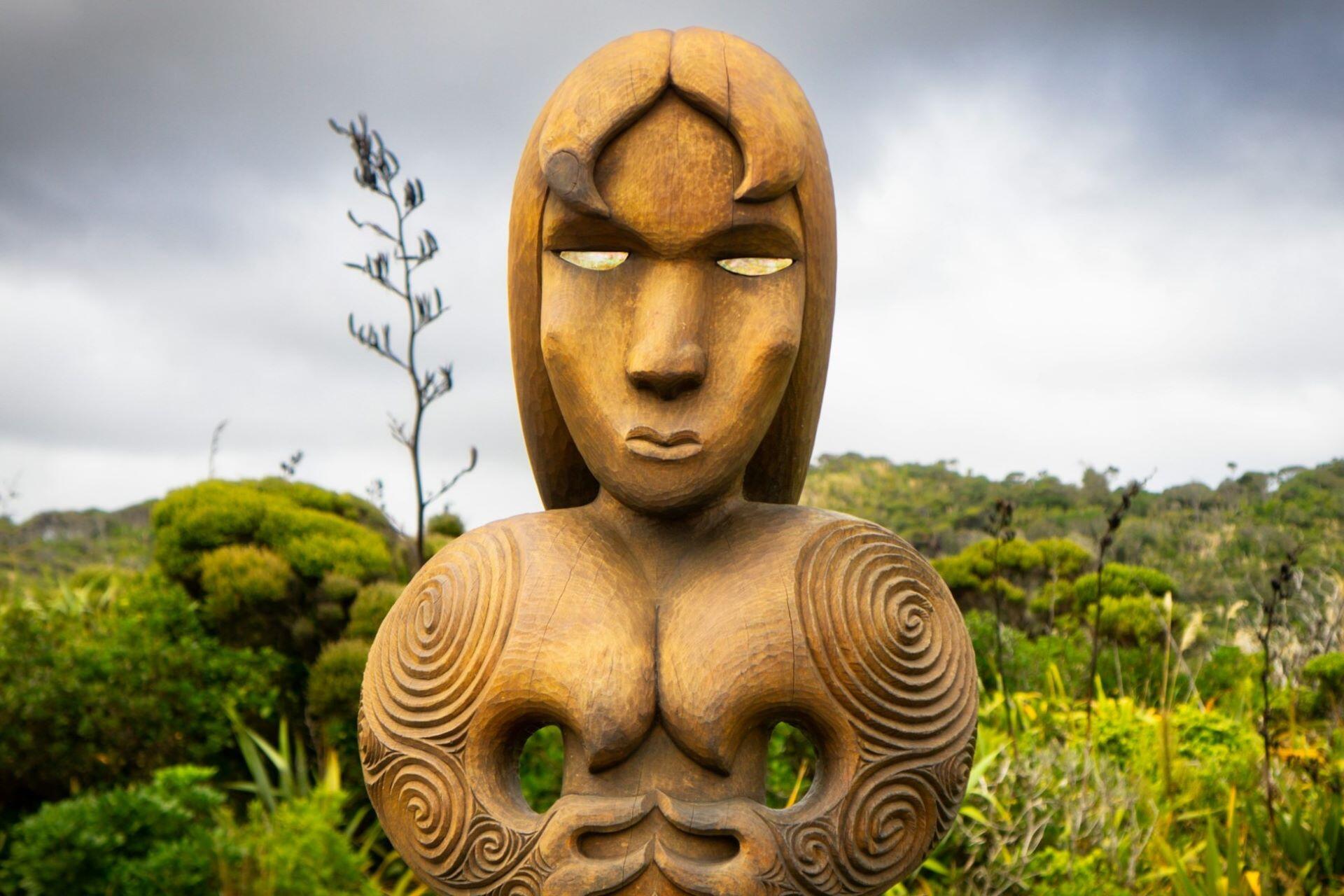
Patterns and designs have long appeared within Māori carving (whakairo). Sharp notches such as pākati, flowing spirals and other repeated forms provide texture and contrast alongside carved figures and larger compositions. These patterns work as part of the complete carving rather than simply as isolated decorative elements.
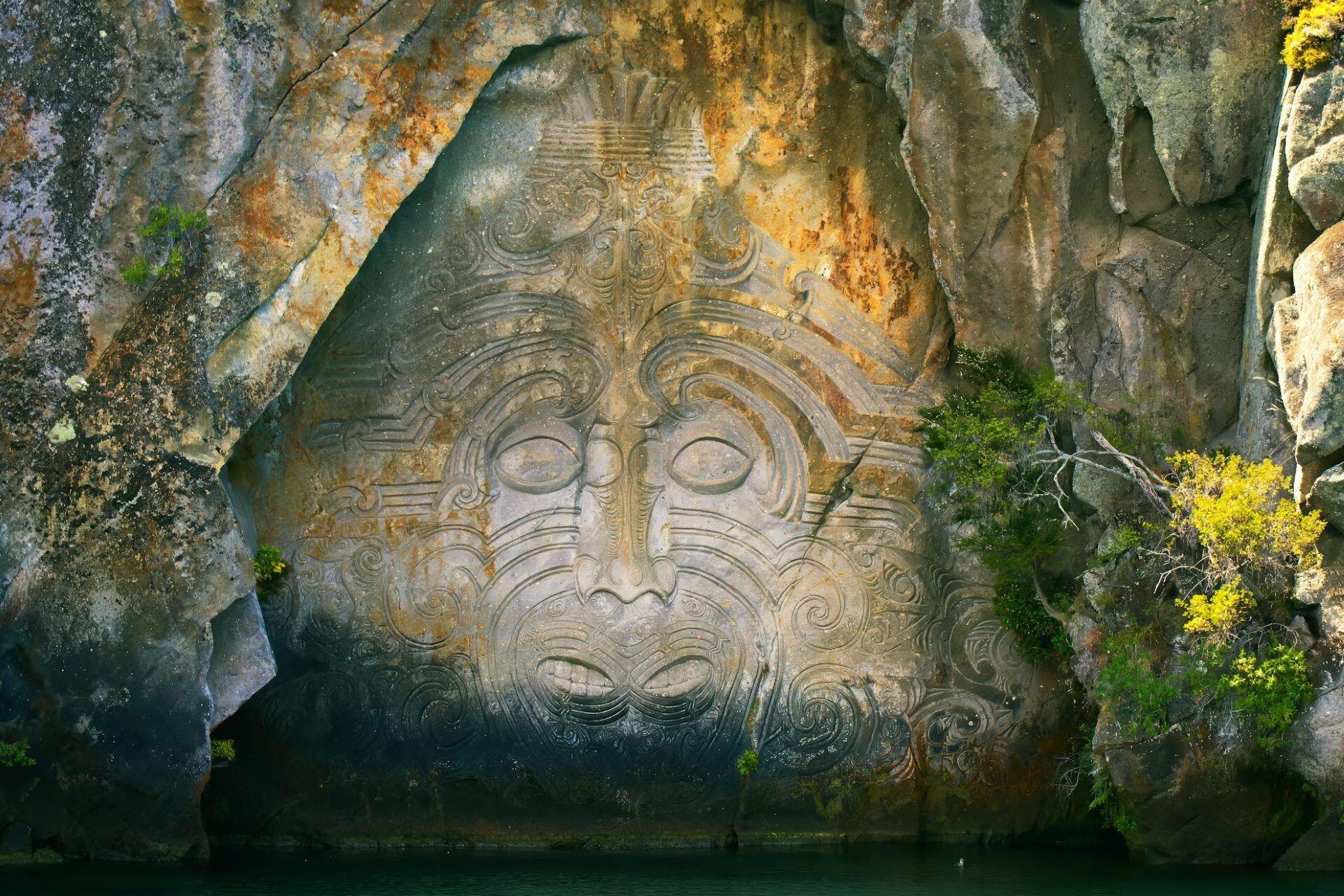
years learning every aspect of the craft.²
Tukutuku Panels and Woven Māori Designs
Tāniko is a border pattern often used in woven designs, such as the borders of cloaks (korowai). These often feature triangular or geometric patterns. Their repeating and symmetrical nature also provides structure within the overall composition and aesthetic of the design.
Patterns in Contemporary Māori Art
The elegant curves and rich symbolism of kōwhaiwhai patterns mean they aren't just symbols of the past. Beyond their traditional roles and deep cultural significance, kōwhaiwhai remain an essential part of Māori art and design.⁷ They've been adapted into modern contexts and have enriched many creative fields with their use.
Tattoos, jewellery, architecture, fashion, and digital media have all been inspired by kōwhaiwhai, which remain a powerful expression of Māori identity, heritage, and storytelling. The aesthetic qualities and symbolic depth of Māori designs also make them popular for jewellery and other accessories. Commonly carved from pounamu (greenstone), bone, or wood, jewellery like pendants and earrings may feature koru spirals and other elements commonly found in traditional Māori patterns.
More modern adaptations mean that Māori artists and artisans use traditional forms in metalwork, resins, and gemstones, blending modernity with traditional artistry. The digital age has also brought kōwhaiwhai into graphic design, digital art, and other multimedia projects. One fascinating use is augmented reality and projection mapping, where contemporary artists can create interactive kōwhaiwhai displays that let viewers engage virtually with Māori art and design.
How to Use Māori-Inspired Designs Respectfully
Because Māori patterns are more than design elements, use them in contemporary art, design, and commercial products with cultural sensitivity, respect, and understanding. Their visual appeal does not remove them from the cultural traditions in which they developed. Understanding that distinction is important before using Māori-inspired forms in a new context.
Start by finding out where a design comes from, who created it and whether it has a particular cultural or community association. Avoid copying existing artwork or moko, credit creators where appropriate, and involve Māori artists or cultural advisers when using cultural elements commercially. Permission or consultation may be appropriate depending on the design and intended use.⁴
Understand the Difference Between Appreciation and Appropriation
These designs and the elements within them can hold deep symbolism and meaning, and are more than shapes, lines, and composition. Anyone who uses these, especially those from outside Māori culture, must understand the cultural significance of these patterns. They're often visual representations of Māori worldviews, ancestry, and stories, not just a nice pattern to use, especially on commercial products.
Before using them, we recommend learning the symbolism and acknowledging the history and cultural context in which these patterns exist and are used. Looking at where a design came from can also help prevent culturally significant work from being treated as a generic decorative motif. This is particularly important when the intended use is public or commercial.
Be Especially Careful With Tā Moko
Māori tattooing differs from many Western tattooing practices in both application and meaning. Designs can have personal and family significance and can reflect a person's growth, lineage, and spiritual connections. These tattoos also allow Māori to make powerful statements about their cultural identity, resilience, and connection to their heritage.
Best Practice for Designers, Brands and Makers
If in doubt, engage with Māori communities and artists to learn more about these designs, and seek permission before using any patterns. Learning the source of a pattern is especially important before adapting it for a brand, product, or other commercial use. Working directly with Māori artists can also provide cultural context that you can't gain simply by copying an existing visual design.
Māori Pattern Ideas for Learning, Art and Interior Inspiration
Māori patterns continue to inspire creative work well beyond their traditional settings, but inspiration should start with understanding the cultural context of the design you consider. Looking at how line, repetition, symmetry and movement are used can provide creative ideas without requiring a direct copy of an existing pattern. This distinction is useful in education, home décor and graphic design alike.
Educational Activities
- Analyse rather than copy: Explore repetition, symmetry, curves, geometric forms and negative space.
- Compare art forms: Look at how kōwhaiwhai, whakairo and tukutuku create pattern through different materials and techniques.
- Create original work: Students can make patterns inspired by their own environment instead of tracing culturally specific Māori designs.
- Provide context: Include the artist, source and cultural background when showing examples.
Home Décor and Creative Projects
- Buy authentic work: Choose licensed prints, carvings or other pieces created by Māori artists.
- Take broader inspiration: Explore natural forms, rhythm, movement and materials without lifting a recognisable cultural pattern.
- Keep the creator visible: Retain artist credits and information about the work when displaying it.
Graphic Design and Branding
- Start with purpose: Build a brief around values, place and storytelling rather than asking for something that simply “looks Māori”.
- Commission expertise: Work with Māori creatives and include cultural advice from the beginning of the project.
- Avoid retrofitting: Researching a copied motif after a logo has already been designed is not a substitute for genuine consultation.⁴
How to Identify a Māori Pattern: A Simple Visual Guide
Māori patterns can often be recognised firstly through their shape, repetition, and the artistic medium in which they appear. Flowing spirals suggest forms such as koru, repeating fish-scale shapes may suggest unaunahi, and sharp repeating notches can indicate pākati. These visible characteristics provide a useful first step in identifying an unfamiliar design.
| Visual clue | Possible identification | Art form or setting to check | Cultural-context note |
|---|---|---|---|
| Curved, unfolding spiral | Koru or pītau-based form | Kōwhaiwhai or whakairo | Similar spiral forms can have different names and uses |
| Large flowing painted rafter design | Kōwhaiwhai | Heke inside a wharenui | Meaning may depend on the whare and community |
| Repeating fish-scale effect | Unaunahi | Whakairo | Regional treatments and terminology can vary |
| Sharp triangular or saw-edged repetition | Niho taniwha | Tukutuku or tāniko | Avoid automatically describing it as a warrior symbol |
| Repeated dog-tooth notches | Pākati | Whakairo | Usually part of a larger carved composition |
| Geometric lattice composition | Tukutuku | Wharenui interior | Tukutuku is its own art form |
| Stylised profile or beaked figure | Manaia | Whakairo | Interpretation depends on the complete work |
The setting is also important. Painted flowing patterns on the rafters of a wharenui are likely kōwhaiwhai, while carved forms belong to the traditions of whakairo and geometric woven designs may belong to weaving traditions. The material and location can therefore narrow down what kind of Māori art you are looking at.
Visual recognition is only a starting point, however. Understanding the cultural meaning of a particular design requires more than matching its appearance to a name. The wider artwork, creator, and cultural setting may all be needed before you can interpret a particular pattern accurately.
References
- Brown, Deidre. “Māori Architecture – Whare Māori.” Te Ara – The Encyclopedia of New Zealand, 15 June 2017. https://teara.govt.nz/en/maori-architecture-whare-maori. Accessed 30 Sept. 2026.
- Graham, Brett. “Whakairo – Māori Carving.” Te Ara – The Encyclopedia of New Zealand, 8 June 2017. https://teara.govt.nz/en/whakairo-maori-carving. Accessed 30 Sept. 2026.
- Higgins, Rawinia. “Tā Moko – Māori Tattooing.” Te Ara – The Encyclopedia of New Zealand, 5 Sept. 2013. https://teara.govt.nz/en/ta-moko-maori-tattooing. Accessed 30 Sept. 2026.
- Intellectual Property Office of New Zealand. “Māori Advisory Committee and Māori Trade Marks.” IPONZ. https://www.iponz.govt.nz/get-ip/trade-marks/practice-guidelines/current/maori-advisory-committee-and-maori-trade-marks/. Accessed 30 Sept. 2026.
- “Koru.” Te Aka Māori Dictionary. https://maoridictionary.co.nz/word/3074. Accessed 30 Sept. 2026.
- Museum of New Zealand Te Papa Tongarewa. “Papahou (Treasure Box).” Collections Online. https://collections.tepapa.govt.nz/object/214446. Accessed 30 Sept. 2026.
- Museum of New Zealand Te Papa Tongarewa. “Rongomaraeroa Kōrero: Dr Sandy Adsett.” Te Papa. https://www.tepapa.govt.nz/about/our-buildings/rongomaraeroa-our-marae/rongomaraeroa-korero-dr-sandy-adsett. Accessed 30 Sept. 2026.
- Museum of New Zealand Te Papa Tongarewa. “Te Hono ki Hawaiki: The Contemporary Wharenui at Te Papa.” Te Papa. https://www.tepapa.govt.nz/about/our-buildings/rongomaraeroa-our-marae/wharenui-te-hono-ki-hawaiki. Accessed 30 Sept. 2026.
- “Niho Taniwha.” Te Aka Māori Dictionary. https://maoridictionary.co.nz/word/4410. Accessed 30 Sept. 2026.
- “Pītau.” Te Aka Māori Dictionary. https://maoridictionary.co.nz/word/5667. Accessed 30 Sept. 2026.
Summarise with AI:
Did you like this article? Leave a rating!


 Loading...