
Thinking about crochet? Not sure where to begin. Here's our quick guide for why you should learn, how you can get started, what you need, and the best projects for beginners.
Key Takeaways
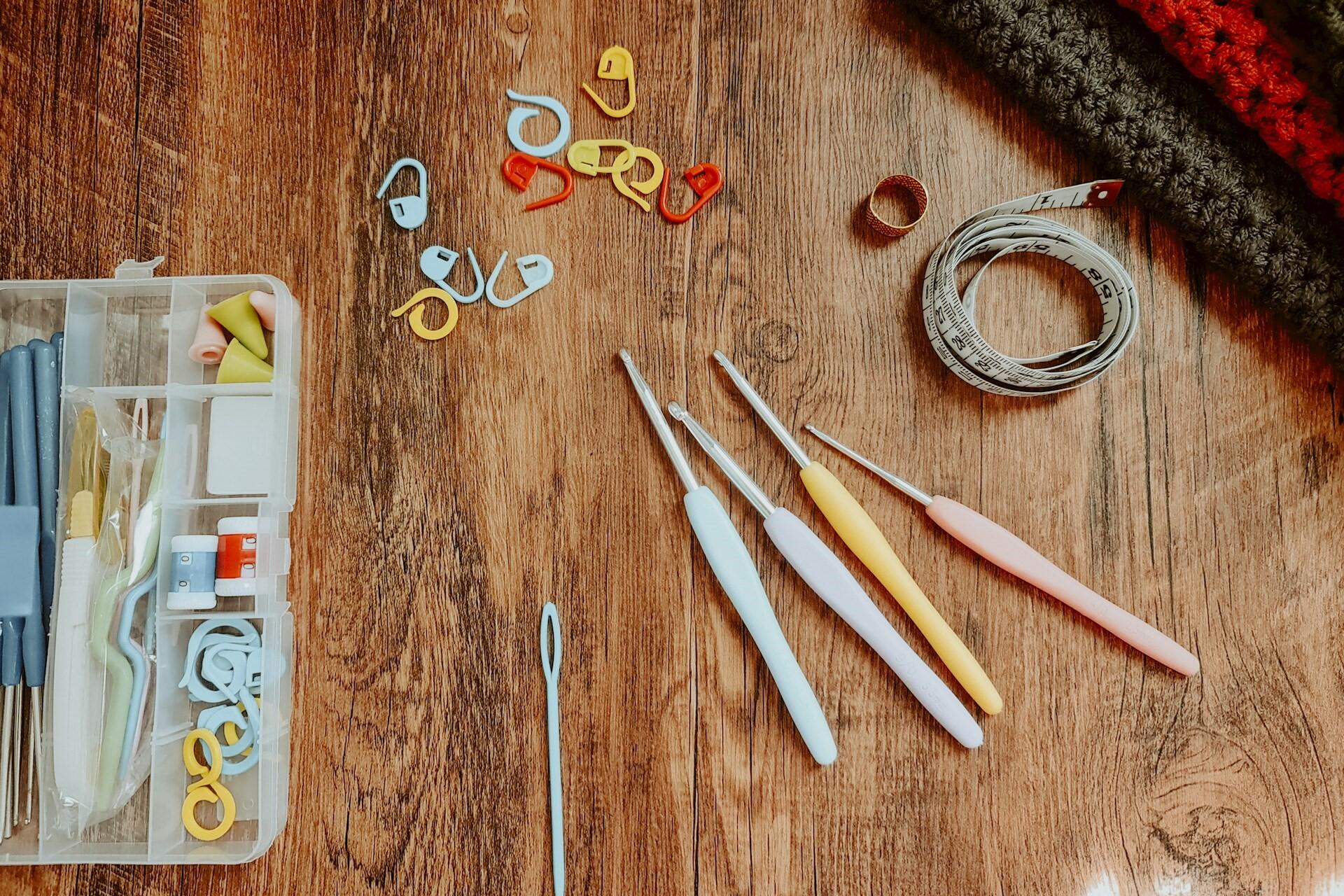
- Crochet beginners only need a few tools to start: a hook, yarn, scissors, stitch markers and a yarn needle.
- A smooth, light-coloured yarn and a medium hook make it easier to see stitches and practise basic movements.
- The best first skills to learn are the slip knot, chain stitch, one simple stitch, turning and stitch counting.
- Always check whether a pattern uses UK or US crochet terms, because stitch names can mean different things in each system.⁴
- Small, flat projects like dishcloths, coasters, scarves and granny squares are ideal for practising tension and neat edges.




Why Learn How to Crochet?
Crochet is a great hobby, but if that isn't enough to convince you, there are more reasons to consider it. With a single hook, some yarn, and basic stitches, you can make things like coasters, dishcloths, scarves or simple squares before moving on to more detailed patterns. It's also a great relaxing activity, with research linking crochet practice to attention and motor-skill engagement.⁹
tonnes of clothing and textile waste are disposed of in New Zealand landfills each year.⁸
Crochet for Beginners: Tools and Materials
Getting started with crochet is pretty cheap, too. With some basic crochet materials, you can get started. However, make sure you pick a hook that matches your yarn, a colour that lets you see your stitches, and a few small accessories.
Choosing a Hook and Yarn
Choose a smooth, light-coloured yarn and a medium crochet hook for your first practice pieces. Very dark yarn, fluffy fibres and tiny hooks can make it harder to see where each stitch begins and ends. A simple yarn-and-hook combination helps you focus on the movement of crocheting before worrying about pattern details.
Extra Tools Worth Having
How to Crochet Step by Step
You can learn how to crochet by following the skills in order. Look for the movements that regularly appear in beginner projects, such as making a slip knot, building a chain, forming simple stitches, and turning your work at the end of a row.⁷ Once you get the hang of these, you can move on to stitch counting and tension, which are the habits that make crochet projects look neater and easier to follow.³
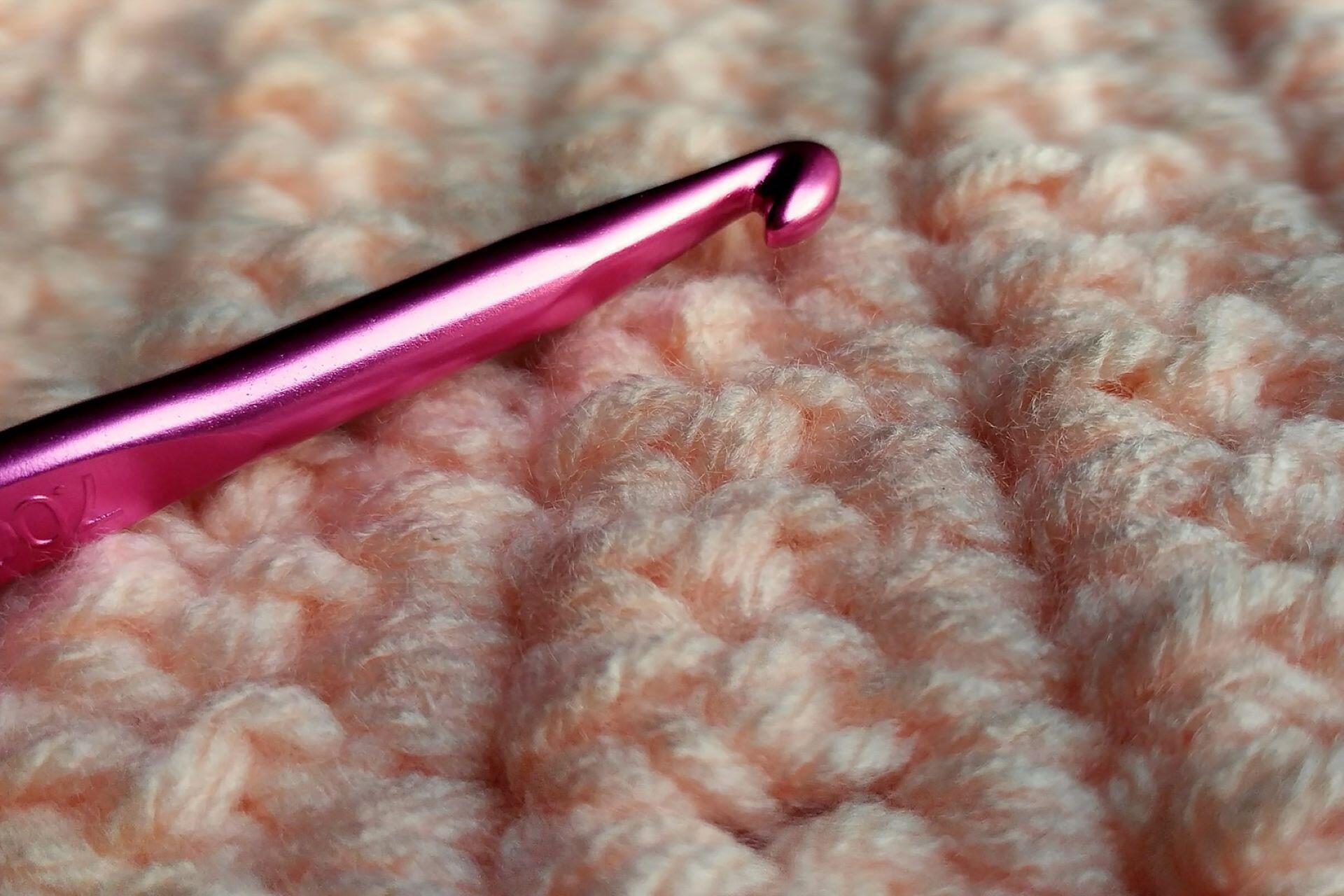
Slip Knot, Chain Stitch and First Stitches
Turning, Counting and Keeping Tension Even
Uneven stitches are normal when learning how to crochet. Most beginners pull the yarn too tightly, make chains of different sizes or forget to count the final stitch in a row. Practising short rows, counting stitches and loosening your grip can make your work more even over time.³
Crochet Terms, Patterns and Common Mistakes
Always check the terms and learn the abbreviations for any crochet tutorial. A lot of mistakes are simply a case of misunderstanding terminology from around the world, mismatching yarn weight, or missing a stitch at the end of a row. Take a few minutes to read the pattern first.⁵
UK, US and NZ Crochet Terminology
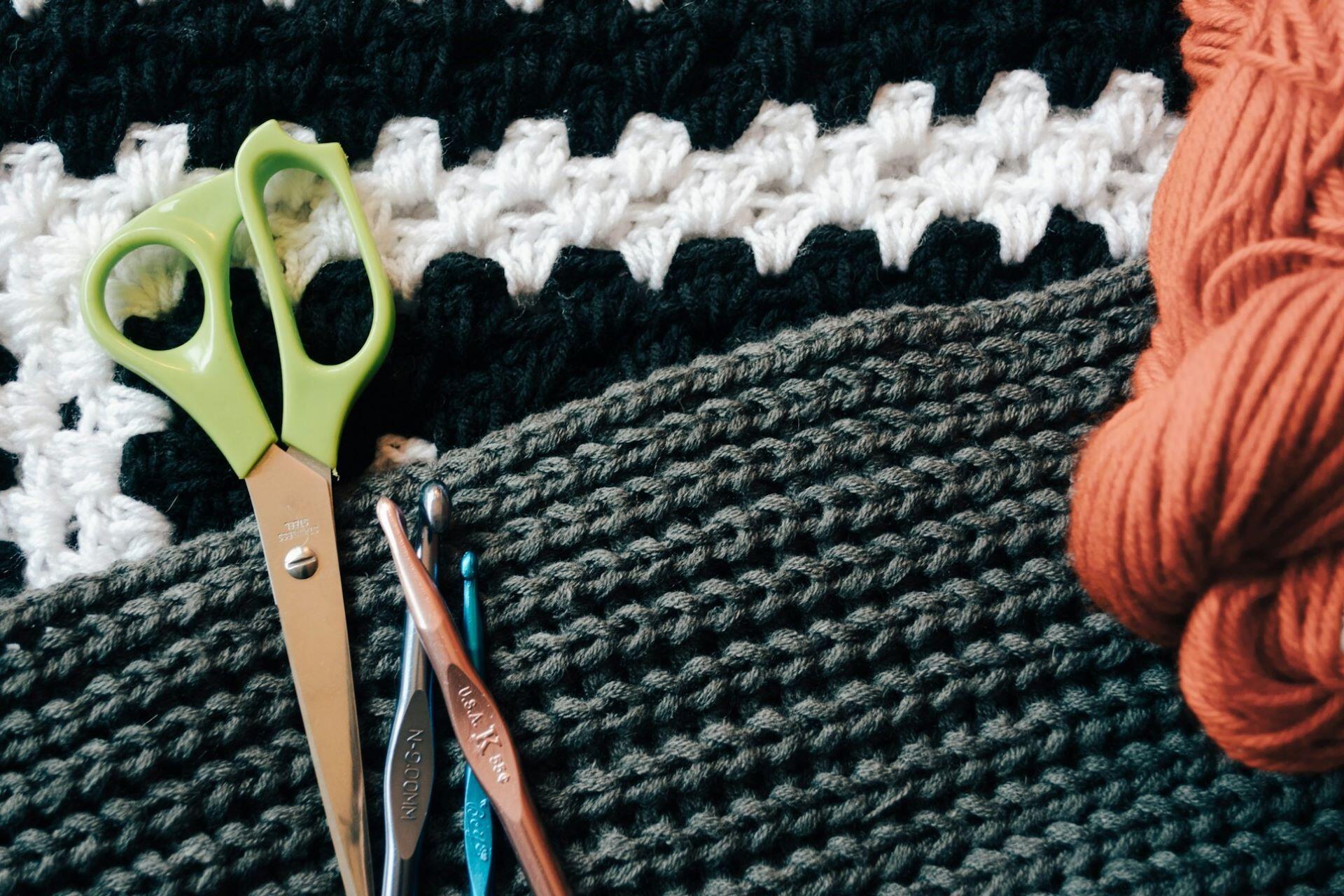
Crochet terms are not universal, which can quickly confuse beginners. For example, US "single crochet" is called "double crochet" in UK terminology, while US "double crochet" is called "treble" in UK terminology. Before starting any online tutorial or pattern, check which terminology it uses, so your project does not come out the wrong size.⁴
Reading Your First Pattern
Easy Crochet Projects for Beginners
For any new hobby, start with the basics. With crochet, practice the same stitches with basic projects. The best crochet projects are small, flat, and repetitive. Focus on tension, stitch counting and neat edges.
A dishcloth is small, useful and forgiving, making it ideal for practising rows of the same stitch.
A coaster helps you practise counting stitches while finishing a quick project in one sitting.
A scarf is repetitive, so it gives beginners plenty of practice with tension and turning.
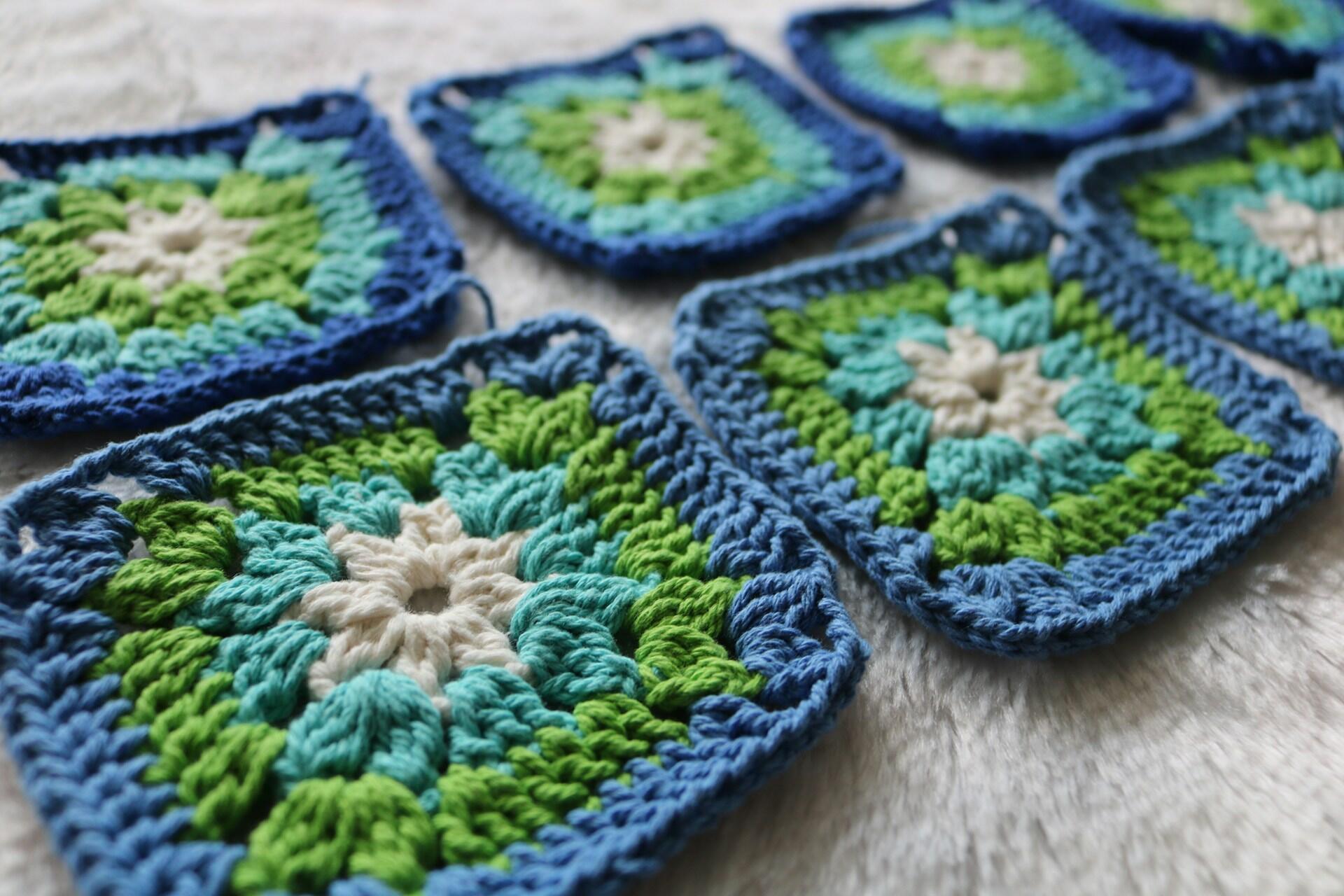
A granny square introduces simple pattern repetition and can later be joined to create larger projects.
A headband is a good first wearable project because it is smaller and quicker than a hat.
A basic beanie is a useful next step once you are ready to practise shaping or working in the round.
A pouch helps beginners practise straight edges, folding and basic finishing.
A small blanket is beginner-friendly if you choose a simple stitch and repeat it across each row.
A cushion cover lets you practise making larger flat panels without needing complex shaping.
A basic bag is a good project once you can count rows, maintain even tension, and follow a simple pattern.
| Tip | Why It Helps | Beginners Should... |
|---|---|---|
| Start with a practice square | Takes pressure off the first project | Make a small swatch before starting anything wearable |
| Use light-coloured yarn | Makes stitches easier to see | Avoid black, navy or fluffy yarn at first |
| Choose a medium hook | Easier to control than tiny hooks | Try a hook size recommended on the yarn label |
| Learn the chain stitch first | Forms the foundation for many projects | Practise chains of equal size |
| Count every row | Prevents accidental increases or decreases | Count stitches before turning your work |
| Use stitch markers | Helps you find row ends and round starts | Mark the first or last stitch in each row |
| Check UK vs US terms | Avoids making the wrong stitch | Look for a terminology note before starting |
| Keep tension relaxed | Helps stitches stay even | Loosen your grip if the hook is hard to insert |
| Pick a useful first project | Keeps motivation high | Try a dishcloth, coaster, scarf or granny square |
| Ask for feedback early | Fixes habits before frustration builds | Show your work to a tutor, group or experienced crocheter |
If you'd like more help with crochet, why not look for a Superprof tutor? You can find crochet tutors all over New Zealand and around the world to help you. With most offering the first session for free, you can even try a few out before choosing the perfect match for you. Search for "crochet" on the Superprof site today.
References
- Adult Learning Centre. “Crochet Beginners.” AdultLearn New Zealand, https://adultlearn.co.nz/course-details.php?cid=485. Accessed 17 Jun. 2026.
- Bella Coco Crochet. “How To Crochet For Beginners: Free Step-by-Step Guide.” Bella Coco Crochet, 13 Feb. 2026, https://blog.bellacococrochet.com/how-to-crochet/. Accessed 17 Jun. 2026.
- B.Hooked Crochet and Knitting. “How to Crochet for Beginners: 10 Steps.” B.Hooked Crochet and Knitting, 9 Oct. 2023, https://bhookedcrochet.com/learn/how-to-crochet/. Accessed 17 Jun. 2026.
- Craft Yarn Council. “Crochet Abbreviations Master List.” Craft Yarn Council, https://www.craftyarncouncil.com/standards/crochet-abbreviations. Accessed 17 Jun. 2026.
- Craft Yarn Council. “How to Read a Crochet Pattern.” Craft Yarn Council, https://www.craftyarncouncil.com/standards/how-to-read-crochet-pattern. Accessed 17 Jun. 2026.
- Craft Yarn Council. “Standard Yarn Weight System.” Craft Yarn Council, https://www.craftyarncouncil.com/standards/yarn-weight-system. Accessed 17 Jun. 2026.
- LoveCrafts. “How to Crochet: Step-by-Step Beginners Guide.” LoveCrafts, https://www.lovecrafts.com/en-gb/c/article/how-to-crochet. Accessed 17 Jun. 2026.
- One Planet. “Textiles.” One Planet New Zealand, https://www.oneplanet.nz/households/textiles/. Accessed 17 Jun. 2026.
- Sebastiano, Davide Rossi, et al. “Crochet Increases Attention Through a Requiring Motor Skill Learning.” Scientific Reports, 3 Feb. 2025, https://www.nature.com/articles/s41598-025-88777-9. Accessed 17 Jun. 2026.
Summarise with AI:
Did you like this article? Leave a rating!

 Loading...