

Poetry has long been the literary genre to convey feelings and emotions rather than scientific truths and historical facts. Most of the great poets of their times have at some point written love poems. From William Shakespeare to Edgar Allan Poe, Robert Burns and John Keats. Love poetry is probably the one genre that every poet has had a go at. Most people fall in love, and poets are not immune to the spell, so many verses and sonnets were inspired by poets' muses and lovers. In this article, we tried to list some of the most passionate and romantic love poems we could find.
Key Takeaways
- For classic romance: Elizabeth Barrett Browning’s “How Do I Love Thee?” and Shakespeare’s Sonnet 116 are two of the most recognisable love poems in English.
- For short love poems: Emily Dickinson’s “Come Slowly-Eden” and W. B. Yeats’s “Aedh Wishes for the Cloths of Heaven” show how much feeling can fit into only a few lines.
- For love poems for her or him: The best choice depends on the message. Browning is direct and devoted, Yeats is tender and vulnerable, Whitman is reflective, and Neruda is passionate.
- For something dramatic: Edgar Allan Poe’s “Annabel Lee” and Robert Burns’s “A Red, Red Rose” add two different kinds of romance: one haunted by loss, the other simple, musical and sincere.
| Poem | Poet | Best for | Why read it? |
|---|---|---|---|
| "How Do I Love Thee?" | Elizabeth Barrett Browning | Classic love poems for her | A direct, romantic sonnet about deep and lasting devotion. |
| "Come Slowly, Eden!" | Emily Dickinson | Short love poems | A compact, suggestive poem that says a lot in only a few lines. |
| "Aedh Wishes for the Cloths of Heaven" | W. B. Yeats | Tender love poems for him or her | A vulnerable poem about giving someone your dreams when you have little else to offer. |
| "Sometimes with One I Love" | Walt Whitman | Reflective love poems | A short poem about unreturned love and how feeling can become art. |
| Sonnet 116 | William Shakespeare | Wedding readings and romantic speeches | A famous sonnet about love that remains constant through time and change. |
| "Here I Love You" | Pablo Neruda | Passionate romantic poems | A wistful poem that links distance, longing and landscape. |
| "Annabel Lee" | Edgar Allan Poe | Dramatic love poems | A lyrical poem about love, memory and loss. |
| "A Red, Red Rose" | Robert Burns | Simple romantic messages | A musical, memorable poem built around images of lasting love. |


"How Do I Love Thee?" by Elizabeth Barrett Browning
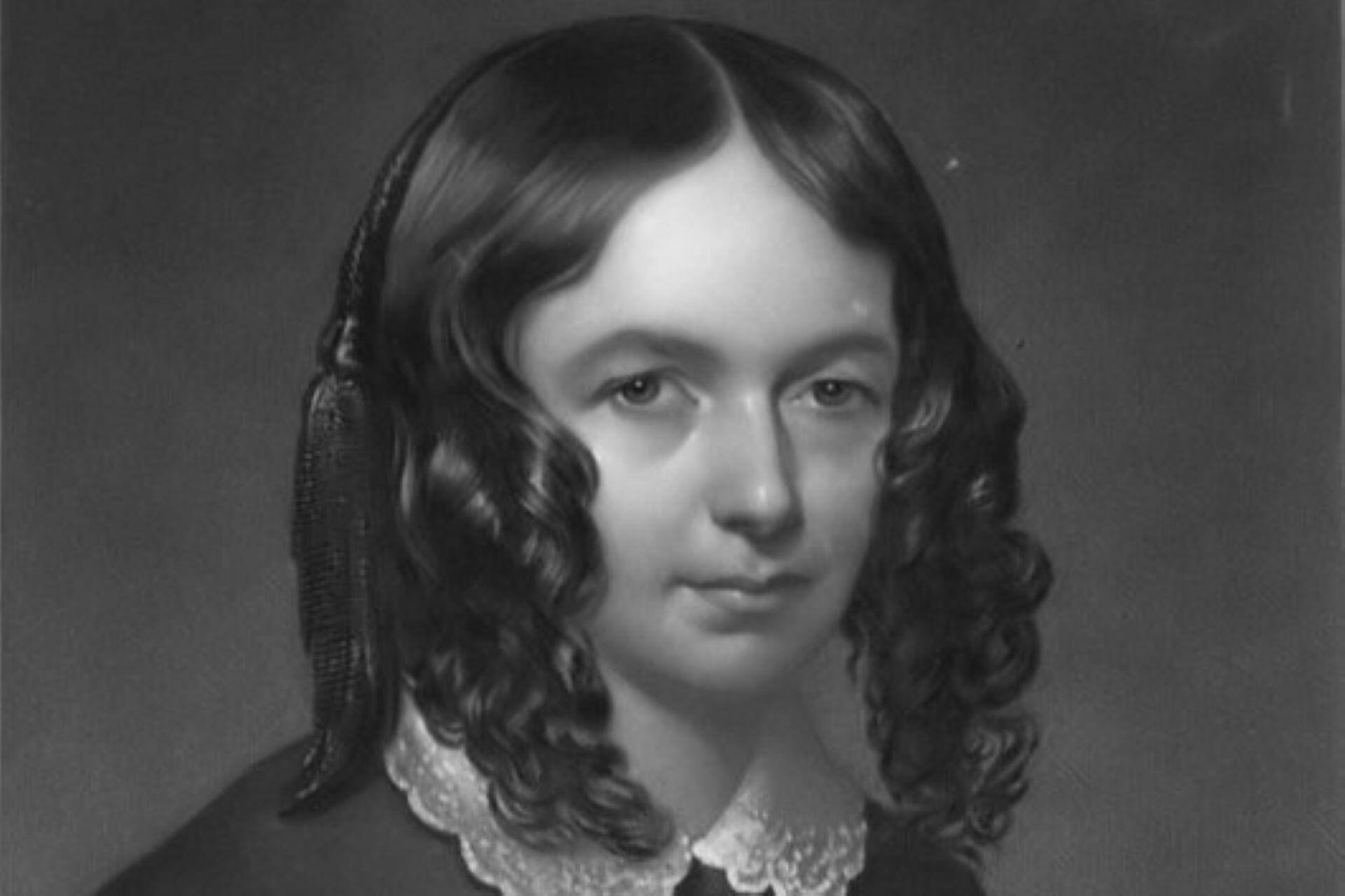
Elizabeth Barrett Browning probably had one of the most romantic love affairs of all time, making her one of the famous female poets of the era. After she published some of her early works, another poet, Robert Browning, began writing to her, and so began a courtship that would end with the pair secretly marrying and fleeing to Italy, where they lived happily ever after. From that relationship, Elizabeth Barrett Browning drew most of the inspiration for some of the most romantic poems of all time.
surviving letters, written between January 1845 and September 1846.³
How Do I Love Thee? is Sonnet 43 from Elizabeth Barrett Browning’s Sonnets from the Portuguese, and its opening question remains one of the most recognisable beginnings in romantic poetry.⁴ She was 40 years old when she broke free from an overprotective father, and this poem sums up perfectly the sixteen years of the happy marriage that she spent alongside her husband.
How do I love thee? Let me count the ways.
I love thee to the depth and breadth and height
My soul can reach, when feeling out of sight
For the ends of being and ideal grace.
I love thee to the level of every day’s
Most quietneed, by sun and candle-light.
I love thee freely, as men strive for right.
I love thee purely, as they turn from praise.
I love thee with the passion put to use
In my old griefs, and with my childhood’s faith.
I love thee with a love I seemed to lose
With my lost saints. I love thee with the breath,
Smiles, tears, of all my life; and, if God choose,
I shall but love thee better after death.
"Come Slowly, Eden!" by Emily Dickinson
Come Slowly-Eden is a short love poem composed of only eight lines, making it a useful example for readers seeking short, emotionally intense love poems.⁵ One interesting fact about it is that it was written by Emily Dickinson, one of the most famous American poetesses, whose spinster life was already the talk of the town in her time. Dickinson never married, but her love life remains a subject of debate, especially because of the mysterious “Master” letters found after her death.⁶
lines long.⁵
Come slowly, Eden!
lips unused to thee,
Bashful, sip thy jasmines,
As the fainting bee,
Reaching late his flower,
Round her chamber hums,
Counts his nectars --enters,
And is lost in balms!
"He Wishes For The Cloths Of Heaven" by W.B. Yeats
William Butler Yeats can be considered one of the most prominent figures of Irish and British poetry and literature. Born into a wealthy Anglo-Irish family in 1865, Yeats grew up in the Irish countryside, a home that would later inspire him greatly.
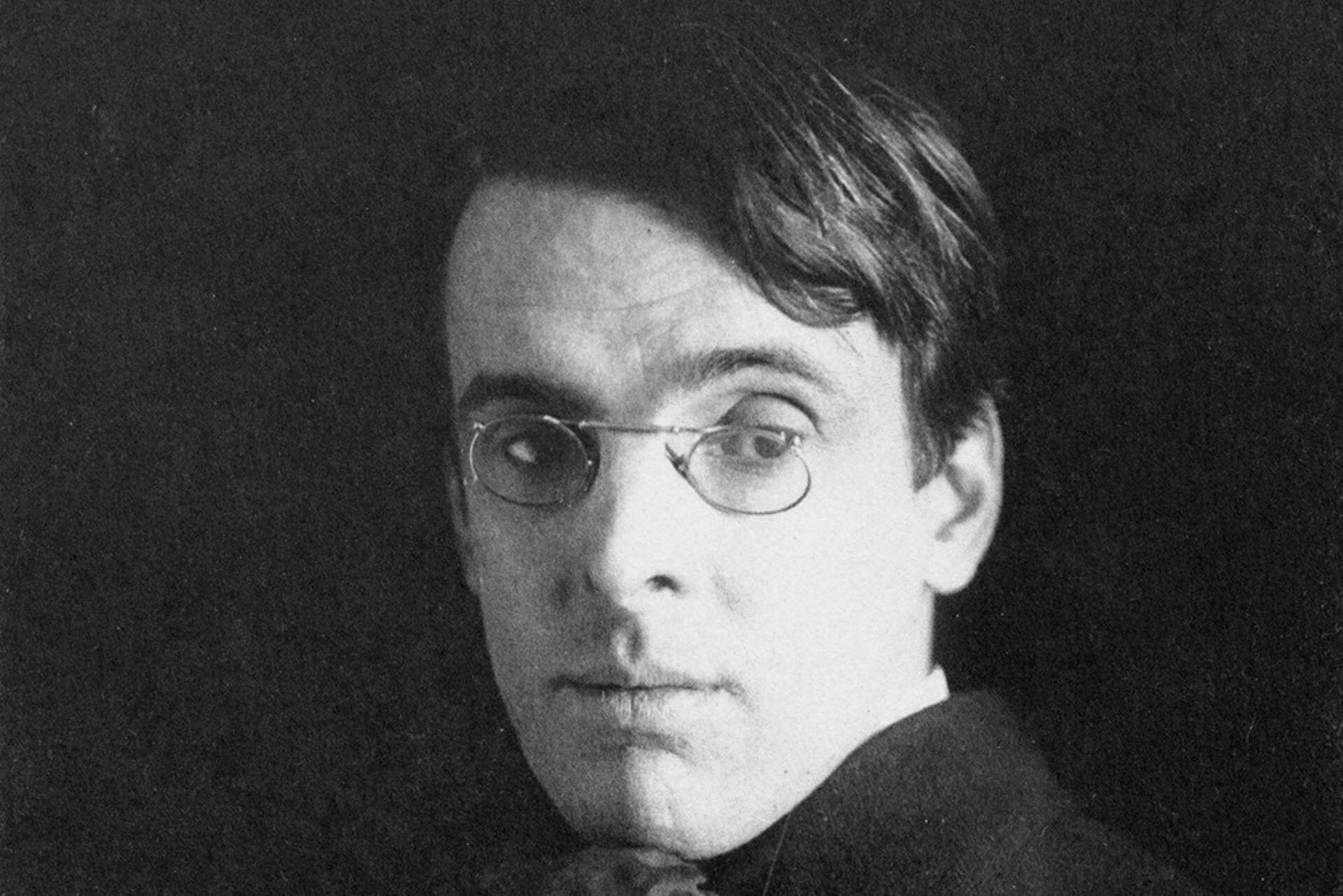
The other part of Yeats' life that inspired him was his unrequited love for English heiress and Irish nationalist, Maud Gonne. Yeats proposed to her four times and was always rebuffed to his greatest despair.
It is only 20 years later that Gonne and Yeats would end up being lovers, for one night only, and though their friendship seemed to have endured, it was never more than platonic. Yeats only married when he was 51 years old to 25 years old Georgie Hyde-Lees, and despite the age difference (and Yeats later infidelity) the union seems to have been a success.
From his troubled love life, Yeats drew much of his inspiration. He was awarded the Nobel Prize in Literature in 1923 "for his always inspired poetry, which in a highly artistic form gives expression to the spirit of a whole nation".
His poem "He Wishes for the Clothes of Heaven" is a straightforward missive to the speaker for his lover: "If I were rich I would give you everything and anything, but I am just a poor man, and all I have are my dreams."¹ The rather simple and dated idea is made striking by the repetitive use of the same word and the absence of any actual rhyme throughout the poem.
Yeats compensated for the banality of his poem by using the rhythm of the repetitions in a very lyrical way. Academics suggested that the poem's simplicity was one reason it became so popular.
Had I the heavens’ embroidered cloths,
Enwrought with golden and silver light,
The blue and the dim and the dark cloths
Of night and light and the half light,
I would spread the cloths under your feet:
But I, being poor, have only my dreams;
I have spread my dreams under your feet;
Tread softly because you tread on my dreams.
Sometimes With One I Love by Walt Whitman
Walt Whitman, born in 1819, is often referred to as the "Father of free verse", given his extensive work that rid itself of meter patterns, rhymes or other musical patterns. He is one of the founders of modern American poetry and has been one of the most influential writers of his time.
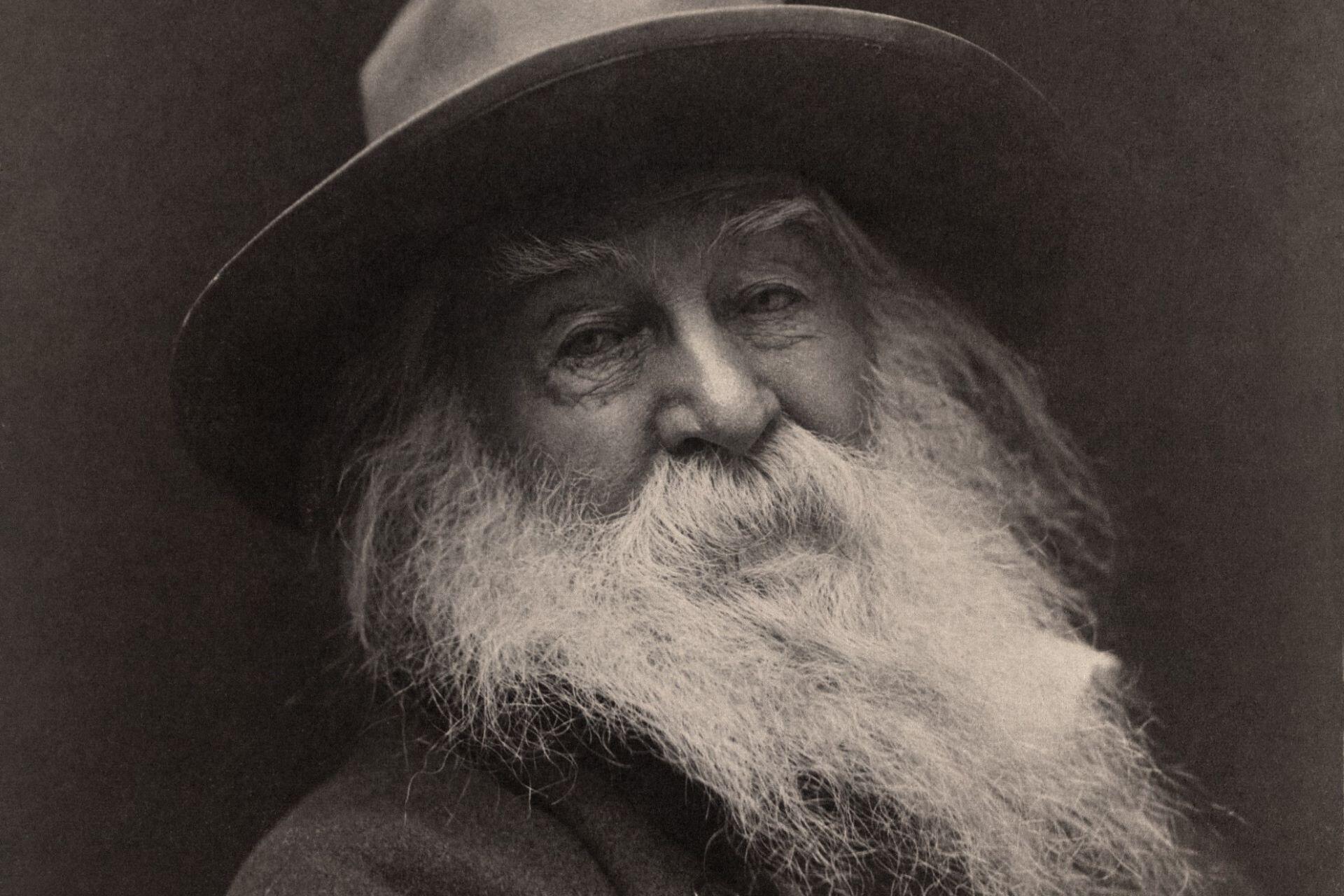
A lot of ink has been poured regarding Whitman's sexuality, but it is commonly accepted that he was homosexual (or "at least" bisexual). For this reason, he was heavily critiqued during his lifetime by contemporary thinkers who declared that his work was depicting "that horrible sin not to be mentioned among Christians."
The Walt Whitman Archive identifies “Sometimes with One I Love” as an 1860 poem from the Calamus cluster, where Whitman often writes about affection, comradeship and unreturned love.¹⁰
Sometimes with one I love I fill myself with rage for fear I effuse
unreturn'd love,
But now I think there is no unreturn'd love, the pay is certain one
way or another,
(I loved a certain person ardently and my love was not return'd,
Yet out of that I have written these songs.)
Let Me Not to the Marriage of True Minds by William Shakespeare
Sonnet 116, titled Let Me Not to the Marriage of True Minds is probably the most famous piece of love poetry of all time.⁷ First published in 1609, describe love beyond the physical attraction that two people can feel for each other and celebrates love in a purer form, strong and constant, based on trust and understanding.

Even though this love poem was written centuries ago, it helped make Shakespeare one of the most romantic poets of all time and inspired future generations of English poets: Elizabeth Barrett Browning, William Wordsworth, William Blake, Lord Byron, Rudyard Kipling, and all the great masters of English poetry.
Let me not to the marriage of true minds
Admit impediments. Love is not love
Which alters when it alteration finds,
Or bends with the remover to remove.
O no! it is an ever-fixed mark
That looks on tempests and is never shaken;
It is the star to every wand’ring bark,
Whose worth’s unknown, although his height betaken.
Love’s not Time’s fool, though rosy lips and cheeks
Within his bending sickle’s compass come;
Love alters not with his brief hours and weeks,
But bears it out even to the edge of doom.
If this be error and upon me proved,
I never writ, nor no man ever loved.
Here I Love You by Pablo Neruda
Pablo Neruda was born Neftalí Ricardo Reyes Basoalto in Chile in 1904 and later became one of the most widely read poets of the twentieth century.⁸ He published his first poetic work at the age of 13 in his local newspaper. A few years later, he would adopt the pen name Pablo Neruda. Fame came early for him, as he managed to publish his first volume of verses when he was only 20 years old, after impressing the biggest publisher of the country. Neruda wrote in many different styles and genres, but some of his best-known works remain his passionate love poems.⁸ Neruda's popularity and influence, as well as his ability to use words to convey messages to the people of Chile, were so feared that it caused his own death.
His most famous love poems were published in his 1924 book Twenty Love Poems and a Song of Despair, when Neruda was only 19 years old. The eroticism of his work shocked some of the critics of the time, especially given the young age of the poet. To this day, 100 years after it was first printed, Twenty Love Poems and a Song of Despair remains the best-selling poetry book in the Spanish Language ever, with more than 20 million copies sold.
Here I love you.
In the dark pines the wind disentangles itself.
The moon glows like phosphorus on the vagrant waters.
Days, all one kind, go chasing each other.
The snow unfurls in dancing figures.
A silver gull slips down from the west.
Sometimes a sail. High, high stars.
Oh the black cross of a ship.
Alone.
Sometimes I get up early and even my soul is wet.
Far away the sea sounds and resounds.
This is a port.
Here I love you.
More Famous Love Poems to Read
Still looking for a few more love poems? Here are a few shorter classics. If you want something easier to quote, share, or read aloud, these are good.
“Annabel Lee” by Edgar Allan Poe
Edgar Allan Poe’s Annabel Lee is a dramatic love poem about memory, grief and devotion. The speaker looks back on a love so intense that even death cannot fully separate the two lovers, giving the poem a darker and more haunting tone than many traditional romantic poems.²
This makes it a useful choice for readers who want a love poem with a story behind it. It is not as soft or reassuring as Browning’s How Do I Love Thee? or Shakespeare’s Sonnet 116, but it has a strong emotional pull and a memorable musical rhythm. Poe’s poem is one of the clearest examples to read next for anyone interested in love poems that mix romance with loss.
It was many and many a year ago,
In a kingdom by the sea,
That a maiden there lived whom you may know
By the name of Annabel Lee;
And this maiden she lived with no other thought
Than to love and be loved by me.
I was a child and she was a child,
In this kingdom by the sea,
But we loved with a love that was more than love—
I and my Annabel Lee—
With a love that the wingèd seraphs of Heaven
Coveted her and me.
And this was the reason that, long ago,
In this kingdom by the sea,
A wind blew out of a cloud, chilling
My beautiful Annabel Lee;
So that her highborn kinsmen came
And bore her away from me,
To shut her up in a sepulchre
In this kingdom by the sea.
The angels, not half so happy in Heaven,
Went envying her and me—
Yes!—that was the reason (as all men know,
In this kingdom by the sea)
That the wind came out of the cloud by night,
Chilling and killing my Annabel Lee.
But our love it was stronger by far than the love
Of those who were older than we—
Of many far wiser than we—
And neither the angels in Heaven above
Nor the demons down under the sea
Can ever dissever my soul from the soul
Of the beautiful Annabel Lee;
For the moon never beams, without bringing me dreams
Of the beautiful Annabel Lee;
And the stars never rise, but I feel the bright eyes
Of the beautiful Annabel Lee;
And so, all the night-tide, I lie down by the side
Of my darling—my darling—my life and my bride,
In her sepulchre there by the sea—
In her tomb by the sounding sea.
“A Red, Red Rose” by Robert Burns
Robert Burns’s A Red, Red Rose is one of the most accessible famous love poems because its language is simple, musical and easy to remember. Instead of building its effect through complex imagery, the poem likens love to a fresh rose and a melody, making it feel more like a song than a formal literary exercise.⁹
That simplicity is why the poem still works well for cards, speeches and personal messages. It is especially useful for readers looking for short love poems that feel warm rather than overly dramatic. Burns gives the reader a clear romantic promise, making the poem stand in strong contrast to Poe’s darker vision of love and Neruda’s more atmospheric sense of longing.
O my Luve is like a red, red rose
That’s newly sprung in June;
O my Luve is like the melody
That’s sweetly played in tune.
So fair art thou, my bonnie lass,
So deep in luve am I;
And I will luve thee still, my dear,
Till a’ the seas gang dry.
Till a’ the seas gang dry, my dear,
And the rocks melt wi’ the sun;
I will love thee still, my dear,
While the sands o’ life shall run.
And fare thee weel, my only luve!
And fare thee weel awhile!
And I will come again, my luve,
Though it were ten thousand mile.
References
- Academy of American Poets. “Aedh Wishes for the Cloths of Heaven.” Poets.org, Academy of American Poets, https://poets.org/poem/aedh-wishes-cloths-heaven. Accessed 28 May 2026.
- Academy of American Poets. “Annabel Lee.” Poets.org, Academy of American Poets, https://poets.org/poem/annabel-lee. Accessed 28 May 2026.
- Baylor University. “The Browning Letters.” Baylor Digital Collections, Armstrong Browning Library, https://digitalcollections-baylor.quartexcollections.com/abl-collections/the-browning-letters. Accessed 28 May 2026.
- Browning, Elizabeth Barrett. “Sonnets from the Portuguese 43: How Do I Love Thee? Let Me Count the Ways.” Poetry Foundation, Poetry Foundation, https://www.poetryfoundation.org/poems/43742/sonnets-from-the-portuguese-43-how-do-i-love-thee-let-me-count-the-ways. Accessed 28 May 2026.
- Dickinson, Emily. “Come Slowly-Eden (211).” Poets.org, Academy of American Poets, https://poets.org/poem/come-slowly-eden-211. Accessed 28 May 2026.
- Dickinson Museum. “Emily Dickinson’s Love Life.” Emily Dickinson Museum, https://www.emilydickinsonmuseum.org/emily-dickinson/biography/special-topics/emily-dickinsons-love-life/. Accessed 28 May 2026.
- Folger Shakespeare. “Sonnet 116.” Folger Shakespeare Library, https://www.folger.edu/explore/shakespeares-works/shakespeares-sonnets/read/116/. Accessed 28 May 2026.
- Neruda, Pablo. “Pablo Neruda.” Poetry Foundation, Poetry Foundation, https://www.poetryfoundation.org/poets/pablo-neruda. Accessed 28 May 2026.
- Burns, Robert. “A Red, Red Rose.” Poetry Foundation, Poetry Foundation, https://www.poetryfoundation.org/poems/43812/a-red-red-rose. Accessed 28 May 2026.
- Whitman Archive. “‘Sometimes with One I Love’ (1860).” The Walt Whitman Archive, https://whitmanarchive.org/item/encyclopedia_entry662. Accessed 28 May 2026.
Summarise with AI:
Did you like this article? Leave a rating!

 Loading...