
Creativity involves breaking out of established patterns to look at things differently.
Edward de Bono
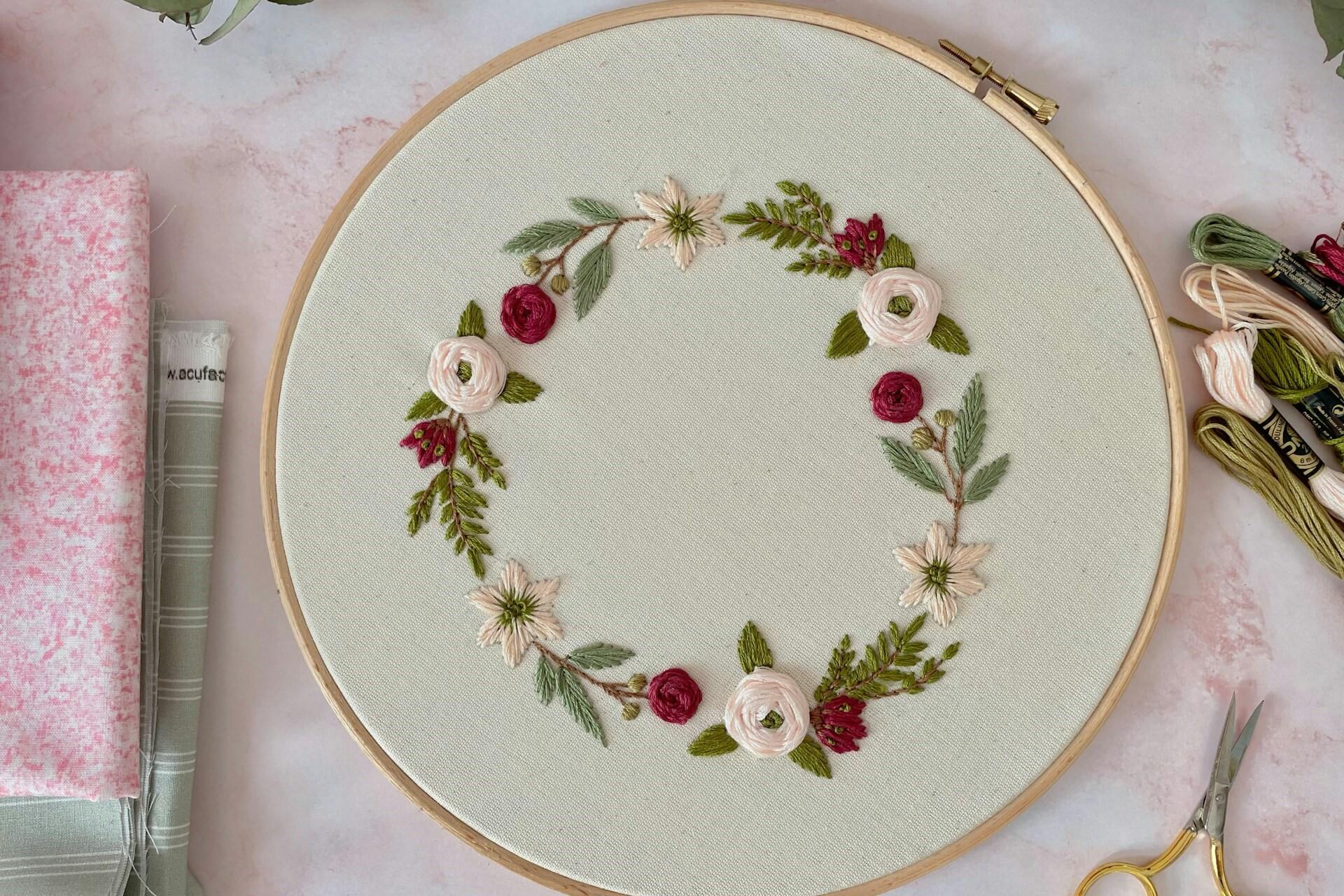
Embroidery is an easy textile craft to get started with because you need some basic, cheap equipment. A needle, thread, fabric, scissors and an embroidery hoop are enough to get started. Learn the basic stitches, and you'll be on your way.
Key Takeaways
- Start small with basic embroidery stitches
Beginners do not need to learn hundreds of techniques. A few simple stitches can already be used to create outlines, borders, flowers, letters and small decorative designs. - Cross-stitch is a beginner-friendly option
Cross-stitch uses repeated X-shaped stitches, often on gridded fabric, making it one of the easiest types of embroidery to follow a pattern for. - The right tools make learning easier
An embroidery hoop, a suitable needle, stranded cotton, simple fabric and sharp scissors help beginners control tension, spacing and stitch direction. - Patterns help guide your progress
Embroidery patterns are not tests. They are useful guides that show where to place stitches, which colours to use and how the finished design should come together. - Embroidery techniques build on each other
Once you can follow a line, fill a small shape and control thread tension, you can move from simple stitches that beginners use to more detailed and creative projects.


What Are Embroidery Stitches?
Embroidery stitches are basically movements of the thread used to decorate fabric. Some stitches create lines, fill shapes, or add texture, dots, borders, or lettering. Learn a few stitches, and you'll find that embroidery is far less intimidating than you first thought.
Every embroidery design is built from repeated stitches. A straight line, a flower, a letter, a border and a filled shape all come from learning how thread moves through fabric. Beginners do not need to learn every technique at once. Start with a few basic embroidery stitches, practise them slowly, and build towards more detailed designs.
Embroidery is also part of a broader hobby of making, repairing, and personalising textiles. New Zealand’s textile craft history includes handwork such as embroidery, spinning, weaving, quilting and patchwork, so a beginner sampler sits within a much wider tradition of decorative making.¹⁰ You might be stitching a small sampler, customising clothes, or just learning a technique. With a thread, you can make plain fabric into something more interesting.
reported creating visual arts and crafts in the previous 12 months, including crafts and textiles.⁷
Types of Embroidery Beginners Should Know
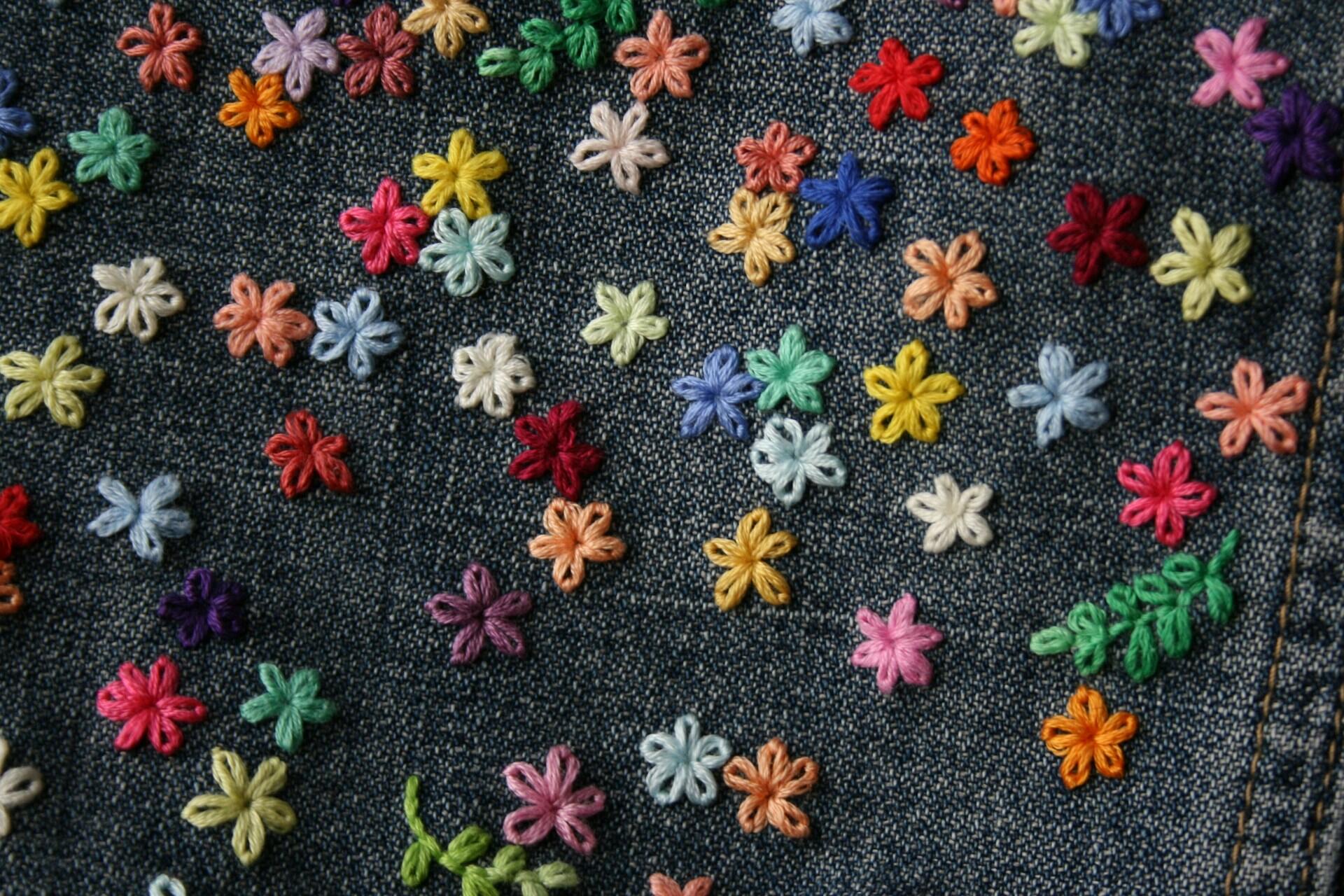
Embroidery isn't a single technique. Beginners should start with certain types of embroidery. Look for options that give you an easy way to practise embroidery with neat, repeated stitches. You'll also want to give yourself options with different types.
Cross-Stitch
Cross-stitch uses small X-shaped stitches, usually on counted fabric such as Aida. It is ideal for beginners because patterns are often charted, gridded or printed directly onto fabric.⁶
Surface Embroidery
Surface embroidery is stitched onto the surface of fabric to create outlines, flowers, lettering, borders and decorative details. It is useful for learners who want more freedom than counted patterns.
Counted Thread Embroidery
Counted thread embroidery relies on the weave of the fabric. Stitchers count holes or threads to place each stitch accurately, which makes it useful for neat, geometric designs.
Cross-stitch is made from two crossing straight stitches, and it looks neatest when every X is worked in the same direction. For example, if the top diagonal leans from the bottom left to the top right, keep that direction throughout the design. This small habit makes beginner projects look cleaner, even when the pattern is simple.⁸
Essential Tools for Learning Embroidery Techniques
You can start learning embroidery with some basic materials. Needle, fabric, scissors, and an embroidery hoop are all useful. Once you have the essentials, you can focus on the embroidery techniques.
Needles, Thread and Fabric
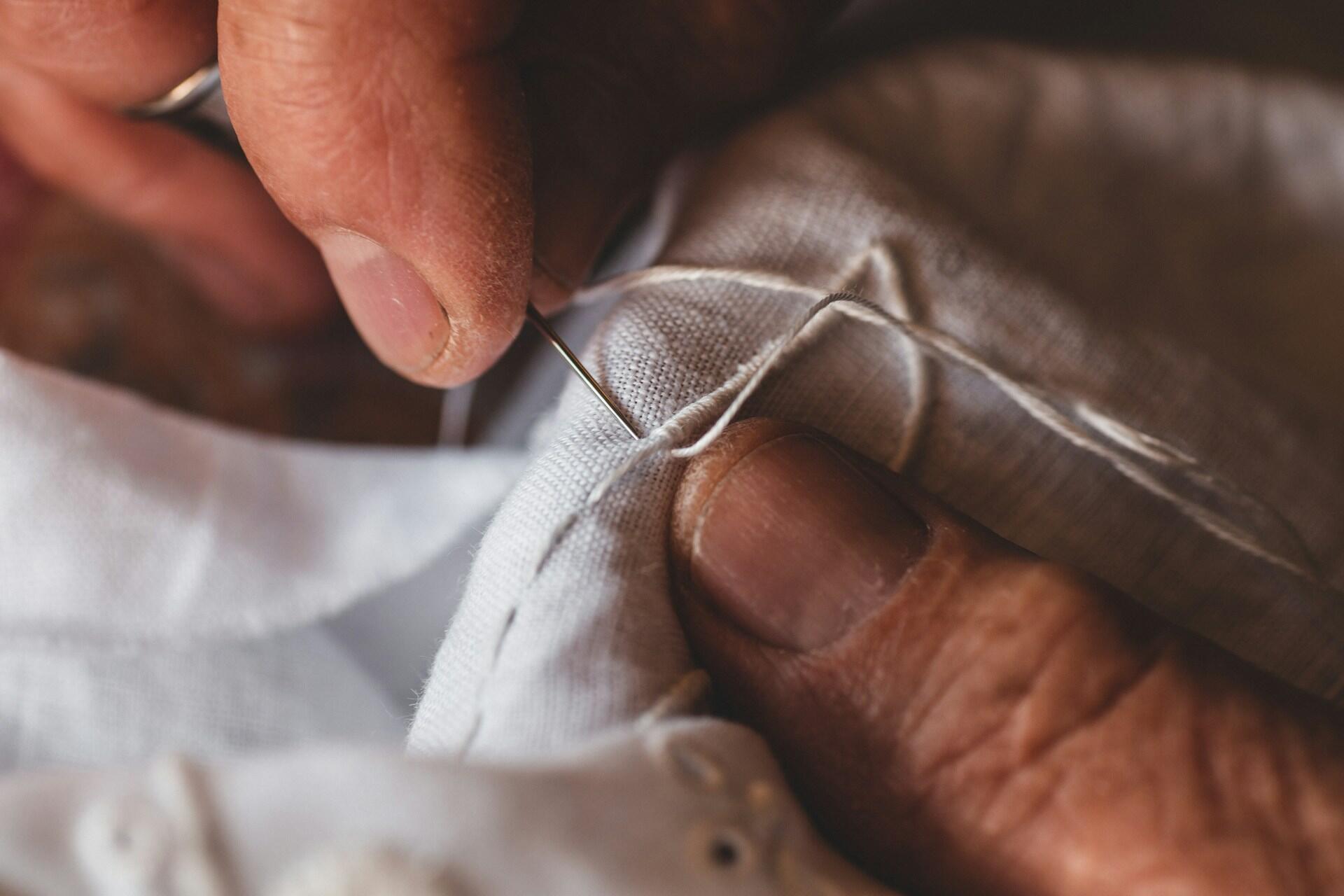
Choose embroidery needles that suit your thread and fabric. The eye should be large enough for the thread, but the needle should still pass cleanly through the fabric.
Stranded embroidery thread can be separated, so beginners can use fewer strands for fine details or more strands for bolder lines.⁴
Cotton, linen and Aida can all work, but Aida is especially helpful for cross-stitch because its visible grid makes stitches easier to place.⁶
Sharp embroidery scissors help you trim thread neatly without pulling at finished stitches.
A hoop keeps fabric taut, which makes it easier to control tension and place stitches evenly.³
Why an Embroidery Hoop Helps
A hoop holds the fabric firmly so it does not shift around while you stitch. This makes it easier to place the needle exactly where you want it.
Loose fabric can bunch up as the thread is pulled through it. Keeping the fabric taut helps stitches sit flatter and reduces unwanted wrinkles.
When the fabric is stretched evenly, it is easier to see the weave and judge the distance between stitches. This is especially useful for basic embroidery stitches and cross-stitch.
A hoop helps beginners avoid pulling the thread too tightly or leaving it too loose. More even tension makes the finished design look cleaner.
Instead of holding floppy fabric in one hand, you can hold the hoop and rotate it as needed. This gives you better control and makes small details easier to manage.
A hoop does not make embroidery faster on its own, but it does make the fabric easier to control. Taut fabric helps beginners keep stitches even, avoid puckering and see where the needle should go next. Loose fabric can make even simple embroidery techniques feel harder than they need to be.
Basic Embroidery Stitches to Learn First
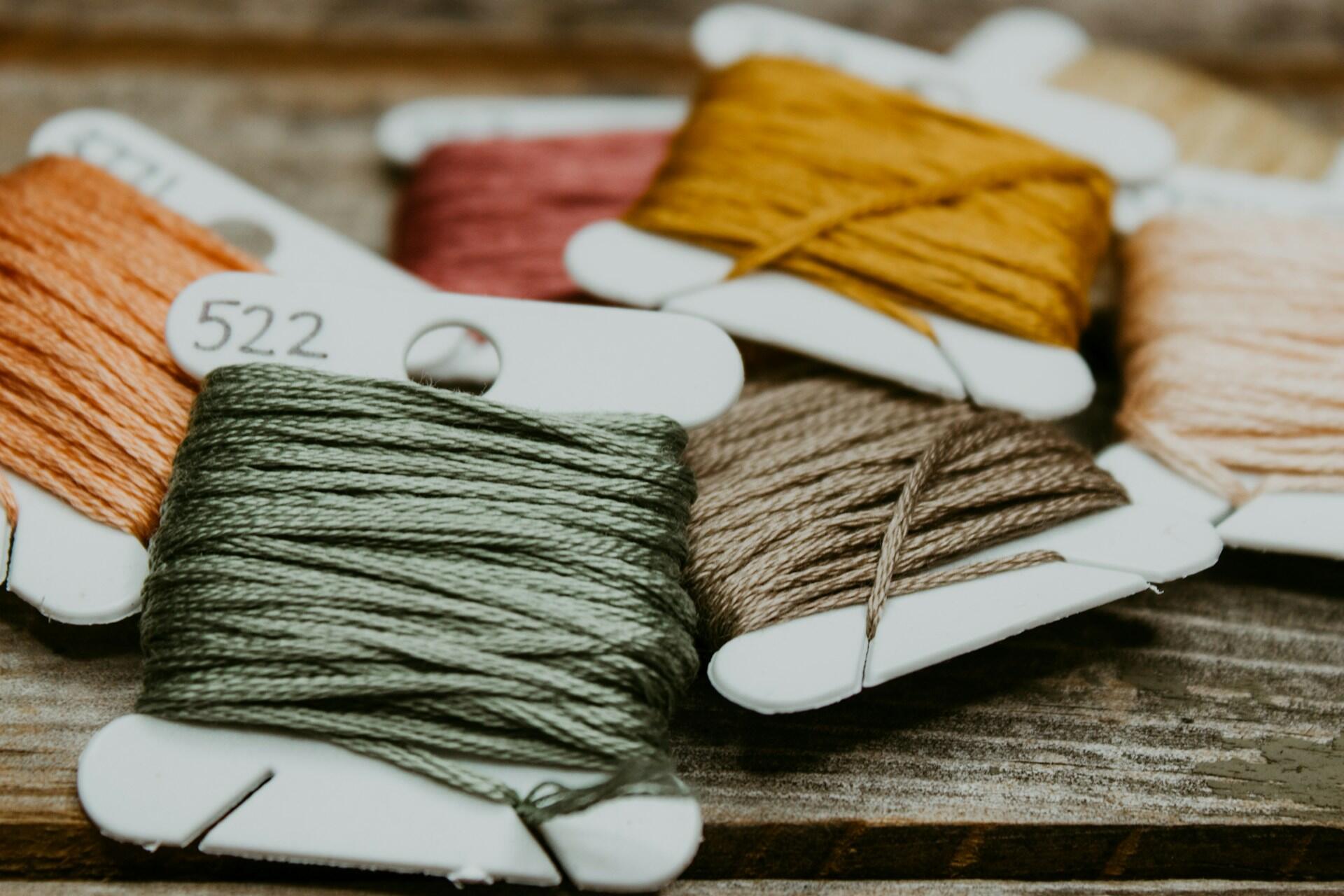
Don't memorise every stitch before a project. Learn the basic stitches that you'll need to move the needle cleanly, control thread tensions, and follow a line. Once you can do the running stitch, backstitch, stem stitch, chain stitch, satin stitch, split stitch, French knots, and cross-stitch, you already have enough stitches for embroidery projects in many different ways.
embroidery stitches, but beginners need only a handful of basic stitches to start creating neat designs.⁹
| Stitch | Best for | Beginner difficulty | First practice idea | Common mistake |
|---|---|---|---|---|
| Running stitch | Simple lines, borders and practice rows | Very easy | Stitch a straight dashed line across scrap fabric | Making the gaps uneven |
| Back stitch | Outlines, lettering and neat shapes | Easy | Trace a small word or leaf outline | Leaving gaps between stitches |
| Stem stitch | Curves, stems and flowing outlines | Easy to medium | Stitch a curved flower stem | Making stitches too long on curves |
| Chain stitch | Decorative lines and textured borders | Medium | Stitch a wavy line of linked loops | Pulling loops too tight |
| Satin stitch | Small filled shapes, petals and letters | Medium | Fill a small leaf or heart shape | Trying to fill a large area too soon |
| Split stitch | Smooth outlines and soft curves | Medium | Stitch around a small circle | Missing the centre of the previous stitch |
| French knot | Dots, flower centres and texture | Medium | Add dots around a stitched flower | Pulling the knot through the fabric |
| Cross-stitch | Counted designs, samplers and charted patterns | Easy | Make a small X-pattern on Aida cloth | Changing the direction of the top stitch |
Reading Patterns and Following Embroidery Designs
Embroidery patterns are how you make designs. You can find patterns printed directly onto fabric, or as symbols, grids, or colour charts that you follow as you stitch. Before you start, check the thread colours, fabric direction and stitch types.
A beginner pattern is there to help you slow down and stitch in the right place. Check the thread colours, symbols, stitch type and starting point before you begin. If you make a mistake, pause and fix it early rather than stitching several rows before checking your work.
From Cross-Stitch to Other Embroidery Techniques
Cross-stitch is a good place ot start. Once you get the hang of that, you can move on to other embroidery techniques. Don't abandon cross-stitch, but use it as your foundation. From there, you can advance using the following embroidery resources:
ANZEG represents 57 embroiderers' guilds across New Zealand, making local groups a useful option for learners who want community, workshops or stitch guidance.¹
Online stitch banks and diagrams are helpful when you need to check needle direction, stitch order or finishing details.⁵
Kits are useful because they usually include fabric, thread, needle, instructions and a pattern in one place.
Embroidery improves through repetition, so 10 focused minutes can be more useful than rushing through a large design.
A Superprof tutor can help with tension, stitch direction, pattern reading and choosing the right embroidery techniques for your first project.
References
- Association of New Zealand Embroiderers’ Guilds Inc. “About Us.” ANZEG, https://www.embroiderynz.co.nz/about-us. Accessed 17 Jun. 2026.
- DMC. “An Introduction to Embroidery.” DMC, https://www.dmc.com/CA/en/video-introduction-embroidery. Accessed 17 Jun. 2026.
- DMC. “How to Use an Embroidery Hoop.” DMC, https://www.dmc.com/NL/en-GB/technique-embroidery-use-hoop. Accessed 17 Jun. 2026.
- DMC. “How to Use Stranded Embroidery Thread.” DMC, https://www.dmc.com/US/en/technique-embroidery-use-stranded-thread. Accessed 17 Jun. 2026.
- DMC. “Step by Step Embroidery Stitch Guide.” DMC, https://www.dmc.com/CA/en/sbs-embroidery-stitch-diagrams. Accessed 17 Jun. 2026.
- DMC. “What Fabric Should You Use for Cross Stitch?” DMC, https://www.dmc.com/BE/en-GB/technique-cross-stitch-what-fabric. Accessed 17 Jun. 2026.
- Manatū Taonga Ministry for Culture and Heritage. “New Zealanders’ Cultural Participation in 2023.” Manatū Taonga, 13 Mar. 2024, https://www.mch.govt.nz/publications/new-zealanders-cultural-participation-2023. Accessed 17 Jun. 2026.
- Royal School of Needlework. “Cross Stitch.” RSN Stitch Bank, https://rsnstitchbank.org/stitch/cross-stitch. Accessed 17 Jun. 2026.
- Royal School of Needlework. “RSN Stitch Bank.” RSN Stitch Bank, https://rsnstitchbank.org/. Accessed 17 Jun. 2026.
- Te Ara: The Encyclopedia of New Zealand. “Other Textile Crafts.” Te Ara, https://teara.govt.nz/en/sewing-knitting-and-textile-crafts/page-4. Accessed 17 Jun. 2026.
Summarise with AI:
Did you like this article? Leave a rating!

 Loading...