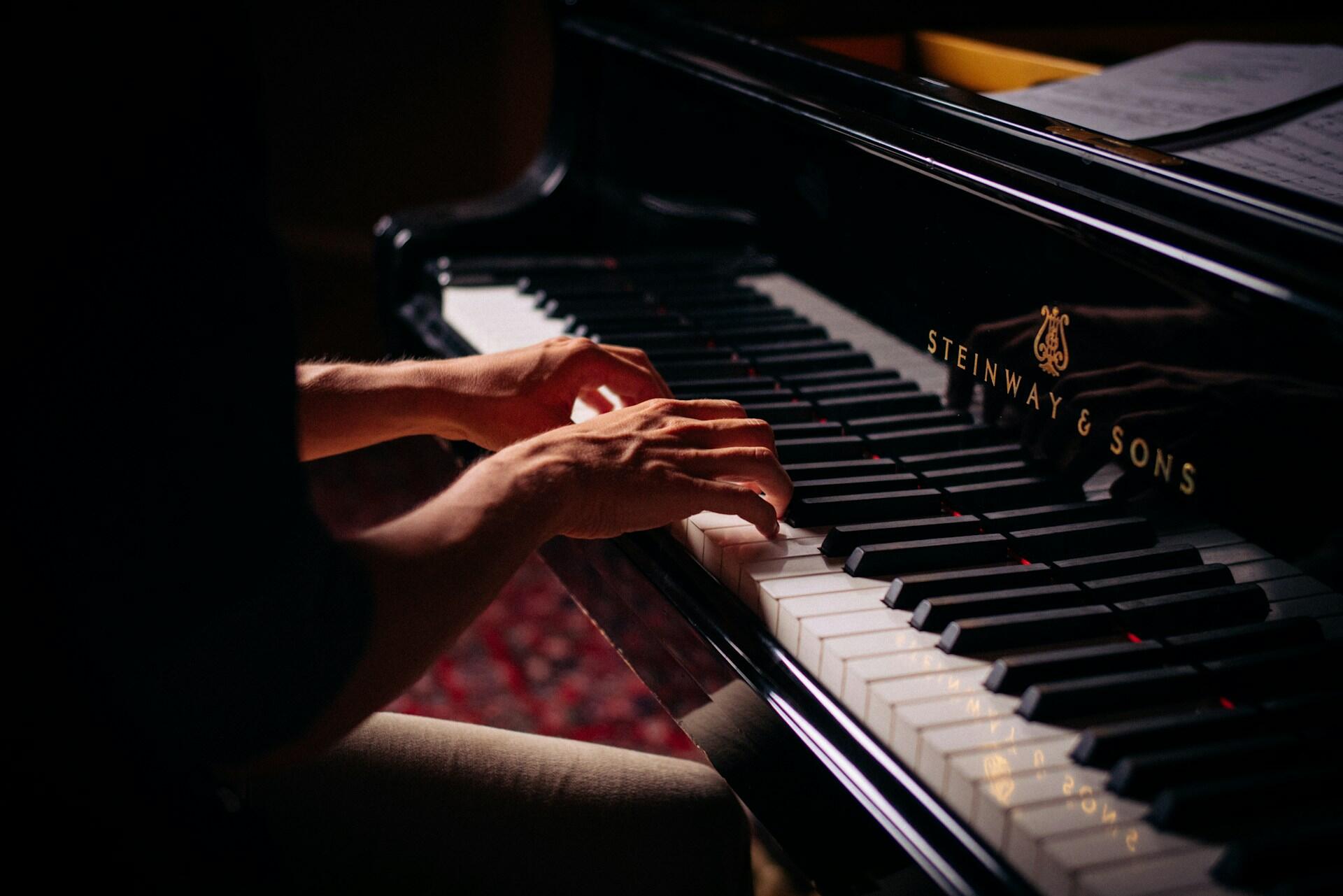

Looking for your first piano melody to play? Need something to help you advance as a pianist? If you're fairly new to the piano, choosing the right pieces to learn will help you advance. Here's our guide with a few song suggestions.
Key Takeaways
- Start with simple, familiar songs so you can focus on notes, rhythm and confidence.
- Choose piano songs that practise one or two skills at a time, such as chords, phrasing or hand coordination.
- Use beginner pieces as stepping stones before moving on to intermediate and advanced repertoire.
- A tutor can help you choose songs that suit your level and avoid building bad habits.


Why Learn Piano Through Songs?
Learning piano takes time. Initially, it might feel like you're not progressing. You have to regularly practice and work through small, repeated actions. For many learners, working towards music they actually want to play can also help support motivation and make practice feel more purposeful.⁴
Learning piano through songs gives your practice a clear goal. Instead of only repeating scales or exercises, each finished song becomes proof that your reading, rhythm, hand coordination and confidence are improving. Research into piano learning also suggests that choosing motivating repertoire can help students feel more connected to their practice.³
What to Know Before You Start
Before you pick some piano songs, think about what you'll have to do to play each song. Simple-sounding pieces are tricky when you're still practising your fingering. While music theory is important, you don't have to master it before you start playing.
Before moving on to faster or more complex piano songs, focus on the basics: reading notes, recognising chords, understanding rhythm and coordinating both hands. A simple song played steadily and cleanly is more useful than a difficult piece rushed with mistakes. Once you can read the staff, follow key signatures and understand basic scales, you will find it much easier to learn new songs.⁵
Notes, Chords and Sheet Music
- Learn how notes are placed on the staff so you can connect sheet music to the keys in front of you.
- Practise simple chords, because many easy piano songs are built around repeated chord patterns.
- Pay attention to key signatures, since they show which notes are usually played as sharps or flats in a piece.⁶
- Count slowly before you speed up, especially when a song looks easy but has an unfamiliar rhythm.
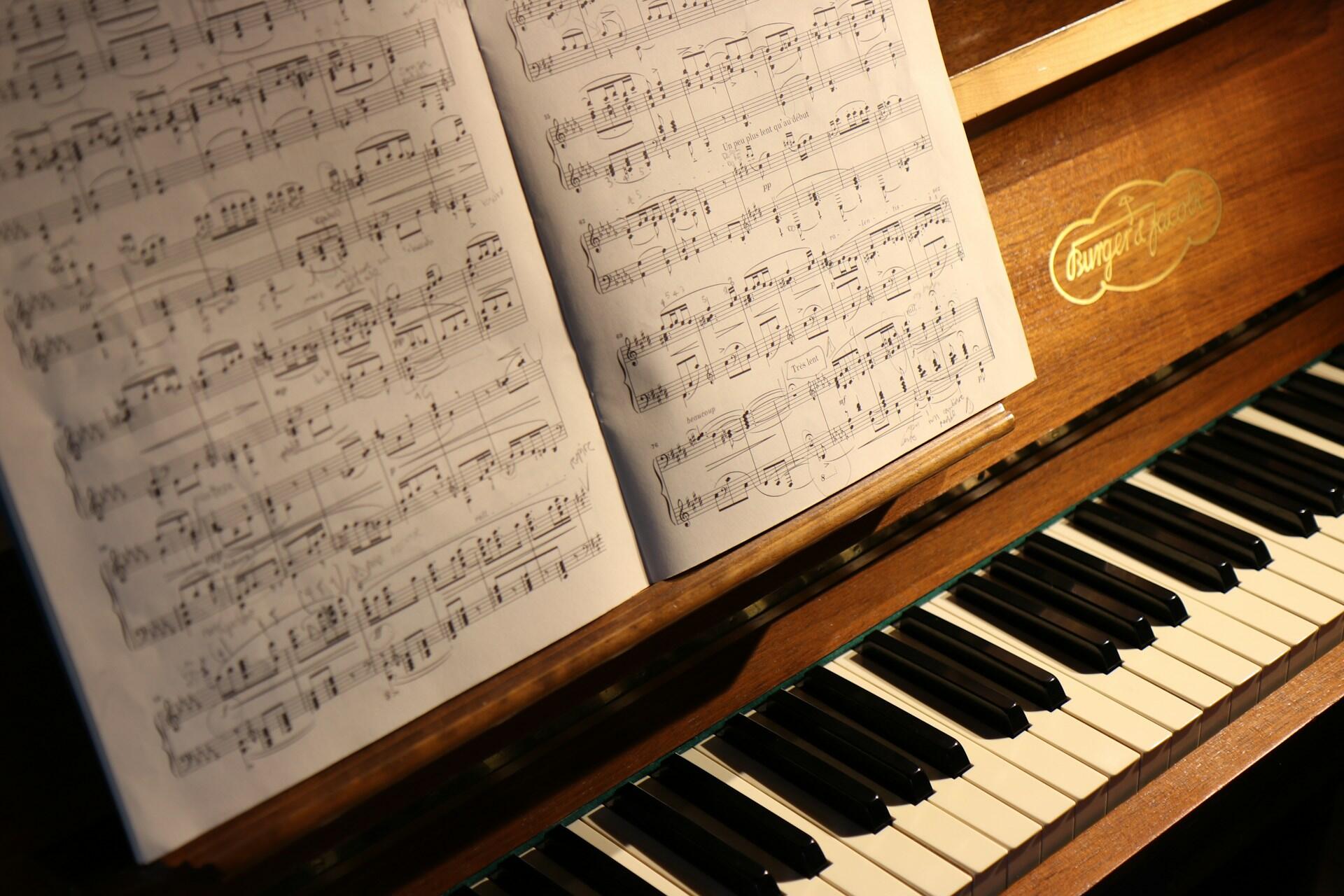
notes in most scales.
Left Hand and Right Hand Coordination
- Start by learning each hand separately before putting both hands together.
- Keep the left hand simple at first, using single notes or basic chord shapes.
- Let the right hand focus on the melody until you feel confident with the tune.
- Use scales and short patterns to get used to moving across the keyboard with both hands.⁷
Easy Piano Songs for Beginners
Are you an absolute beginner sitting down to the piano, having only played a few times? Start with recognisable and simple songs. Look for clear melodies, steady rhythms, and repeatable patterns that work both your right and left hands. Here are our two suggestions.
Twinkle, Twinkle, Little Star
- Most learners already know the melody, so they can focus on finding the notes.
- The rhythm is simple and steady, making it a useful first confidence builder.
- It helps beginners practise playing a clear right-hand melody before adding anything more complex.
Let It Be by The Beatles
- It is one of the most recognisable pop piano songs for beginners.
- The chord movement is approachable, so learners can start practising simple accompaniment.
- It feels more rewarding than a basic exercise because it sounds like a full song quite quickly.

Piano Songs for Intermediate Players
Here are a couple of songs for those progressing. Before you move on to a demanding repertoire, these are songs that pianists starting to find the instrument comfortable can consider playing. It's worthwhile looking for published sheet music, and graded repertoire lists can also help you choose pieces that feel challenging but still realistic for your current level.²
Hello by Adele
- It introduces emotional phrasing without becoming too fast or technically overwhelming.
- The piano part provides learners with useful practice in chord changes and steady timing.
- It is a significant step up for players ready to move beyond very easy piano songs.
Look for published sheet music for Hello for beginners. This should help you learn a version of the song that's appropriate for your level. The same is true of many different pieces.
Sonatina in G, Anh. 5, No. 1
- It gives intermediate players a clear route into classical piano repertoire.
- The piece helps develop hand control, phrasing and light articulation.
- It is useful for learners who want to build the skills needed for graded piano pieces.
If you're feeling a bit adventurous, you could also try Havana by Camila Cabello. This is a great option for any learners who want to practise rhythm and their left-hand movement with more pop-focused music. This is a nice step after you've mastered some slower beginner songs, as this one required some groove, too. Keep the pulse steady while changing patterns. If you're using published sheet music, make sure you compare the arrangement to your current level before tackling the full song. You'll find that some versions are more complex than others, but there's printed sheet music for the most popular songs for a range of different levels.
Advanced Piano Songs to Work Towards
Once you start getting good, look to challenge yourself. Musicality should be part of your playing by this point. You shouldn't just be hitting the right notes; there should also be a performance aspect to your playing.
Clair de Lune by Claude Debussy
- It is a famous advanced piano piece that rewards patience, control and musical expression.
- The rhythm, texture and dynamics make it a good long-term goal for developing pianists.
- It helps advanced players work on tone, interpretation and smooth movement across the keyboard.
The Entertainer by Scott Joplin
- It introduces players to the lively rhythm and character of ragtime piano.
- The piece challenges coordination between the left and right hands.
- It is a fun, advanced goal because it sounds impressive and recognisable when played well.
| Level | Song | Why it works | Main skill practised |
|---|---|---|---|
| Beginner | Twinkle, Twinkle, Little Star | A familiar melody with a simple rhythm, making it easier for beginners to focus on finding notes. | Right hand melody |
| Beginner | Let It Be by The Beatles | A recognisable pop song with approachable chord movement and a rewarding full-song feel. | Simple chords and timing |
| Intermediate | Hello by Adele | A modern piano-led song that introduces emotional phrasing without becoming too fast. | Chord changes and expression |
| Intermediate | Sonatina in G, Anh. 5, No. 1 | A short classical piece that helps learners develop hand control, phrasing and light articulation. | Classical phrasing |
| Advanced | Clair de Lune by Claude Debussy | A famous advanced piece that rewards patience, control, tone and musical interpretation. | Dynamics and interpretation |
| Advanced | The Entertainer by Scott Joplin | A lively ragtime piece that challenges rhythm, syncopation and coordination between both hands. | Syncopation and coordination |
How to Choose the Right Piano Song for Your Level
You have to be honest with yourself to pick songs. You need to know whether something's too easy or uncomfortable. Every piece you learn to play should give you a skill or two to work on. It might be smooth chord changes, a cleaner rhythm or better hand coordination.
The best piano song to learn is not always the most famous one. Choose pieces that stretch your skills without overwhelming you, especially if you are building towards graded repertoire or more advanced classical music. Piano syllabi from ABRSM and Trinity show how carefully pieces are grouped by level, which is a useful reminder that song choice should match your current technique.¹
If you're taking lessons, levels can help you. There are graded repertoire lists. Look to these. Before you do any grades, start with the lowest levels. From there, you can pick pieces based on the level you can currently master.
ABRSM piano grades.
Start Learning Piano Songs with Support
If you're looking for help with your piano playing, you can look for a piano tutor on Superprof. There are piano tutors all over New Zealand and around the world who can help you. With most offering the first session for free, you can even try a few.
References
- ABRSM. “Practical Grades: Piano Syllabus 2025 and 2026.” ABRSM, 2024, https://www.abrsm.org/sites/default/files/2024-06/Piano%202025%20%26%202026%20Prac%20syllabus%2020240524_access.pdf. Accessed 23 May 2026.
- Trinity College London. “Piano Repertoire List: Face-to-Face and Digital Graded Exams from 2023.” Trinity College London, Jan. 2025, https://www.trinitycollege.com/resource?id=10125. Accessed 23 May 2026.
- Coutts, Leah. “Selecting Motivating Repertoire for Adult Piano Students: A Transformative Pedagogical Approach.” British Journal of Music Education, Cambridge University Press, 2018, https://www.cambridge.org/core/journals/british-journal-of-music-education/article/selecting-motivating-repertoire-for-adult-piano-students-a-transformative-pedagogical-approach/BB0811C58E3C43CD1BB09509CB228CF4. Accessed 23 May 2026.
- Cheng, Zhen. “Improving Students’ Intrinsic Motivation in Piano Learning.” ERIC, 2016, https://files.eric.ed.gov/fulltext/EJ1146385.pdf. Accessed 23 May 2026.
- “The Staff, Clefs, and Ledger Lines.” musictheory.net, https://www.musictheory.net/lessons/10. Accessed 23 May 2026.
- “Key Signatures.” musictheory.net, https://www.musictheory.net/lessons/24. Accessed 23 May 2026.
- “Major Scales, Scale Degrees, and Key Signatures.” Open Music Theory, https://viva.pressbooks.pub/openmusictheory/chapter/major-scales/. Accessed 23 May 2026.
- “Hello by Adele: Digital Sheet Music.” Musicnotes, https://www.musicnotes.com/sheetmusic/adele/hello/MN0156888. Accessed 23 May 2026.
- “Havana by Camila Cabello Feat. Young Thug: Digital Sheet Music.” Musicnotes, https://www.musicnotes.com/sheetmusic/camila-cabello-feat-young-thug/havana/MN0177083. Accessed 23 May 2026.
- “Suite Bergamasque, CD 82: Clair de Lune.” International Music Score Library Project, https://imslp.org/wiki/Suite_bergamasque%2C_CD_82_%28Debussy%2C_Claude%29. Accessed 23 May 2026.
Summarise with AI:
Did you like this article? Leave a rating!

 Loading...