

For a lot of people, university years are not just a period spent reading books and revising for exams but also a time when they met a lot of new people, discovered new things and learnt to live independently of their parents. A great idea to make the most of these few years is to do an undergraduate degree abroad.
When we live in another country, we have even more opportunities to expand our horizons and explore the world. It is also a great way to develop a better sense of responsibility because international students find themselves far away from their families and have to look after themselves on their own.
Additionally, an international experience can be a great booster for students' future careers, whether in New Zealand or in other countries. A lot of companies look for employees who are able to interact in multicultural environments and have a good understanding of how foreign markets work.
Find out more about other countries where you can study with NCEA.
So, entering a university outside New Zealand can be an excellent idea, but what country can students choose? As it happens, New Zealand has a quite prestigious secondary education system, so its end-of-school qualifications are recognised all over the world.
In this article, we will try and find out how things are for those who would like to study in Europe. This continent is especially popular among students, as it has some of the most prestigious universities in the world offering an exceptional choice of undergraduate programmes.
So, let's have a look at what requirements NCEA students will have to meet to study in Europe and what are the best countries to apply for entry to university.



Lisbon Recognition Convention
For historical reasons, different countries in the world can have pretty different education systems. School students don't spend the same number of years to get their secondary school qualification, they may sit completely different exams and the entry to university may be based on various criteria.
Learn about what NCEA is equivalent to in other countries.
As a result, the international movement of students might have been pretty difficult. But luckily, many countries understood the importance of international student exchange and took measures to make it easier.
For instance, such an initiative was undertaken at the level of the European Union and led to the signing of the Lisbon Recognition Convention. The main idea of the convention is that the signatory countries should fairly recognise one another's education qualifications and allow people to apply for entry to university or work with a foreign diploma.
The Convention was ratified by all the member states of the European Union, except for Greece and Monaco, and a few other countries, including New Zealand. This is great news for New Zealand students because it means that their NCEA qualification can be accepted in a lot of places, including some of the most famous universities in the world, like Cambridge or Oxford.
However, even though the NCEA qualification is recognised by most European Universities, there may be additional requirements for foreign students to apply for entry successfully. For instance, it may be necessary that you speak the language of the country if the programme you are aiming at is not in English or there may be additional entrance tests.
For US college admissions, language might not be the biggest problem for NZ students but instead the conversion of the NCEA.
So let's have a look at some of the most popular destinations in Europe among students and see in more detail what you'll need to enrol in an undergraduate course there.
Studying in Ireland or the UK
Two especially popular European destinations for New Zealand students are the UK and Ireland. As both are mostly English-speaking countries and have prestigious education institutions, doing an undergraduate degree there can become an excellent choice.
Both countries are signatories of the Lisbon Recognition Convention and recognise the NCEA qualification. With NCEA level 3 and University Entrance, you can apply to most institutions in the two countries. Generally, you will not be required to provide any additional documents, such as English language certificates, because NCEA already proves your good command of the language as well as other abilities.
NCEA is considered equivalent to A-levels in the UK and can serve to enter top universities.
However, if you are interested in entering one of the top UK universities, like Cambridge or Oxford, your NCEA results can take particular importance. For example, for some degrees, an NCEA qualification endorsed with Excellence may be required. What's more, the university may have a look at the courses you took to make sure they are in line with the undergraduate programme you are applying for.
Excellence endorsement at NCEA is a quite high education achievement because you will need to gain at least fifty level 3 credits at Excellence. This usually takes a lot of hard work but it can also be worth it, given you can enter Cambridge or Oxford afterwards.
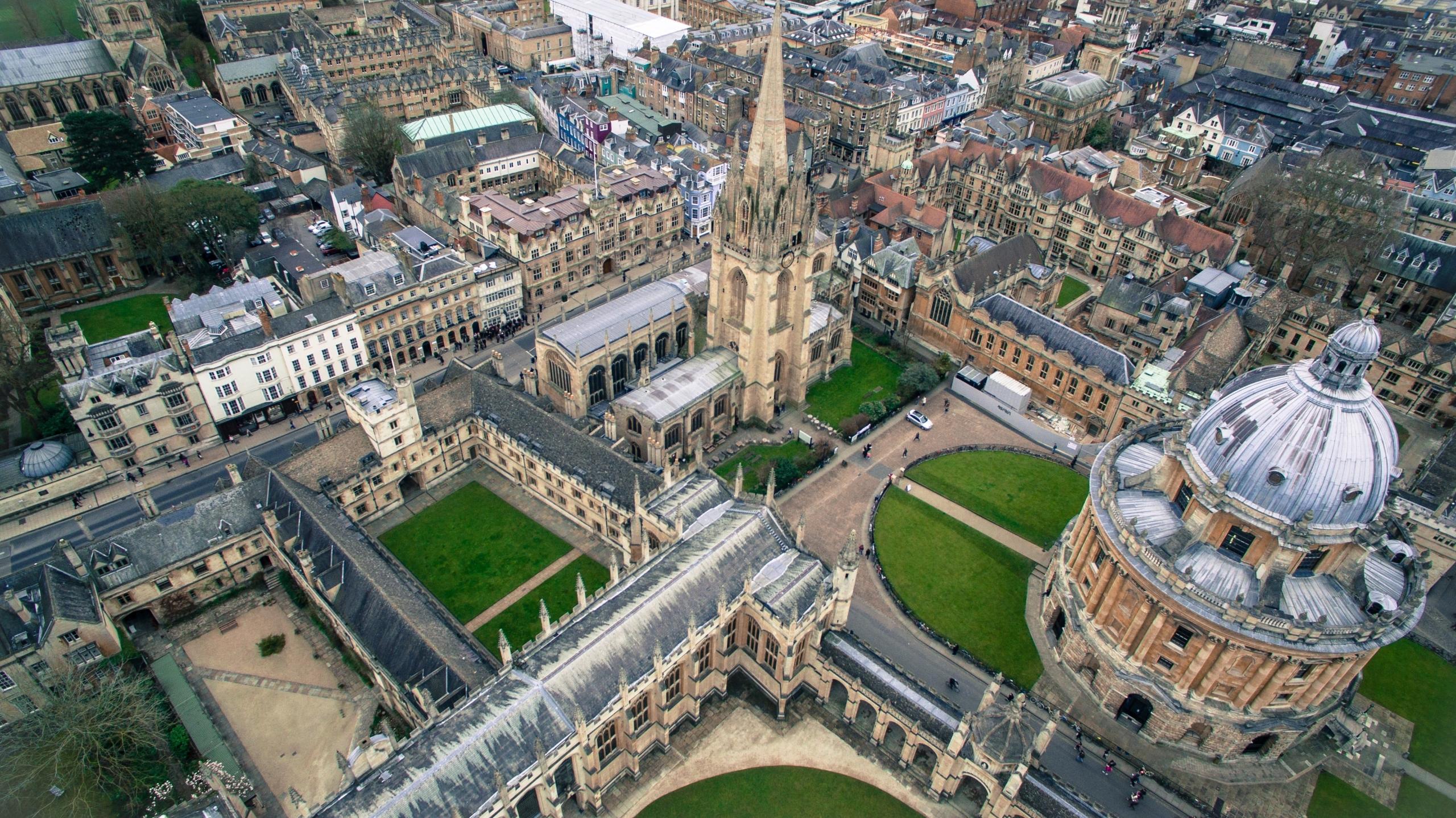
Studies in Continental Europe
If English-speaking countries like Ireland or the UK seem to be an easy solution to you or you simply want to discover something different, there are plenty of excellent universities in continental Europe where students with NCEA qualifications can apply.
Here are some of the most popular places among students from New Zealand.
You can also enter a US university with NCEA.
Germany
Germany is Europe's biggest economy and has some of the best universities on the continent. But what makes Germany especially attractive for foreign students is that studying in most of its universities is almost completely free of charge. All you'll have to pay are some administrative fees and you can study whatever course you want, given you've met the entrance requirements.
Additionally, a lot of German institutions offer undergraduate degrees in English that can be taken up by both international and home students. This can be a great opportunity to continue your studies right after school and if you want to pick up German, you will be offered supplementary courses. It will be a great plus later on.
France
France is not only one of the most visited countries in the world by tourists but also the second country in Europe by the number of international students. It has famous world-level universities and is famous for its rich scientific and artistic tradition. Whatever course you are interested in taking, France can be the right place to achieve excellent academic results.
New Zealand qualifications are accepted by most French universities and the cost of studies is significantly lower than in the UK or other English-speaking countries.
Studying in France can overall be a great experience, the only problem is that most public institutions in the country require undergraduate students to speak French. This can be a plus if you want to improve your level of language, but if you've never studied the language at all, it may take several years before you meet the requirements for entry to a university.
Scandinavian countries
Another great destination for international students is Scandinavian countries. These are quite for investing a lot of money into education, so their universities tend to meet the highest international standards. What's more, locals usually have a very good level of English, so you won't have difficulty getting by with it, even though speaking the local language can always be a plus.
Overall, international undergraduate students tend to have great experiences in Northern Europe, the only problem is that the cost of studies can often be high. First of all, Scandinavian countries are in themselves quite expensive, so rent and food are likely to take you a lot of money. What's more, tuition fees in Sweden and Denmark can be high (universities in Norway and Iceland don't charge any tuition fees).

To conclude, Northern Europe can be a great destination for international students. Your university is likely to accept your NCEA qualification and take you in. However, you should be ready for high-level expenses, so finding a student job can be a great plus.
Let's see how NCEA is converted to ATAR to study in Australia and achieve exceptional academic results.
Get ready for university-level studies with a Superprof tutor
If you are interested in getting higher education in Europe but feel like you might not be ready for a course, a good solution can be to take lessons with tutors.
They will provide you with personalised help to achieve the best possible results in each NCEA course and can assist you in learning a foreign language if needed.
All you need is to connect to Superprof and look for the best tutors in New Zealand online. With them, your academic results will quickly go up and the idea of going abroad to study at university won't seem that impossible anymore...you could even start considering studying at Havard.
Summarise with AI:
Did you like this article? Leave a rating!


 Loading...