
The Māori creation story is central to the culture. While it explains how the world began, it also outlines relationships between people, land, and the spiritual realm. It doesn't separate humanity from nature, but instead places them within a broader family that includes the earth, sky, oceans, and forests. This story, and the beliefs attached to it and taught through it, continues to shape Māori identity, values, and responsibilities.
Key Takeaways
- The Māori creation story explains the origins of the world through a gradual process, moving from potential and darkness into light and life rather than a single moment of creation.
- Ranginui and Papatūānuku, the Sky Father and Earth Mother, sit at the centre of the story, with their separation allowing space, balance, and growth.
- The atua represent natural and human forces, showing why harmony and conflict coexist in the world.
- Creation stories differ between iwi, reflecting place, environment, and whakapapa, while sharing common foundational themes.
- Rather than being a distant myth, the Māori creation story continues to shape identity, responsibility, and relationships with the natural world today.


The Three Stages of Creation in Māori Mythology
Māori creation traditions describe the world emerging gradually rather than appearing fully formed. These stages emphasise growth, tradition, and change over time, across a layered structure. This reflects a worldview in which existence is shaped by process rather than sudden transformation.
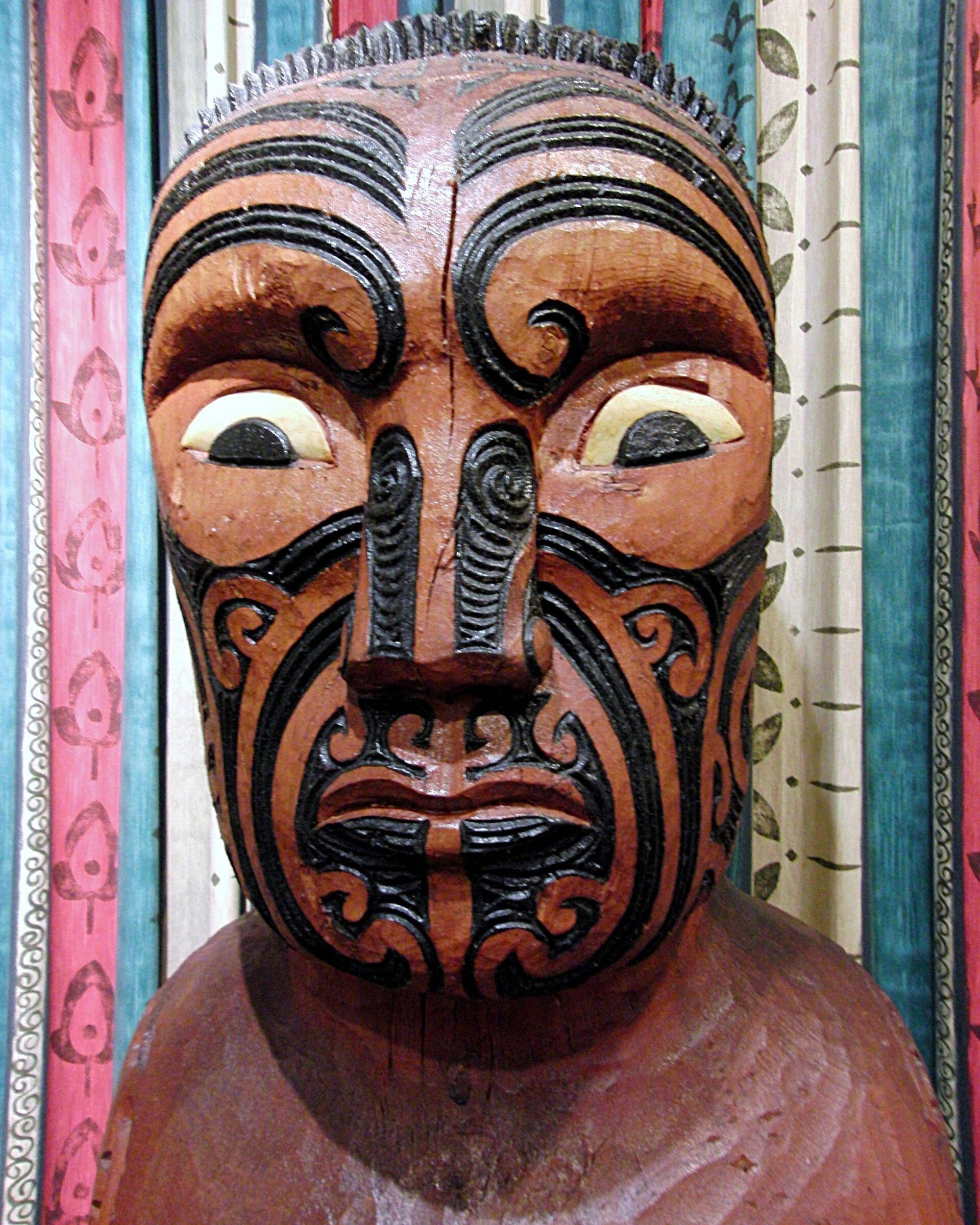
Te Kore – The Realm of Potential
In the Māori creation story, Te Kore is a state of unlimited possibility. It shouldn't be understood as emptiness. It's the conditions that allow creation to occur, containing the seeds of all future life and form. Potential is powerful in Māori thought, with Te Kore acknowledging that beginnings are usually unseen and intangible.
Te Pō – The Long Night of Becoming
Te Pō is the extended period of darkness, growth, and gestation. This is when forms begin to take shape. They're not visible or defined yet. Again, darkness here isn't negative. It's necessary to provide the space needed for development before life arrives.
Te Ao Mārama – The World of Light and Life
Finally, we have Te Ao Mārama; the emergence of clarity, space, and understanding. With the separation of Ranginui and Papatūānuku, light can enter the world and life can flourish. This stage represents awareness, balance, and the beginning of human existence.
realms that form the foundation of Māori creation beliefs: Te Kore (potential), Te Pō (darkness), and Te Ao Mārama (the world of light and life).
Ranginui and Papatūānuku – The Sky Father and Earth Mother
Creation is not a single event but a process of becoming, moving from potential into being.
Rev. Māori Marsden, Māori theologian
In Māori creation traditions, Ranginui and Papatūānuku are the original parents. Their relationship shapes the world's physical structure. Their story is one of love, tension, and sacrifice.
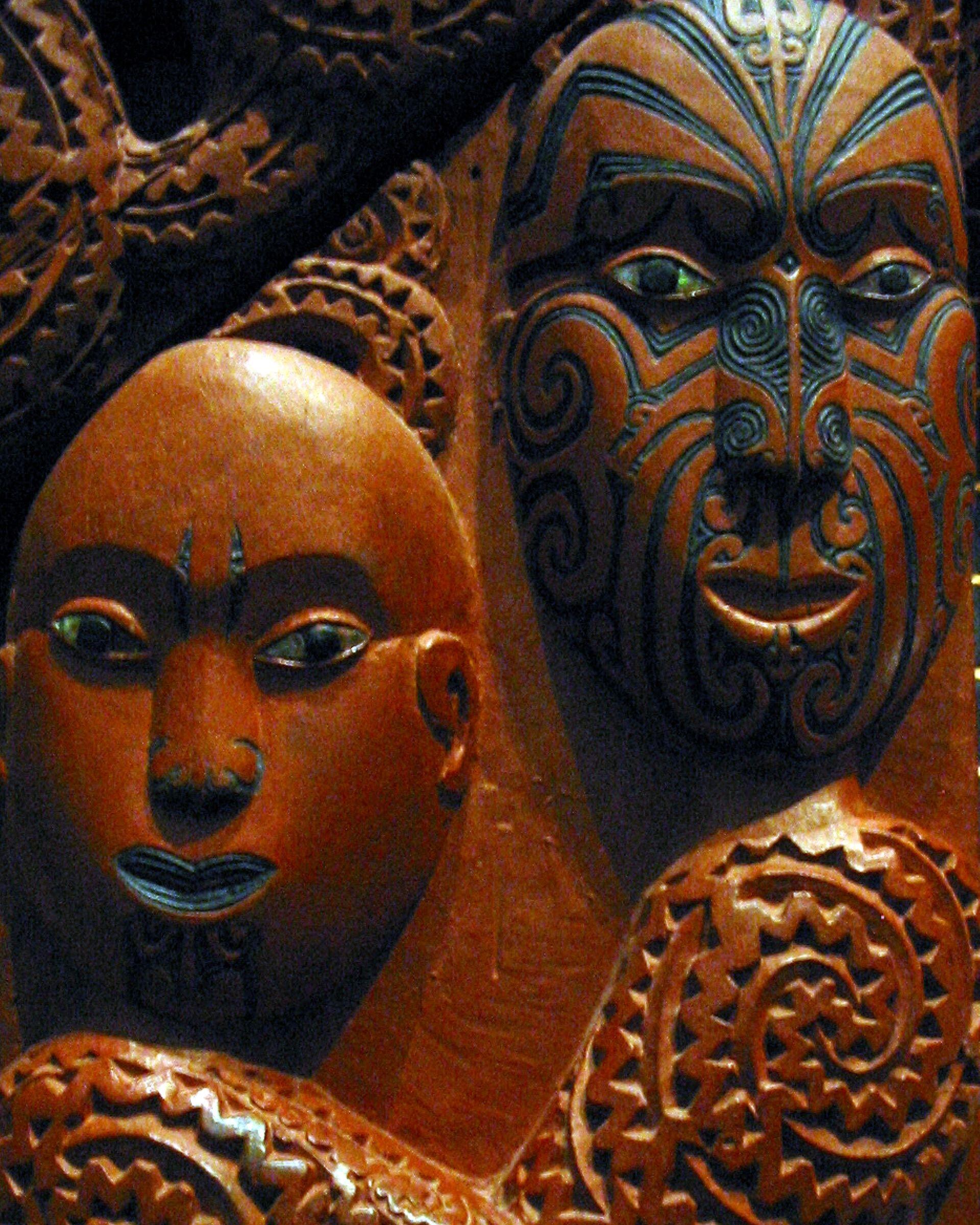
The Embrace of the Parents
Initially, Ranginui and Papatūānuku were locked in an embrace so close that their children had to live between them in a world without light or space. Despite the limited darkness, this isn't considered a bad period. Instead, it's one of unity and shared experience.
The Separation That Brought Light
Ultimately, the parents decided that to allow life to grow, they'd have to separate. It was a difficult decision, and Tāne Mahuta's success in pushing Ranginui and Papatūānuku apart is what created the space for light, air, and movement. This was a turning point for the world.
The Children of Rangi and Papa
atua: Tāne Mahuta, Tangaroa, Tāwhirimātea, Tūmatauenga, and Rūaumoko.
Ranginui and Papatūānuku's children represent the different forces in the natural and human worlds. Each atua responds differently to their parents' separation. These reactions reveal distinct values and roles, and together they explain why both harmony and conflict exist in our world.
Tāne Mahuta – God of Forests and Light
Tāne Mahuta is the atua who enabled creation by separating his parents. His actions helped forests to grow, which is where you might encounter patupaiarehe. He's a bringer of balance and a protector of life.
Tangaroa, Tāwhirimātea, and Tūmatauenga
Tangaroa, Tāwhirimātea, and Tūmatauenga each have different associations. Tangaroa is associated with the sea and the ocean's unpredictable, powerful nature. Tāwhirimātea's response to the separation showed the emotional cost of change, expressed through storms and winds. Tūmatauenga, who's often associated with humanity, represents strength, survival, and the challenges of living in the world.
Conflict, Consequences, and Balance in the World
The Māori tradition explains the world as one that's not in perfect harmony. The world is shaped by the tension between different forces. These conflicts are used to describe natural events and to show that balance must be maintained.
Tāwhirimātea’s Anger
Tāwhirimātea was angry at the separation of his parents. This anger is expressed through winds and storms. His actions disrupt land and sea.
Humanity’s Place Among the Atua
Humans are connected to Tūmatauenga. Strength and adaptability are themes that reflect the human experience. Humans are in the same family as the atua, rather than above them. Humans inherit both responsibility and vulnerability within the natural world.
In Māori tradition, an atua is not simply a "god" in the Western sense. Atua are powerful ancestral beings who represent natural forces, domains of life, and relationships within the world. They are closely connected to whakapapa, linking the natural environment, the spiritual realm, and human communities.
In the Māori creation story, atua such as Tāne Mahuta, Tangaroa, Tāwhirimātea, and Tūmatauenga are the children of Ranginui and Papatūānuku. Each atua embodies a particular realm, forests, seas, winds, or human activity, and their actions help shape the structure and balance of the world. Rather than being distant rulers, atua are understood as relatives, reinforcing a worldview based on connection and responsibility.
Different Iwi Versions of the Māori Creation Story
The Māori creation story differs across iwi. While the broader themes are essentially the same, different iwi have preserved distinct telling, which often reflect their environment, history, and whakapapa. Place and community are central to these stories, as they are in the stories of taniwha.
The Māori creation story is not just a myth about the distant past. It reflects Te Ao Māori, the Māori worldview, which understands the world as interconnected through whakapapa. People, land, oceans, plants, animals, and spiritual forces are all related rather than separate.
This worldview emphasises balance, reciprocity, and respect. The separation of Ranginui and Papatūānuku explains not only how light entered the world, but also why humans have obligations to care for the environment. Concepts such as kaitiakitanga (guardianship) emerge directly from these creation traditions, shaping Māori approaches to land, resources, and community life.
Regional Variations and Oral Tradition
Since these stories have been preserved through oral tradition, they've adapted to the groups that maintain them. Certain variations may emphasise different atua or events depending on the groups' landscapes and values. These differences should be thought of as expressions of living knowledge rather than contradictions.
The Role of Storytelling Across Generations
Creation traditions remain relevant across time through storytelling. The narration, performance, and teaching of them allow each generation to reinterpret the stories. This process ensures that the stories remain connected to contemporary life in the same ways they did when they were first told.
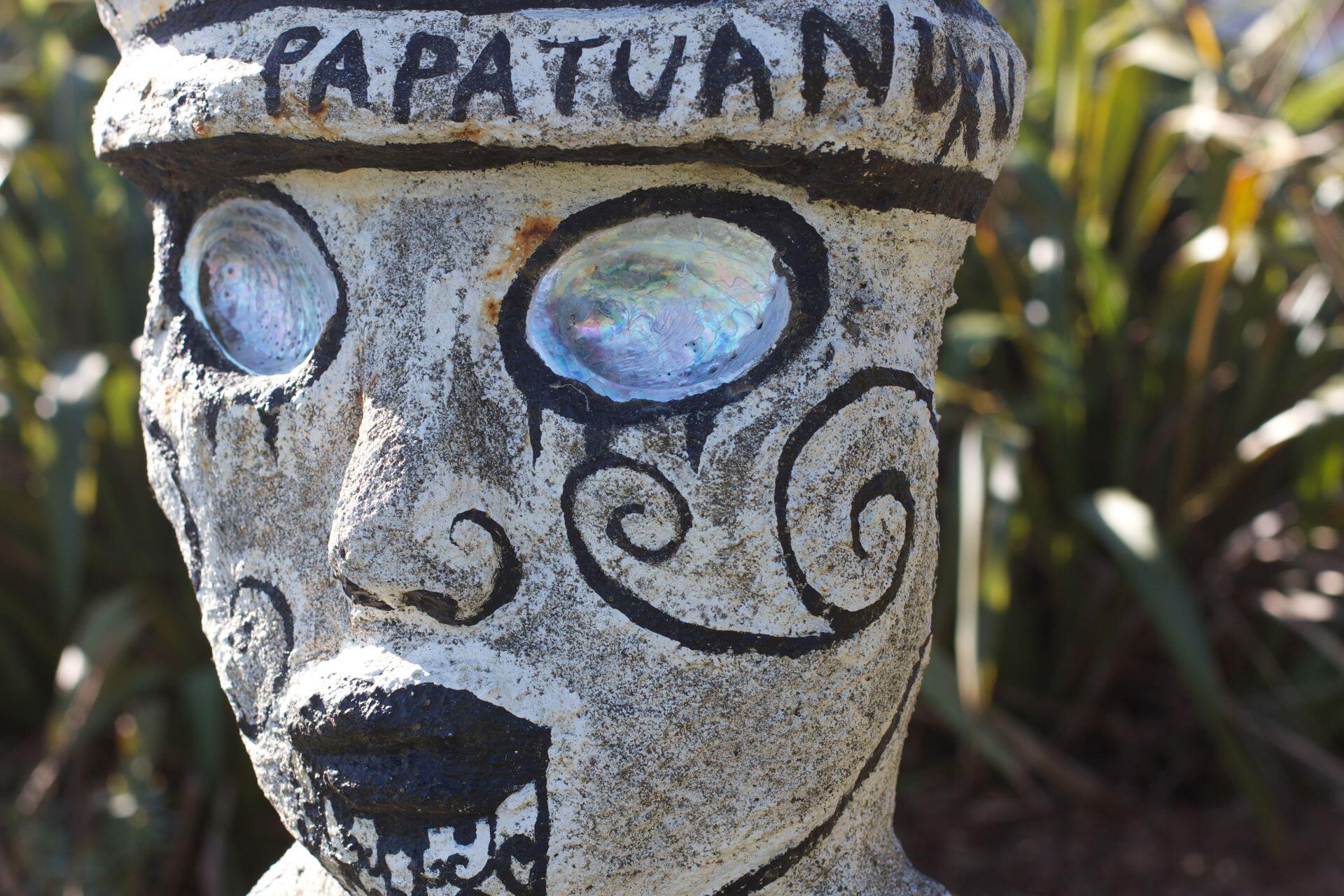
The Māori Creation Story in Art, Language, and Culture
Māori cultural expression regularly features creation themes and manaia. Art, language, and ceremony all involve the imagery and relationships from these traditions. This allows these stories to reinforce shared understanding and identity, even across iwi.
One of the most enduring influences of the Māori creation story is its connection to kaitiakitanga, the principle of guardianship and care for the natural world. Because humans descend from the same ancestral line as the atua and the natural environment, people are not seen as masters of nature, but as part of it.
The conflicts between the atua, particularly Tāwhirimātea's ongoing storms and Tangaroa's turbulent seas, are often understood as reminders of imbalance. These stories reinforce the idea that respectful relationships with the land, waters, and skies are essential. In this way, the creation story continues to guide environmental ethics and cultural values in Aotearoa New Zealand today.
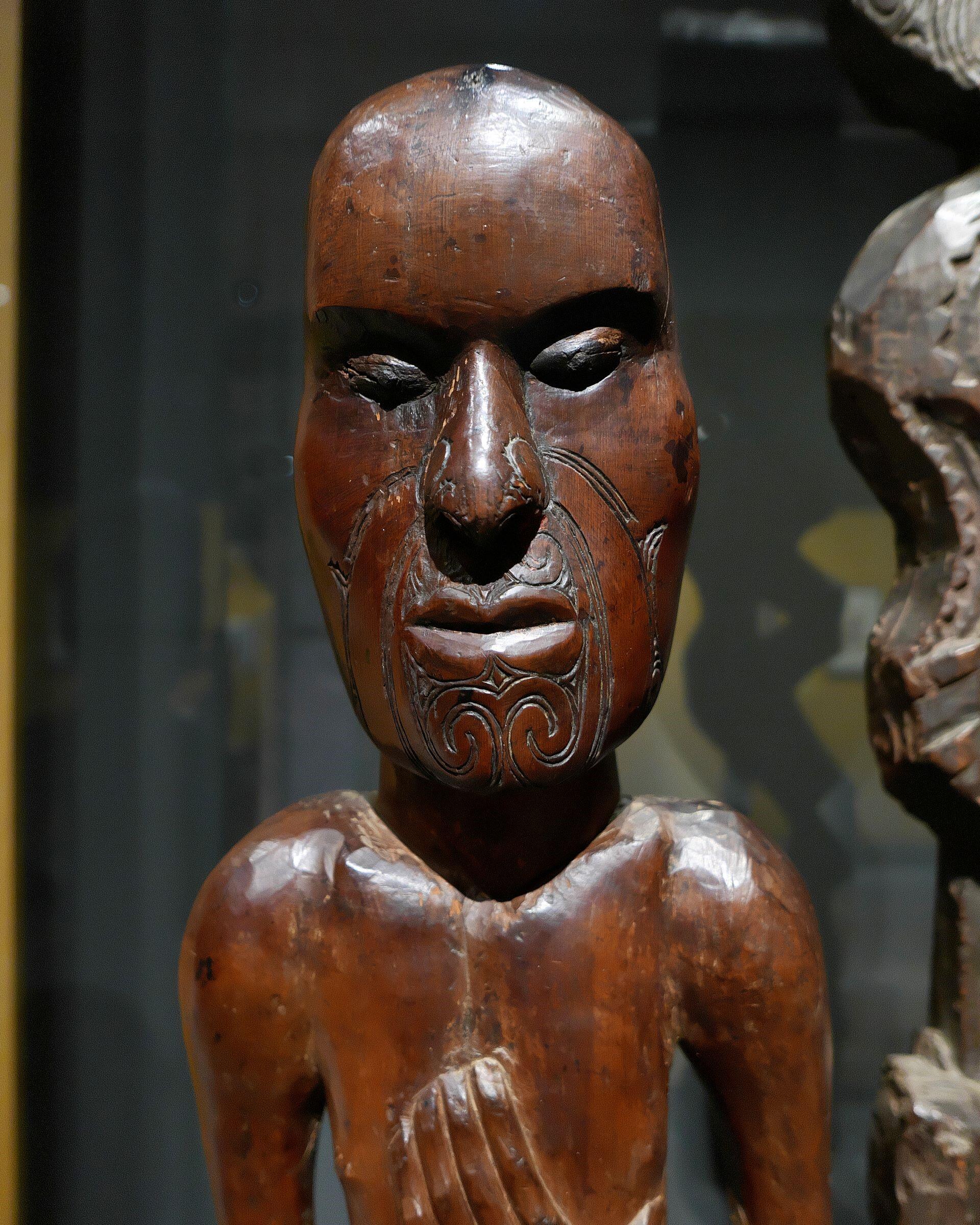
Creation Themes in Carving and Weaving
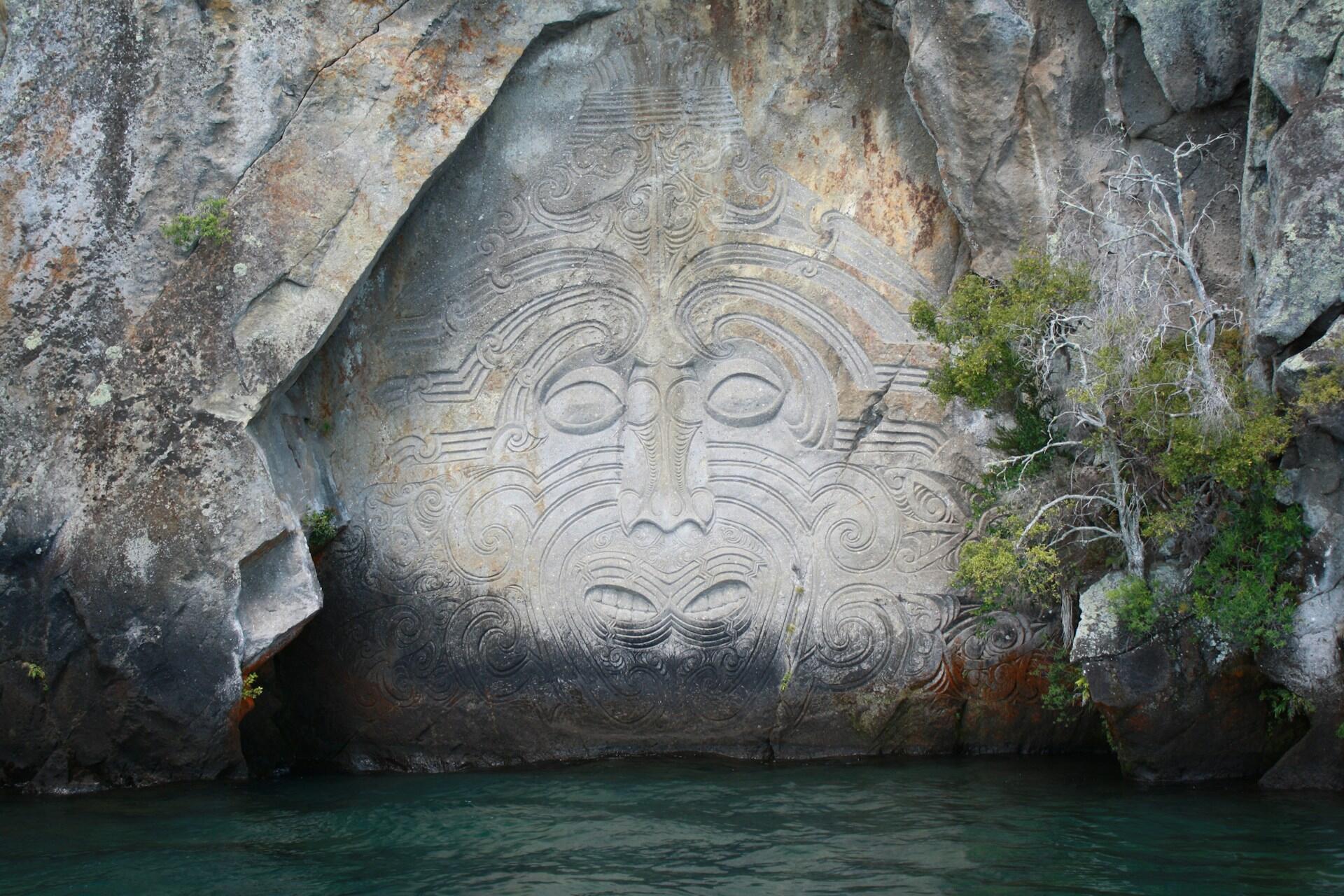
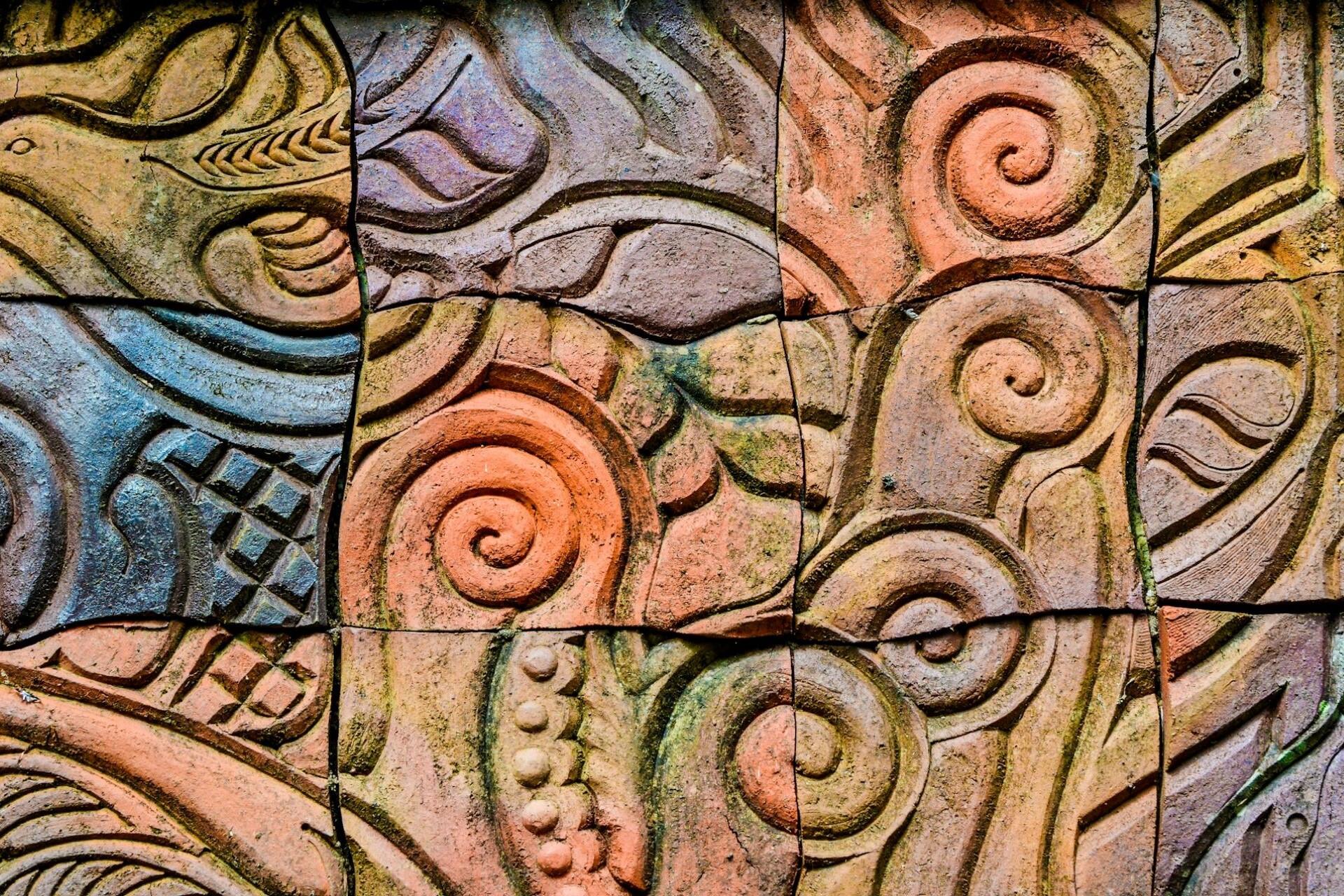
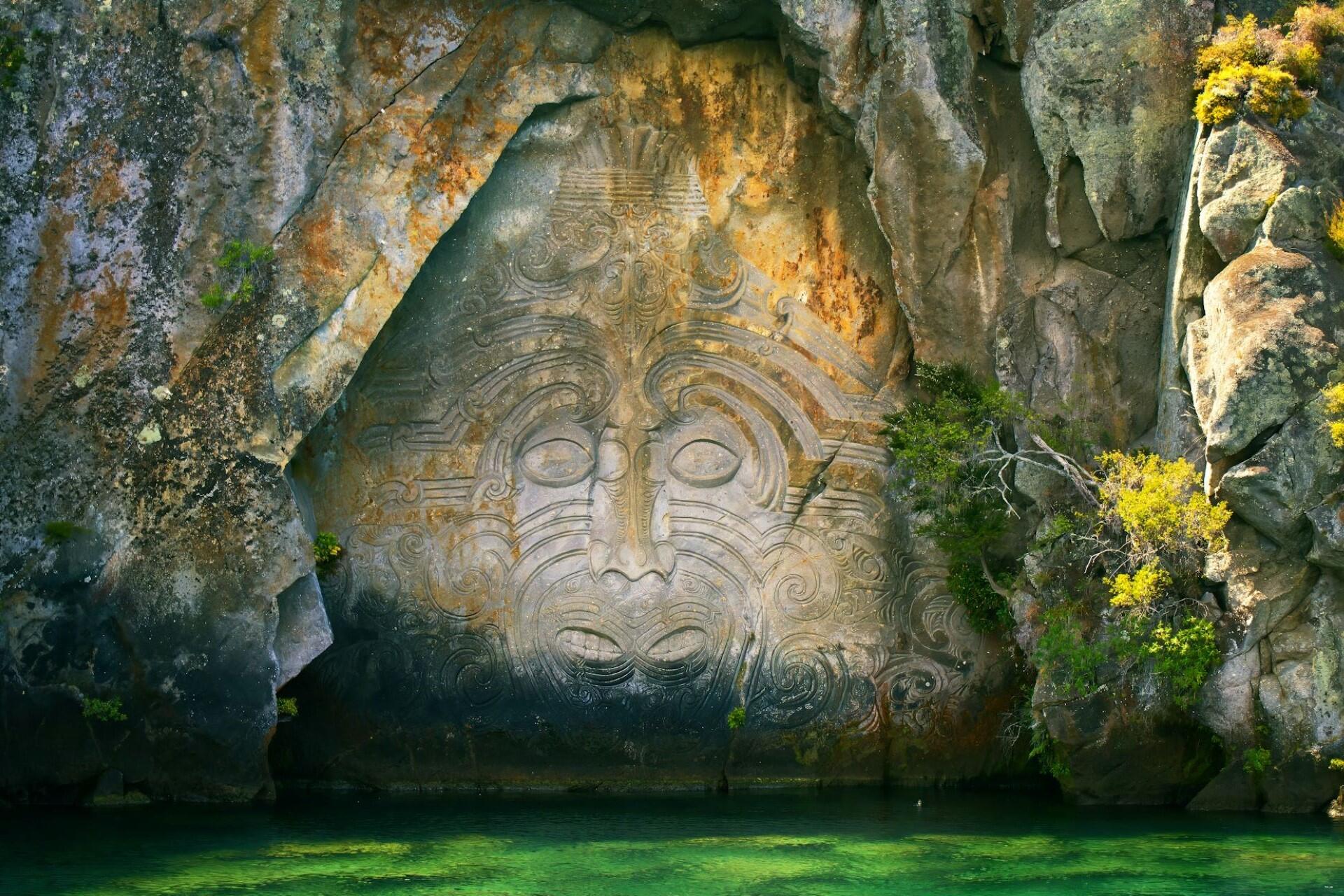
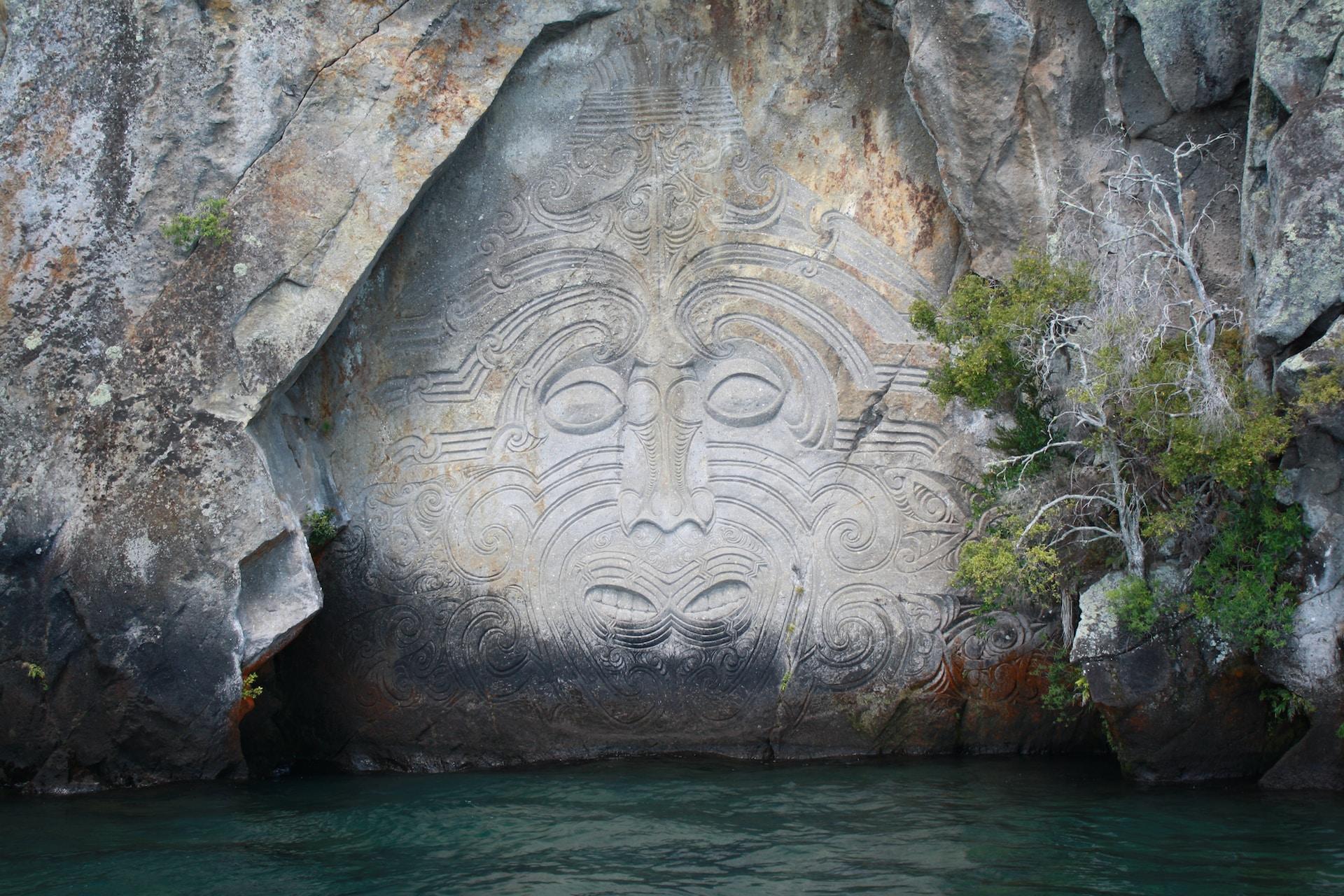
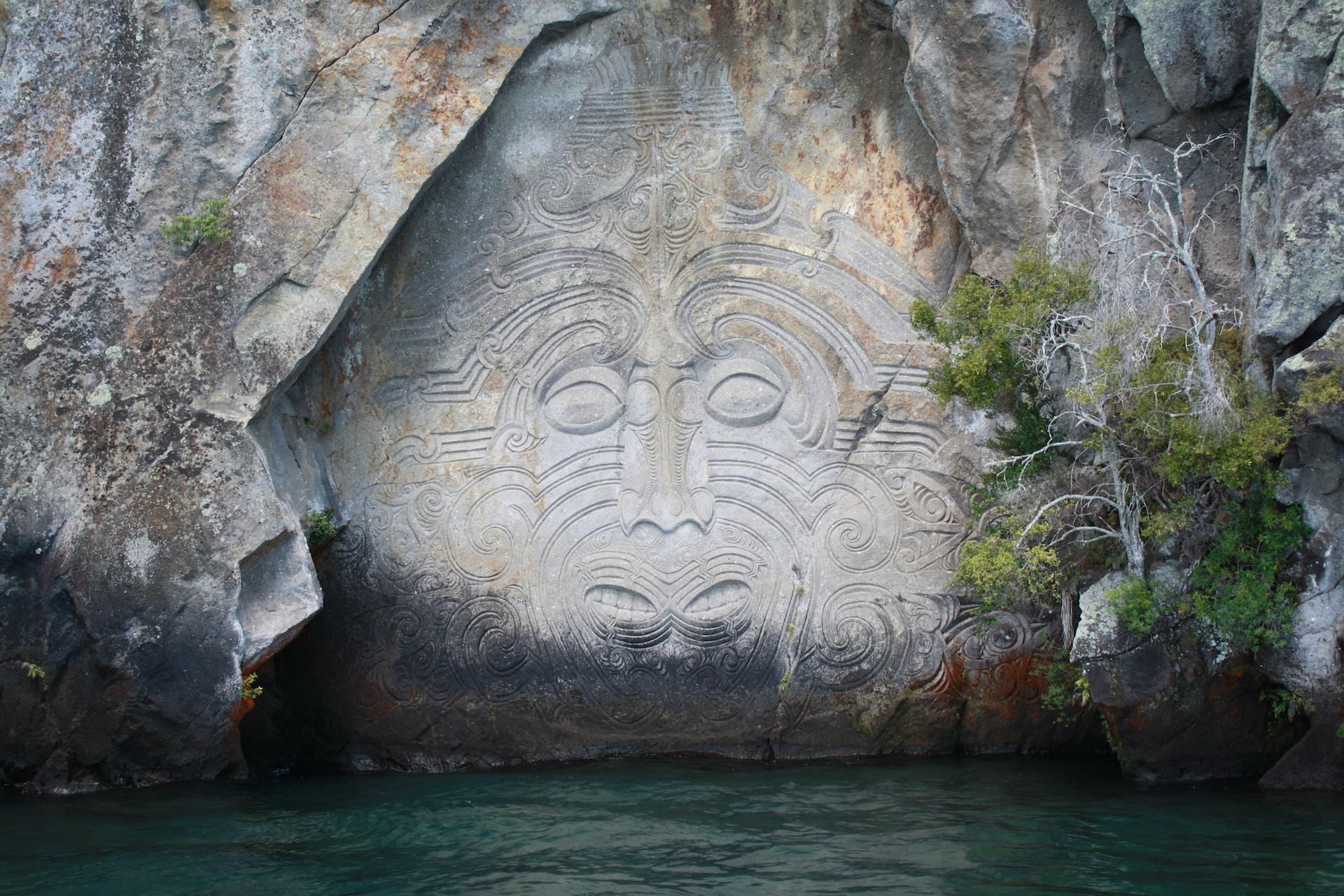
Carving and weaving are areas where the creation stories are often seen. It's common to see carvings depicting atua (ancestors) and the symbolism associated with creation. Weaving can incorporate patterns from genealogy and the natural world, serving as visual storytelling in their own right.
Creation Stories in Modern Māori Identity
Today, creation stories continue to shape Māori perspectives on identity and belonging. They're used in education, language revitalisation, and cultural practice. Ancestral knowledge can help ground modern life in these stories and their cultural continuity.
A Living Story, Not a Distant Myth
Ultimately, the Māori creation story is a living tradition. It isn't a relic of the past. Its themes of connection, balance, and responsibility continue to guide relationships between people and the environment. The people who tell and experience the stories understand creation as an ongoing process, with the story remaining relevant even as the world continues to change.
Summarise with AI:
Did you like this article? Leave a rating!

 Loading...