
Ranginui and Papatūānuku are central to Māori belief. In Māori cosmology, they're the parents from whom all life descends. Their story explains how the physical world came to be and how relationships between people, land, and the spiritual realm are understood. They're not distant or abstract figures; they're part of whakapapa, with the natural world part of a shared ancestry. The story of Ranginui and Papatūānuku isn't one from the past either; it's a living and breathing story that continues to shape Māori perspectives on balance, responsibility, and connection. It forms a foundation for cultural values that extend into everyday life in Aotearoa.
Key Takeaways
- Ranginui and Papatūānuku are the sky father and earth mother in Māori belief, forming the ancestral foundation of the natural and spiritual world.
- Their separation allowed light, space, and life to emerge, but did not break the bond between sky, earth, and their children.
- The atua, as children of Ranginui and Papatūānuku, explain natural forces, conflict, and balance within the world.
- Māori creation traditions emphasise whakapapa, viewing people, land, and environment as part of a shared family.
- The story remains a living tradition that continues to shape Māori values, identity, and environmental responsibility today.


The First Parents of the World
Ranginui, the sky father, and Papatūānuku, the earth mother, are the original source of all existence in Māori tradition. The atua who govern forests, seas, winds, food, and human activity all came from their union. Their relationship is the framework for understanding how different parts of the world relate to one another. Since the sky and the earth are parents, Māori traditions place greater emphasis on independence rather than hierarchy. The world isn't divided into separate elements, but held together by relationships demanding care and respect.
Ranginui and Papatūānuku are not distant gods in Māori belief, but the original parents and ancestors of all living things. Ranginui represents the sky and the life-giving space above. At the same time, Papatūānuku embodies the earth as a source of nourishment and stability.
Their relationship forms the foundation of Māori cosmology, placing the natural world within a shared genealogy. By understanding sky and earth as parents, Māori tradition emphasises respect, care, and connection rather than control over the environment.
Life Between Sky and Earth
Most versions talk about the movement from nothingness and darkness to something and light, with the separation of earth and sky as the central act that brings the world into being.
Te Ahukaramū Charles Royal, Te Ara: Māori creation traditions
Before there was light, Ranginui and Papatūānuku's children lived confined between their parents, who were locked in an embrace. Since space was limited, no light could enter this place. They experienced the world around them as darkness, which should be remembered not as a negative, but rather a period of closeness and constraint. In Māori traditions, this stage is one of becoming. Unrealised potential exists. The desire for space and light grew gradually from lived experience, not from sudden rebellion.
The Separation of Ranginui and Papatūānuku
A turning point in Māori creation traditions, the separation of Ranginui and Papatūānuku opened the world to movement, growth, and visibility. This act completely transformed existence, allowing life to develop. We can't stress this enough, but this is not an act of cruelty or one where the Ranginui and Papatūānuku "split up". Instead, it's a painful but necessary choice that allowed the world to flourish. The emotional traces of this tough decision are evident in the natural environment.
The separation of Ranginui and Papatūānuku is not portrayed as rejection or abandonment. Instead, it is understood as a necessary act that allowed growth, light, and movement to enter the world.
This moment reflects a recurring theme in Māori tradition: that creation often involves sacrifice. The pain of separation makes life possible, reminding people that balance and flourishing can require difficult choices.
The Decision to Separate
Though Ranginui and Papatūānuku separated, it was their children who discussed what should be done. There were all manner of suggestions from more extreme solutions like destroying their parents. Ultimately, these ideas were rejected, and the decision-making process was guided by love and respect.
Separation was the compromise deemed necessary. The children could create space for light and life without severing their bond with their parents. This moment and the decision made are pivotal in broader Māori culture, as they guide the idea that change often comes with responsibility and an emotional cost.
Tāne Mahuta and the Arrival of Light
While the other atua attempted and failed to separate their parents, Tāne Mahuta used strength and determination to separate Ranginui and Papatūānuku. As you can likely guess, when he separated them, he pushed Ranginui, the sky father, upwards, and Papatūānuku, the earth mother, downwards.
From here, light could enter. Forests could grow, birds could move freely, and the land could take shape. Due to these actions, Tāne’s role links him closely to life, growth, and renewal. He's the atua of the forests and living things.
The Children of Ranginui and Papatūānuku
The different children of Ranginui and Papatūānukurepresent different parts of the world, including sea and winds, cultivated food, and human activity. Each atua responded differently to their parents' separation, making the creation story itself a diverse collection of perspectives. These atua explain why the world is both harmonious and tense. Natural forces are framed as a family, with an emphasis on relationships and balance, just like with manaia, rather than control.
children named in Māori tradition.
| Atua | Domain | Role in the Creation Story |
|---|---|---|
| Tāne Mahuta | Forests, birds, light | Separated Ranginui and Papatūānuku, allowing light and life to enter the world |
| Tāwhirimātea | Winds, storms, weather | Opposed the separation and unleashed storms in anger |
| Tangaroa | Sea, rivers, fish | Governed the oceans and all aquatic life after separation |
| Tūmatauenga | Humanity, war | Ancestor of humankind and embodiment of strength and survival |
| Rongo | Cultivated food, peace | Associated with agriculture, harmony, and sustained life |
| Haumia-tiketike | Wild food plants | Linked to uncultivated food sources and survival |
| Rūaumoko | Earthquakes, volcanoes | Youngest child, representing movement beneath the earth |
| Rehua* | Stars, heat | In some traditions, associated with the upper heavens and seasonal cycles |
Conflict, Consequences, and the Natural World
Māori belief accepts that the world isn't perfectly ordered or peaceful. The landscape is shaped by conflict and negotiations between different forces. These tensions explain the destructive and sustaining aspects of nature. The natural world is dynamic. Storms, earthquakes, and conflict aren't random events; they're relations that were formed in creation.
Atua Who Supported the Separation
- Tāne Mahutabelieved separation was necessary to bring light, growth, and space into the world.
- Rongoand Haumia-tiketikeaccepted separation as a way to allow food and sustenance to flourish.
- These atua represent balance, growth, and the practical needs of life.
Atua Who Opposed the Separation
- Tāwhirimāteastrongly opposed separating his parents and responded with anger and storms.
- His resistance reflects grief, loss, and the emotional cost of change.
- The winds and weather are understood as continuing expressions of this opposition.
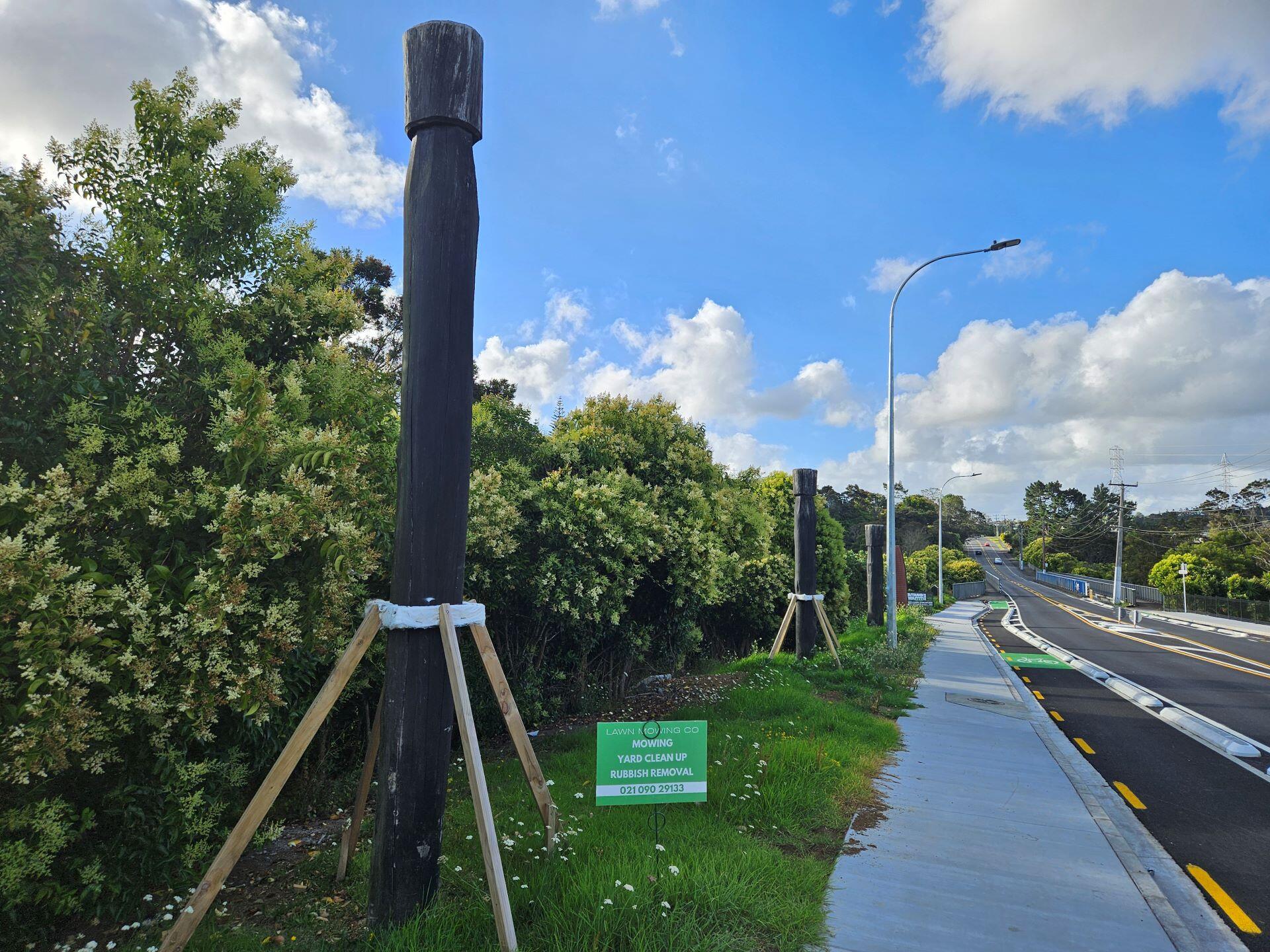
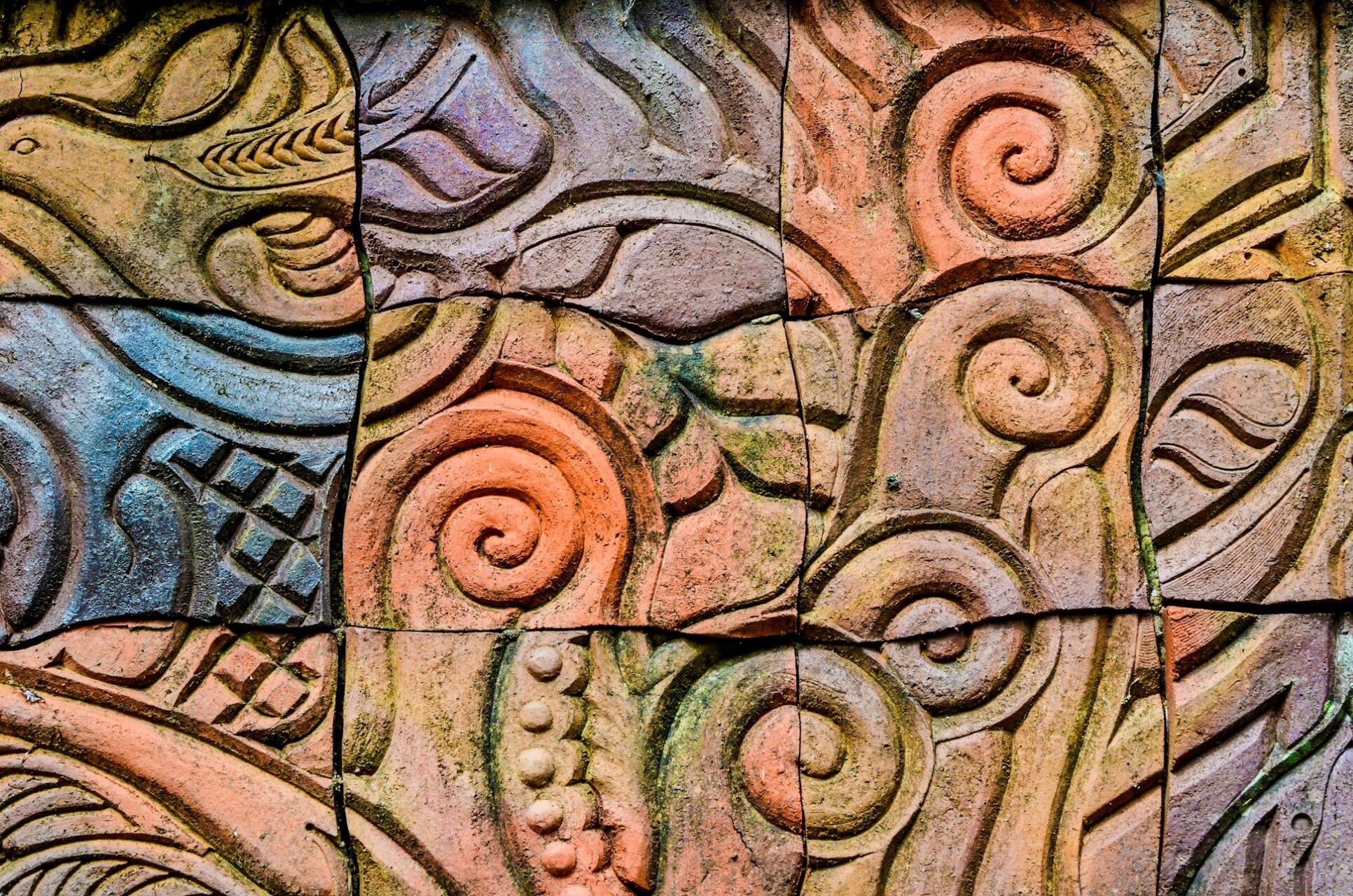
Te Ao Whānui, a nine part sculpture by Whare Thompson over the Huruhuru Creek bridge on Triangle Road, between Massey and Henderson, West Auckland, NZ. Depicting Ranginui, Papatūānuku, waka hulls and pouwhenua. | Image by Prosperosity. Creative Commons Attribution 4.0 International license.
Tāwhirimātea’s Opposition
Tāwhirimātea didn't take the separation of his parents and his brothers. He couldn't accept the loss of their closeness. He lashed out through violent winds and destructive weather. However, his actions aren't portrayed as evil but rather emotional. He's dealing with and processing things in his way. Many Māori traditions acknowledge that change can be painful and leave lasting wounds.
Tūmatauenga and Humanity
Tūmatauenga is a particularly special atua. He has a connection to humanity. Others may have withdrawn or retaliated, but Tūmatauenga faced the challenges of the new world in his parents' separation. Humans are said to be descendants of Tūmatauenga, which is how they've inherited his qualities, such as resilience, struggle, and adaptability. Through this connection, people are in the same family as the atua, and, therefore, subject ot the same forces and responsibilities as them.
Whakapapa and Māori Worldview
Whakapapa is what binds Ranginui, Papatūānuku, the atua, and humanity into a single genealogical framework. Rivers, where you might find taniwha, mountains, and seas are ancestors, not mere objects. Every part of the world is part of an extended family, linked by the atua and the creation story. This shapes how Māori see the land and the environment, reinforcing the ideas of guardianship and care.
Whakapapa links people directly to Ranginui, Papatūānuku, and their children, placing humans within the same ancestral line as the natural world. Mountains, rivers, forests, and oceans are therefore not resources to be owned, but relatives to be respected.
This understanding shapes Māori relationships with land and environment, reinforcing values of guardianship and responsibility. By tracing their ancestry back to the sky and the earth, the Māori worldview frames environmental care as a familial obligation rather than a moral choice.
Different Iwi Traditions
The story of Ranginui and Papatūānuku varies across iwi. It's a living, breathing story that's been told and retold, highlighting the elements essential to different iwi: their landscapes, histories, and priorities. The core themes remain consistent, but the details and emphasis can shift. These are a strength of the story rather than a contradiction. Oral tradition allows the story to adapt while maintaining its meaning, much as stories of patupaiarehe warn people about appropriate behaviours in certain places. This is how it remains relevant to every generation.
different iwi across New Zealand. Each preserves its own traditions connected to Ranginui and Papatūānuku.
Ranginui and Papatūānuku in Māori Life Today
Ranginui and Papatūānuku remain central to Māori identity. Their story appears in language, education, and discussions about the environment and sustainability. Creation traditions can be used to frame contemporary concerns through ancestral knowledge. Māori communities maintain continuity between past, present, and future.
years through oral storytelling, ceremony, and cultural practice.
Summarise with AI:
Did you like this article? Leave a rating!

 Loading...