

We know that as we learn, synapse fires, and that structural brain change requires revisiting ideas and learning them thoroughly. But what precisely does that imply? Yes, it's vital to revisit mathematical concepts, but repeatedly 'practising' approaches is actually counterproductive. The most effective strategy to reinforce a new arithmetic concept is to use it in a variety of situations.
Studying NCEA Level 3 math with proper direction is important. When studying for either internal or external assessment, it's helpful to practice a variety of examples and questions.
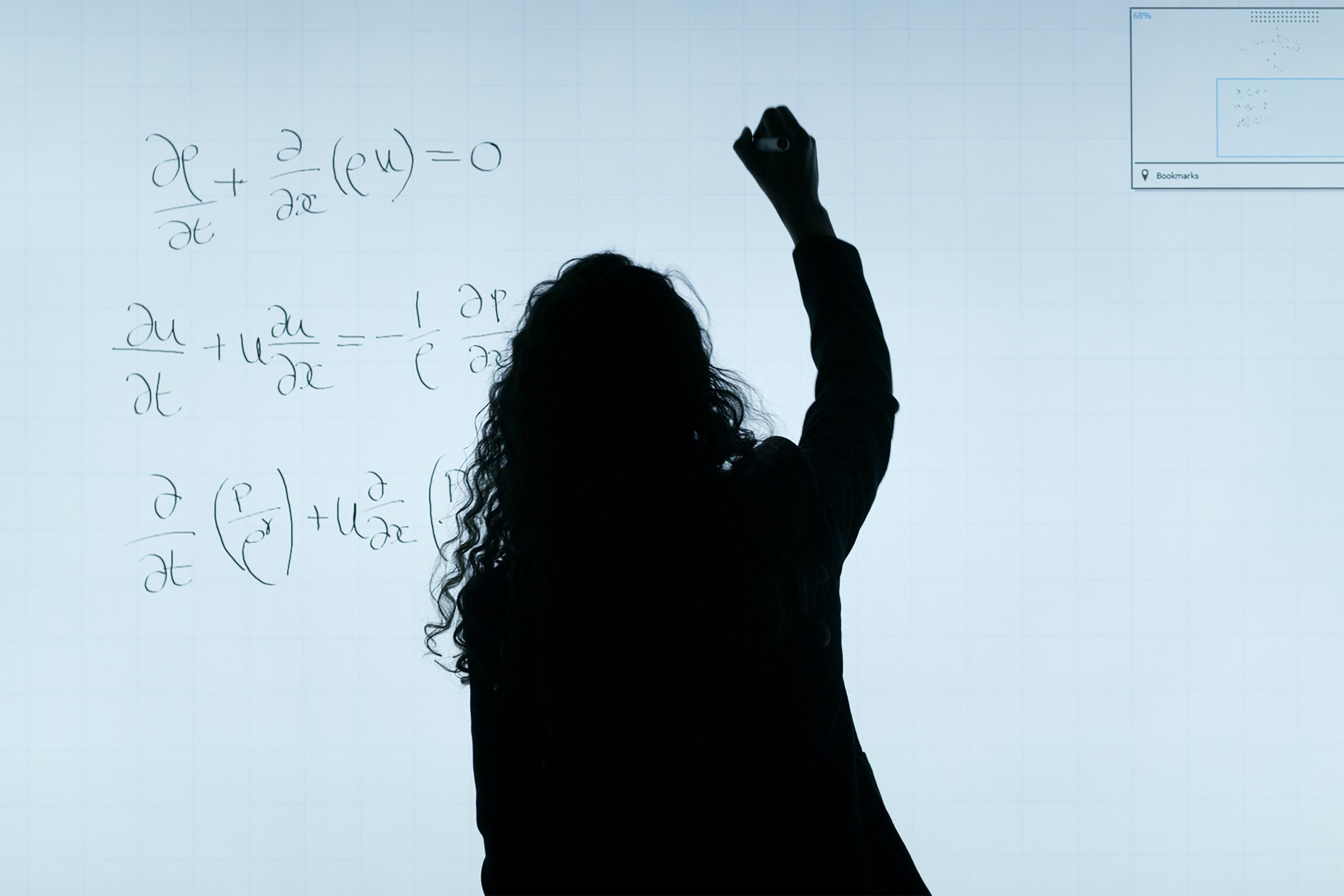


Questions for LEVEL 3 CALCULUS (24 credits)
Calculus is a branch of mathematics that can be used by people who want to learn more about math or in any field where analysis is needed. Students who learn calculus make themselves more marketable in a lot of ways. Also, it gives people the skills they need to investigate, analyse, explain, and make sense of the world we live in. You must cover all five NCEA Level 3 Achievement Standards in Calculus if you want to get an A+.
Assessment 91573 - Use the geometry of conic sections to solve problems.
A conic section, or just conic, is a curve made when the surface of a cone is cut through by a plane. There are three types of conic sections: the hyperbola, the parabola, and the ellipse. The circle is a special case of the ellipse, but it used to be called a fourth type.
To understand conics, you must first study the standard forms of different conic equations, their extensions when shifted, and their many properties, such as eccentricity, directrix distance, focus distances, and so on. After learning a subject, make sure to do at least one or two sample questions from old tests, since conics needs more practise.
Assessment 91575 - Use trigonometric methods to solve problems.
Before you start trigonometry, you should know how to do algebra and geometry well. After learning algebra, you should be able to handle algebraic equations and solve problems with ease. From geometry, you should know about similar triangles, the Pythagorean theorem, and a few other things, but not much else. To solve problems, you need to know how to use trigonometry and how to think more abstractly.
Assessment 91577: Use algebra with complex numbers to solve problems.
Using algebraic methods is the only way to find out what operations can be done on complex numbers. Many basic algebraic rules, such as the associative, commutative, and distributive laws, can be used to figure out how the different numbers of operations are related. By following these rules, it's easy to figure out how to solve algebraic equations. Because algebra is based on both known and unknown values (called "variables"), it has its own set of rules that can be used to solve problems.
Assessment 91578: Use methods of differentiation to solve problems
Logarithms are often used as a type of differentiation when figuring out how to separate two functions. When dealing with complicated functions like y = g1(x)(g2(x)) or y = g1(x) g2(x) g3(x)... or other similar functions, it is easier to use the logarithm of the function first and then differentiate.
If you want to be successful, you need to be able to figure out how to solve problems by looking for breaks, limits, and functions. Figure out which methods of differentiation, integration, and anti-differentiation to use on functions and relations, and then use both analytical and numerical methods to do so.
Assessment 91579: Use methods of integration to solve problems.
Approaches to Integration is a collection of different ways to solve both hard and simple integration problems in calculus. To use a certain method of integration, we must first figure out what kind of integral we are dealing with and then use the best method of integration to solve it. You will need to look into different ways to add, such as the integration by parts method, the substitution method, the partial fraction method, the reverse chain rule, and others.
Questions for Level 3 Statistics
Assessment 91580 - Investigate Time Series Data
There are two parts to a time-series analysis: Time series models are constructed, validated, and used to predict future values or fill in missing data. Analyzing time series data requires an understanding of statistics. There are several ways in which this may be done, such as commenting on the process, taking into account other elements, analysing the validity of any models, or displaying an improved understanding of models.
Assessment 91579 - Use Statistical Methods to make formal inference
Comparing and discussing sample distributions will be a major part of this course. In this context, the median is justified and its impact on the context or research inquiry is examined, for example, by seeking for explanations for data qualities that have been seen. There must be references to scientific studies throughout the discussion. With the use of data resampling, a statistical inference may be made by creating a confidence interval.
Assessment 91584 - Evaluate Statistical Reports
You'll be evaluating data-based reports here. An important part of this process is identifying and commenting on important aspects of a document that are essential to its findings. In this course, you will learn how to analyse a range of statistically based reports, including surveys, polls and trials.
Assessment 91585 - Apply probability concepts in solving problems
You'll need to be familiar with discrete data and the expected value in order to apply discrete probability concepts to problem-solving. You will use discrete probability and how it might be used to solve problems.
Assessment 91586 - Apply probability in solving problems
To determine the likelihood of a certain event or outcome, a probability distribution is used. p(x) = the chance that a random variable has a specific value of x is used by statisticians to define probabilities. You will be calculating the mean and standard deviation of a discrete random variable's distribution and connecting probabilities and areas under density functions.
Types of Questions in NCEA Level 3 maths

Multiple Choice Questions
Multiple-choice questions have one question (stem) and multiple alternative responses (choices), which include the correct answer as well as various erroneous answers (distractors). Students usually choose the correct answer by circling the appropriate number or letter on the machine-readable response sheet or filling in the associated circle. It's really important to revisit NCEA Level 3 past papers. Students can usually react rapidly to this kind of inquiry. As a result, they're frequently used to assess students' understanding of a wide range of topics. Because it is typically difficult to develop numerous plausible distractors, creating these questions can be time-demanding. They can, however, be marked swiftly.
True/False or Yes/No
True/false questions contain only one statement. Students answer questions by marking whether a statement is true or false. True/false questions, for example, have only two possible answers (Answer: True).
True/false questions, like multiple choice questions:
- Are frequently used to determine familiarity with course content and to check for common misunderstandings.
- Allow students to react rapidly so that tests can employ a large number of them to assess knowledge of a wide range of topic.
- True or false questions give pupils a 50% chance of guessing the correct answer. As a result, multiple choice questions are frequently substituted for true/false questions
Computational Based
Computational questions require that students perform calculations in order to solve for an answer. Computational questions can be used to assess your memory of solution techniques and their ability to apply those techniques to solve both questions they have attempted before and questions that stretch their abilities by requiring that they combine and use solution techniques in novel ways.
Divide your answer sheets into two columns: calculations in one, and a list of assumptions, description of process and justification of choices in the other. This ensures that the marker can distinguish between a simple mathematical mistake and a profound conceptual error and give feedback accordingly.
Law Based Question
The Mathematics Knowledge subtest may occasionally ask you a question that does not need you to solve a mathematical problem. Instead, you'll be asked to respond to a question about a mathematical concept, term, rule, or law. However, you're unlikely to see more than two or three of these questions on the test.
We are confident that with all of these tips and tactics, you will pass your NCEA Level 3 Maths (even with Merit or Excellence), and we hope that you will be just as confident. However, we are the first to recognise that Maths is not a subject that can be studied by reading notes half-heartedly and then slamming the next day. True perfection is achieved by practice, practice, practice. But what if you need someone to double-check that the type of practice you're doing is correct, or if you have issues or areas, you don't understand and need assistance with before you reach the golden practice phase? Perhaps you require some explanation on how to get started on the route to Excellence or how to properly secure your chances. That is precisely why we exist at Superprof. We offer a number of qualified teachers who can assist you in reaching your goals. Allow us to assist you. Please contact us right away.
Summarise with AI:
Did you like this article? Leave a rating!

 Loading...