

Anyone who wants to speak Māori will need to learn the pronouns. If you're not sure what they are, they're the words that describe who does an action, which could be one person, two people, or a group of people or actors. Not only do you need to learn the words, but you'll need to learn how pronouns work in te reo as they're not exactly the same as in English. Luckily for you, we're just about to cover that.
Key Takeaways
- Māori pronouns differ from English pronouns because they include both inclusive and exclusive forms to indicate whether the listener is part of the group.
- Te reo Māori uses three number types for pronouns: singular (one person), dual (two people), and plural (three or more people).
- Singular pronouns like ahau / au, koe, and ia form the foundation of basic sentence building.
- Dual pronouns such as tāua and māua add clarity by distinguishing groups of exactly two people.
- Plural pronouns like tātou, mātou, koutou, and rātou are essential for describing larger groups in everyday life.
- Pronouns in Māori do not change form between subject and object positions; meaning comes from particles like kei, e, i, and ki a.
- Getting confident with pronouns improves your overall grammar and lets you create clearer, more natural sentences in te reo Māori.


Understanding Māori Pronouns and How They Work
Grammatically, pronouns show who is speaking, who's being spoken to, and who is involved, and they're often used in everyday Māori phrases. Unlike in English, Māori has both inclusive and exclusive forms that indicate whether the listener is part of the group. Māori uses three number types, which indicate whether something involves one person, two people, or more than two people.
Māori pronouns differ from English pronouns in that they include notions of inclusivity and exclusivity, and they distinguish between singular, dual, and plural forms. These differences make pronouns an essential part of understanding how people relate to each other in te reo Māori. When learners understand these distinctions early, it becomes much easier to create accurate sentences and speak naturally.
How Māori Pronouns Are Different From English
Group distinctions
Māori pronouns indicate whether the listener is included in the group, whereas English does not.
Number accuracy
Māori has singular, dual, and plural forms, whereas English has only singular and plural.
Contextual use
Māori pronouns work closely with particles like kei, e, and i, which guide meaning and sentence structure.
What Inclusive and Exclusive Pronouns Mean
Inclusive pronouns include 'you' and 'we,' indicating that the speaker and listener are part of the same group.
Exclusive pronouns exclude the listener, showing that the speaker is talking about themselves with others, but not the listener.
This distinction reflects Māori values around relationships, respect, and clarity in communication.

The Three Number Forms: Singular, Dual, Plural
Singular: Refers to one person and is the simplest group of pronouns to learn.
Dual: Refers to two people and is a unique feature of Māori grammar that adds precision.
Plural: Refers to three or more people and includes necessary inclusive and exclusive forms that help learners choose the correct pronoun.
Singular Pronouns in Māori (Tahi)
In Māori, the singular pronouns are probably the best place for us to start, as once you have them, you can start working on the Māori syntax. With these pronouns, you can begin building basic sentences and practising how Māori grammar uses particles and word order (which is best left for another article). Once you know how the singular pronouns work, you can start using the dual and plural forms.
schools offer Māori language in education at some level in New Zealand.
Dual Pronouns in Māori (Tokorua)
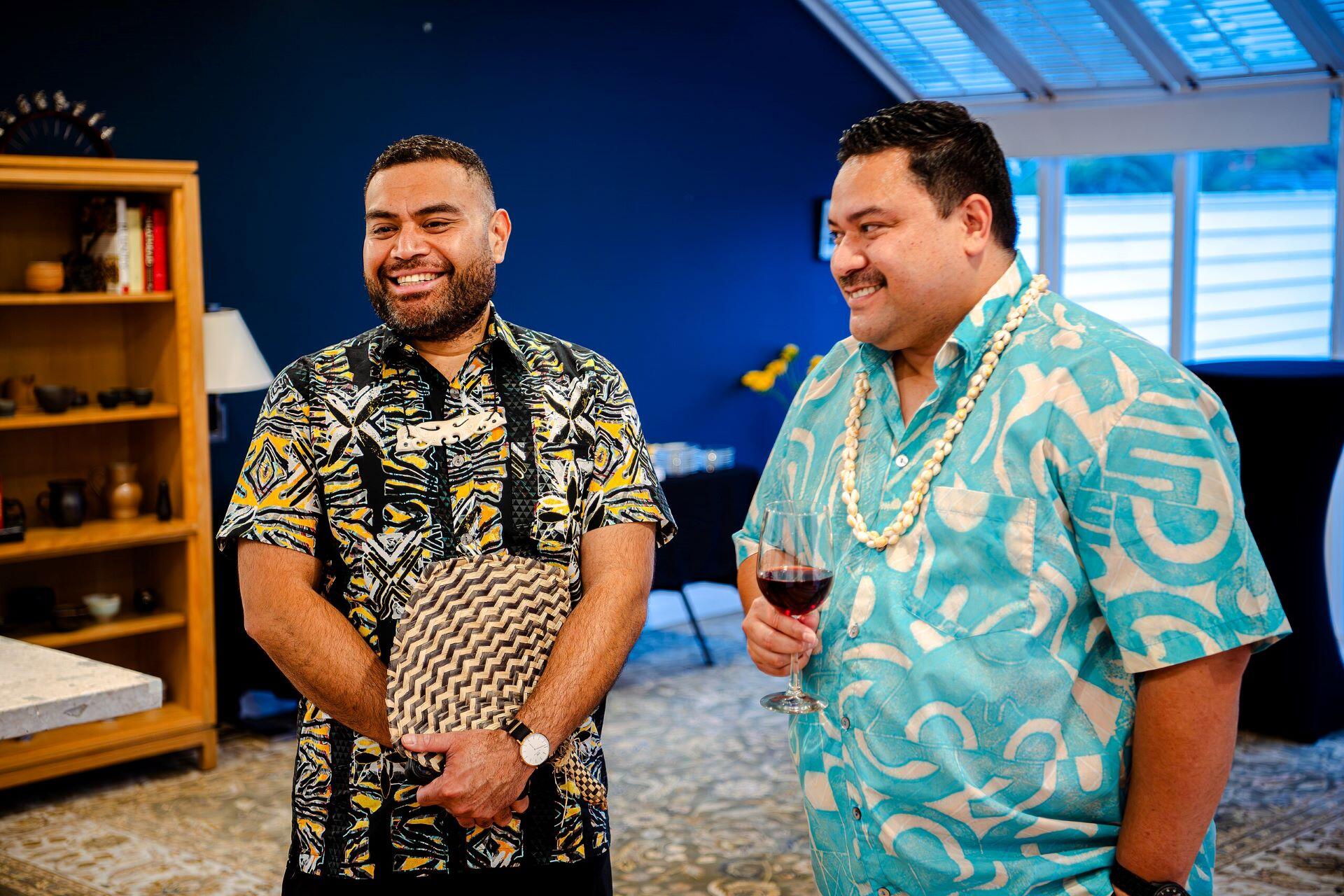
In Māori, unlike in English, there are dual pronouns to refer to exactly two people. This adds a lovely level of clarity that English can't always capture as elegantly. Dual pronouns can help you avoid confusion while also expressing relationships in everyday sentences like wishing encouragement.
Inclusive and exclusive pronouns show whether the listener is part of the group being described. Tāua includes the listener, meaning “you and I”, while māua excludes the listener, meaning “someone else and I”. Learning this distinction helps speakers choose the most accurate pronoun for real conversations.
Plural Pronouns in Māori (Tokotoru / Tokomaha)
In Māori, plural pronouns refer to three or more people, unlike in English, where they refer to two or more. Just like with the dual pronouns, the Māori plural pronouns also have inclusive and exclusive groups, which is a good way if you have to wish certain people happy birthday in Māori.

of New Zealanders reported speaking te reo Māori at least 'fairly well'.
How to Use Māori Pronouns in Sentences
To effectively use all these pronouns, you need to understand sentence structure and the role of particles in te reo. Unlike in English, the Māori don't change whether they're a subject or an object pronoun, so it's simpler in a way, especially if you're writing an email. Here are some examples for you to practise with.
Pronouns in Māori stay the same whether they are used as subjects or objects, which makes the language simpler than English in many ways. What matters most is the order of words and the use of particles like kei, e, and i to show tense. When learners focus on these patterns, they can build accurate sentences with confidence.
Using Pronouns as Subjects
Pronouns as Objects
Pronouns with Kei
Common Mistakes Learners Make
| Person | Number | Inclusive/Exclusive | Māori Pronoun | English Meaning | Example Sentence |
|---|---|---|---|---|---|
| 1st | Singular | Exclusive | Ahau / Au | I | Ahau e kai ana. (I am eating.) |
| 2nd | Singular | N/A | Koe | You (one person) | Koe e kōrero ana. (You are speaking.) |
| 3rd | Singular | N/A | Ia | He / She | Ia e whakarongo ana. (He or she is listening.) |
| 1st | Dual | Inclusive | Tāua | You and I | Tāua e haere ana. (You and I are going.) |
| 1st | Dual | Exclusive | Māua | We (but not you) | Māua e kai ana. (We are eating, but not you.) |
| 2nd | Dual | N/A | Kōrua | You two | Kōrua e waiata ana. (You two are singing.) |
| 3rd | Dual | N/A | Rāua | They two | Rāua e kōrero ana. (They two are talking.) |
| 1st | Plural | Inclusive | Tātou | All of us (including you) | Tātou e ako ana. (We are all learning.) |
| 1st | Plural | Exclusive | Mātou | We (but not you) | Mātou e haere ana. (We are going, but not you.) |
| 2nd | Plural | N/A | Koutou | You all | Koutou e tuhi ana. (You all are writing.) |
| 3rd | Plural | N/A | Rātou | They | Rātou e waiata ana. (They are singing.) |
Summarise with AI:
Did you like this article? Leave a rating!

 Loading...