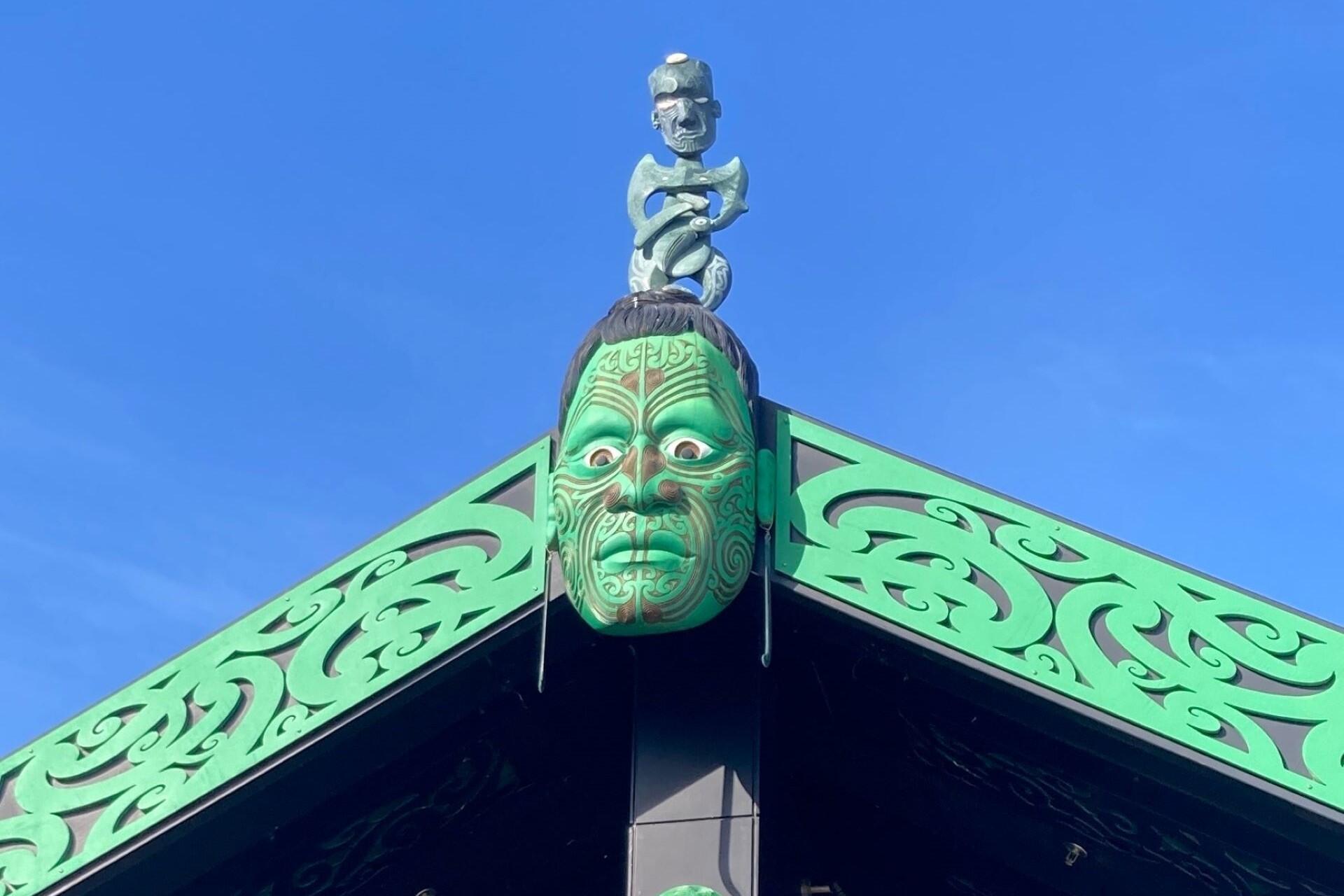

The manaia is a supernatural creature often seen in Māori carving, usually shown in profile with a bird-like head and a human form.
Te Ara: The Encyclopedia of New Zealand
A manaia is a guardian figure. It exists between the seen and unseen. It occupies a space between the human and the spirit world. Rather than being a single creature or myth, the manaia expresses ideas about protection, balance, and the connection between the realms of existence. Let's explore what they are.
Key Takeaways
- The manaia is a Māori guardian figure that exists between the human, natural, and spiritual worlds.
- It symbolises protection, balance, and awareness rather than authority or power.
- Manaia are closely connected to whakapapa, reinforcing relationships between people, ancestors, and place.
- In whakairo, the manaia acts as a spiritual guardian of spaces, stories, and communal identity.
- Variations in manaia form reflect local environments, traditions, and spiritual priorities.
- As taonga, manaia are worn or carried as reminders of responsibility, not ownership or protection.
- The manaia remains culturally significant today, requiring a respectful understanding of its meaning and context.


Manaia Meaning in Culture: Protection, Balance, and the Spirit World
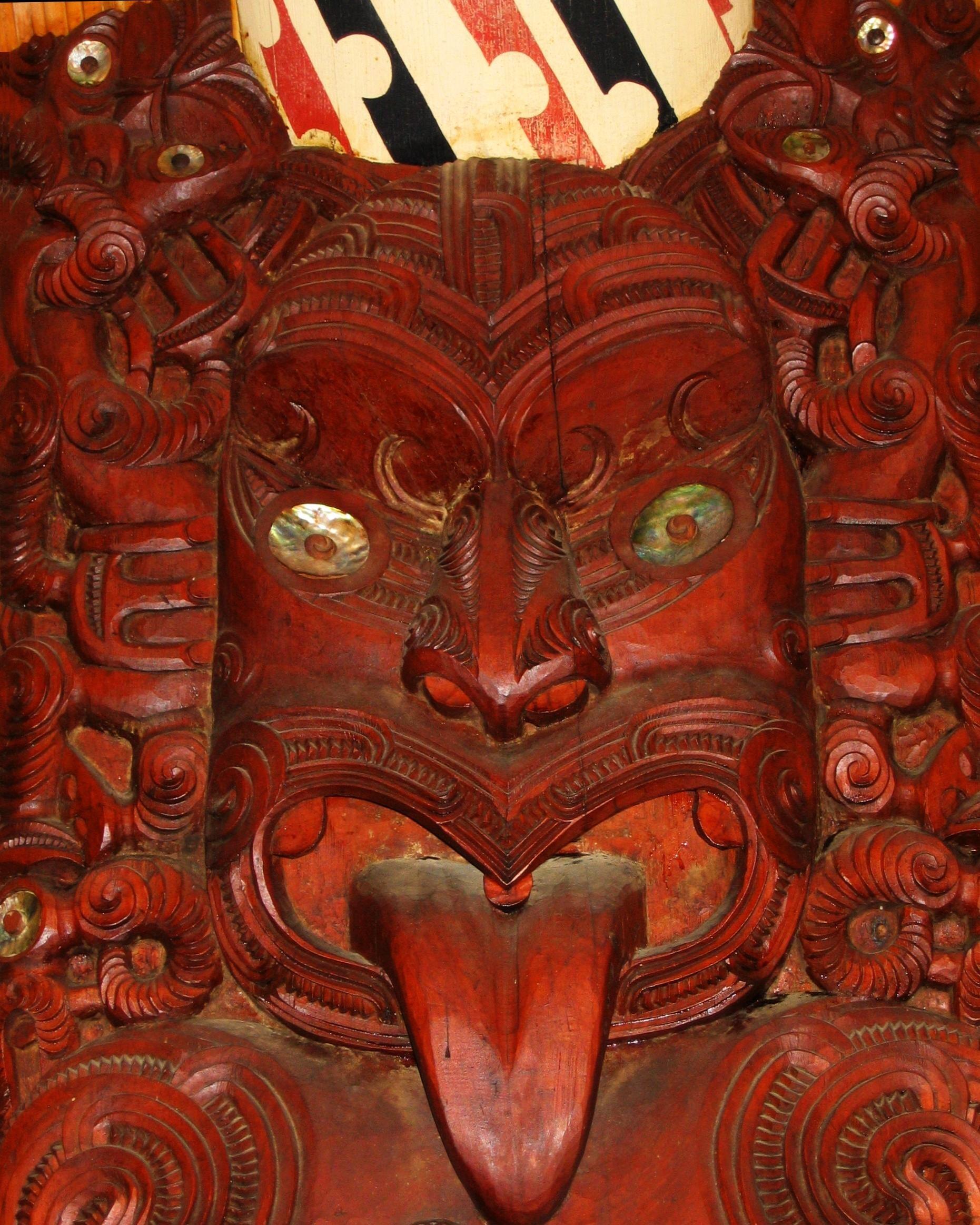
In Māori culture, the manaia is a protective figure. It's not really a symbol of authority or power. Still, it is instead tied to balance, particularly the balance between the physical and spiritual world. The manaia is like a messenger, moving between realms and maintaining harmony. It's different from atua, who govern specific domains, and from ancestors, who form direct genealogical lines.
The manaia is rooted in whakapapa and relationships, just like the Māori creation story. It reflects the Māori worldview, which holds that spiritual forces are present in everyday life. Protection comes through awareness and respect rather than domination. The manaia doesn't act independently or aggressively, though. It signals guardianship and guidance in places or situations where spiritual boundaries matter.
In Māori belief, the manaia represents balance between worlds. It is often described as a messenger or intermediary, connecting the living with ancestors and the spiritual realm. This role places the manaia within whakapapa rather than outside it.
Manaia symbolism emphasises protection rather than authority. It reflects the Māori worldview, which holds that spiritual forces coexist alongside everyday life and must be acknowledged with respect and awareness.
realms: the human, natural, and spiritual realms.
The Manaia Creature in Whakairo: How It’s Shown in Māori Carving
In Māori tradition, the manaia is most commonly encountered through whakairo, the art of carving. You'll see these carvings on whare whakairo (meeting houses), waka, weaponry, and other taonga where protection and spiritual awareness are essential. The manaia acts as a guardian figure, watching over people's spaces and the ancestral narratives embedded within the carving.
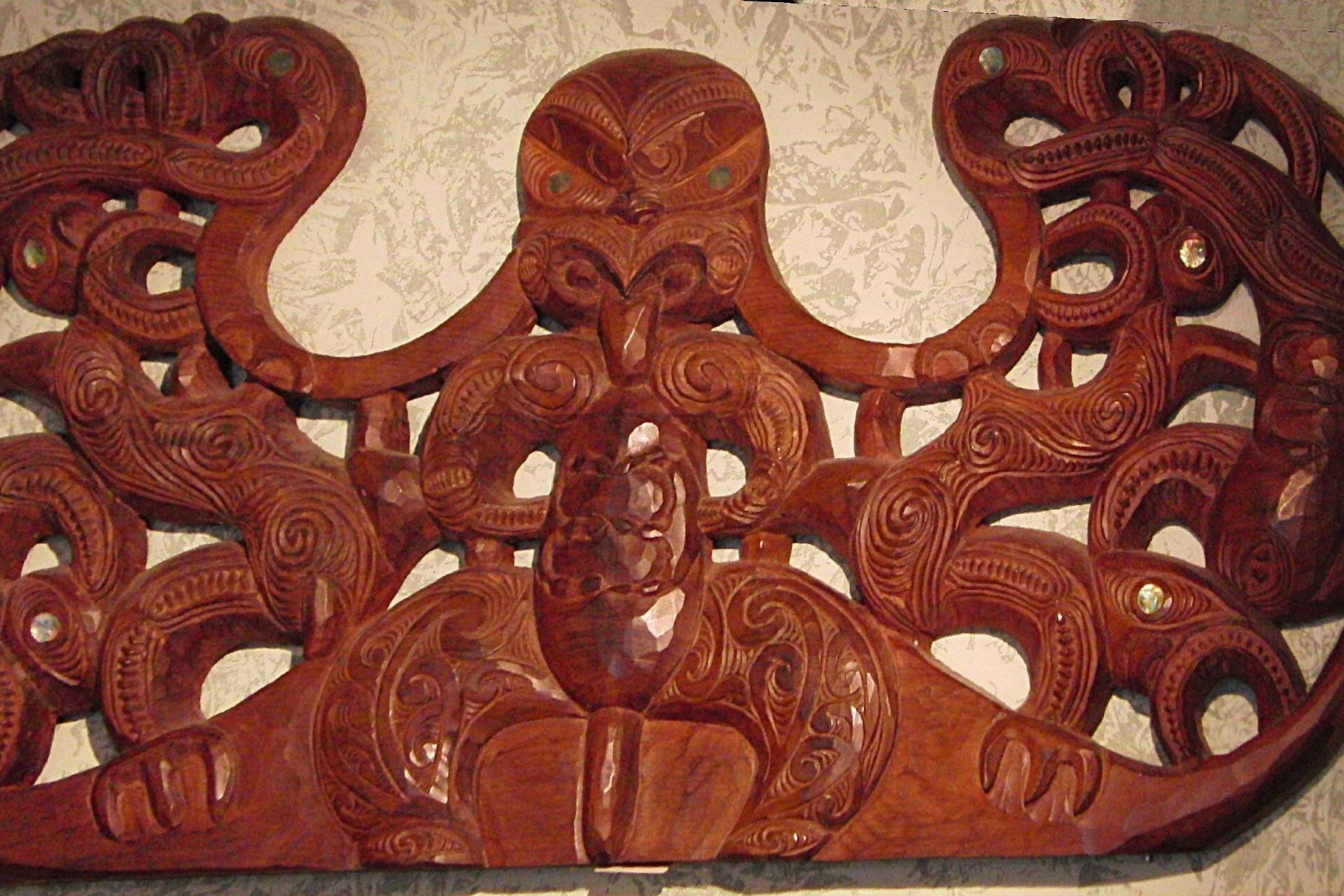
Pierre André Leclercq. Creative Commons Attribution-Share Alike 4.0 International, 3.0 Unported, 2.5 Generic, 2.0 Generic and 1.0 Generic license.
The manaia is often positioned at thresholds, edges, or structural points, places where transitions occur, and protection is symbolically required. These aren't just decorative; they visually reinforce the presence of the spiritual realm in communal and ceremonial spaces, much as taniwha are linked to physical geographical features. It reminds us that these environments are alive with history, genealogy, and responsibility.
Manaia figures frequently appear in whakairo, traditional Māori carving, particularly on meeting houses, waka, and taonga. In these contexts, the manaia acts as a guardian of people, spaces, and ancestral narratives.
Carved manaia are not decorative motifs. They are visual expressions of protection and continuity, reinforcing the presence of spiritual guardianship within communal and ceremonial spaces.
Manaia Symbol Variations: Common Forms and What They Can Suggest
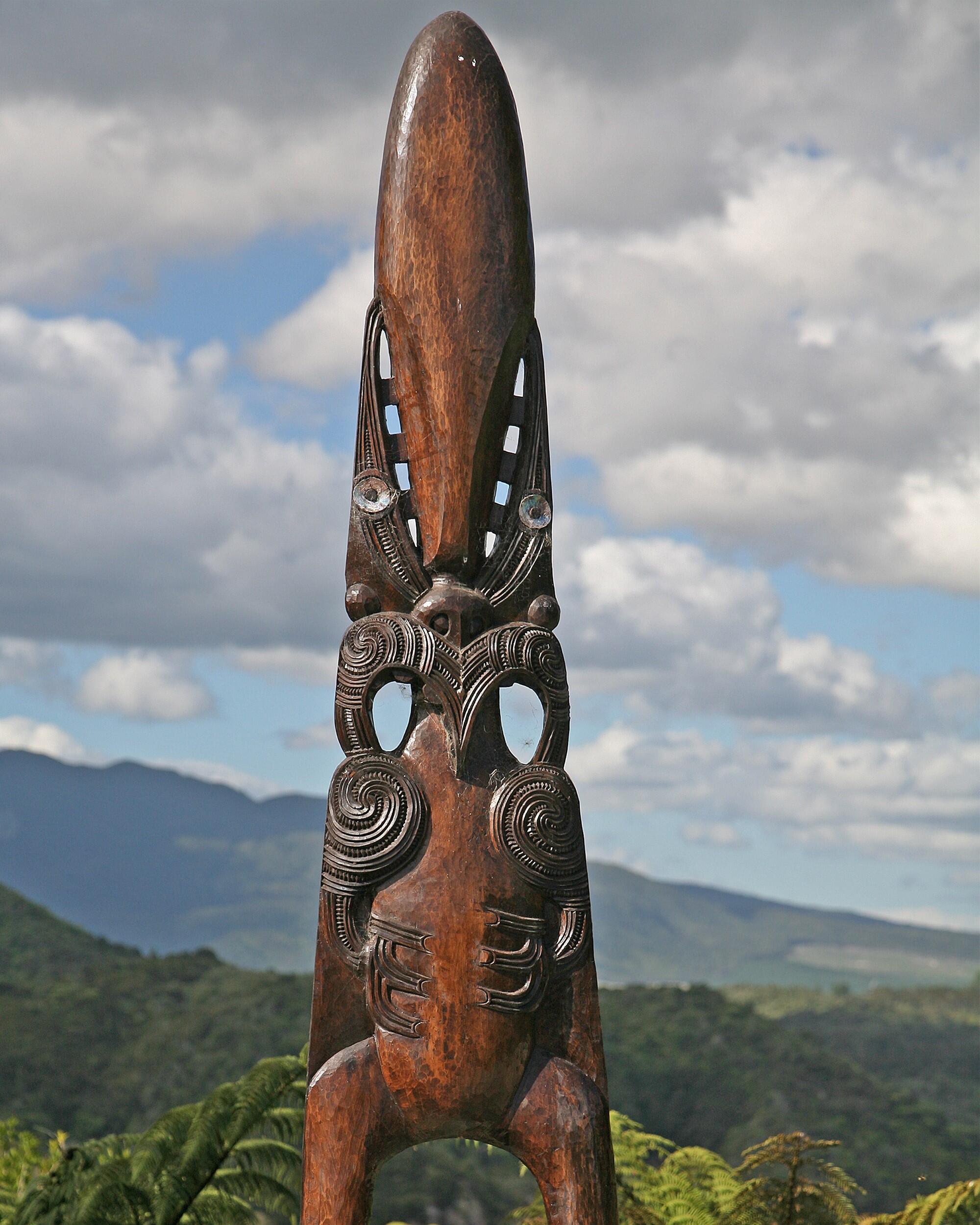
There isn't really an exact standardised form for manaia, much like the patupaiarehe. Differences in posture, proportions, and emphasis mean that each manaia reflects its specific environment, purpose, or story. It adapts to context.
Some manaia are elongated or compact to suggest movement, alertness, or watchfulness. Some lean toward one realm more than another, emphasising the air, land, or water, depending on its location. The visual choices communicate the relationships or boundaries being protected, and artists embed their local knowledge to ensure the connection to place and whakapapa.
Manaia are often depicted with a bird-like head, a human body, and, sometimes, a tail resembling a fish or a reptile. These hybrid forms reflect their role as beings that move between realms rather than belonging fully to one.
The exact appearance of a manaia can differ across regions and artists. These variations are intentional, allowing the figure to reflect local traditions, environments, and spiritual interpretations.
combined forms (human, bird, and sea creature) to express balance between different worlds.
Manaia as Taonga: Pounamu, Bone Carving, and Wearing the Symbol
The manaia can take on a more personal role as a taonga. It can be worn close to the body when carved from materials such as pounamu or bone. This reinforces its function as a guardian in daily life. Generally, their meaning is shaped by who wears them, how they're used, and the relationships they represent.
Wearing a manaia doesn't mean that the wearer owns or controls the protection of spiritual forces. Instead, it reflects their commitment to awareness and responsibility. It's a reminder that the protection is reciprocal. It depends on how they behave, the respect they show towards others and the environment, and their understanding of the symbol's origins. Maniaa taonga act as both guardians and teachers, reinforcing values.
Manaia are commonly represented in taonga such as pendants, carvings, and personal adornments. When worn or carried, they are understood as protective symbols rather than ornaments.
As taonga, manaia embody ancestral knowledge and spiritual responsibility. Their use reinforces the idea that protection comes through respect, connection, and awareness rather than ownership or power.
years, particularly on whare whakairo, waka, and sacred objects.
Manaia Today: Respectful Use, Context, and Cultural Continuity
In contemporary Māori life, the manaia is a living symbol. It appears in carving, just like Ranginui and Papatuanuku often do, jewellery, architecture, education, and public spaces. It often appears as part of wider conversations about identity, heritage, and continuity. It reflects the ongoing relevance of Māori values, especially those centred on balance, protection, and respect for spiritual boundaries.
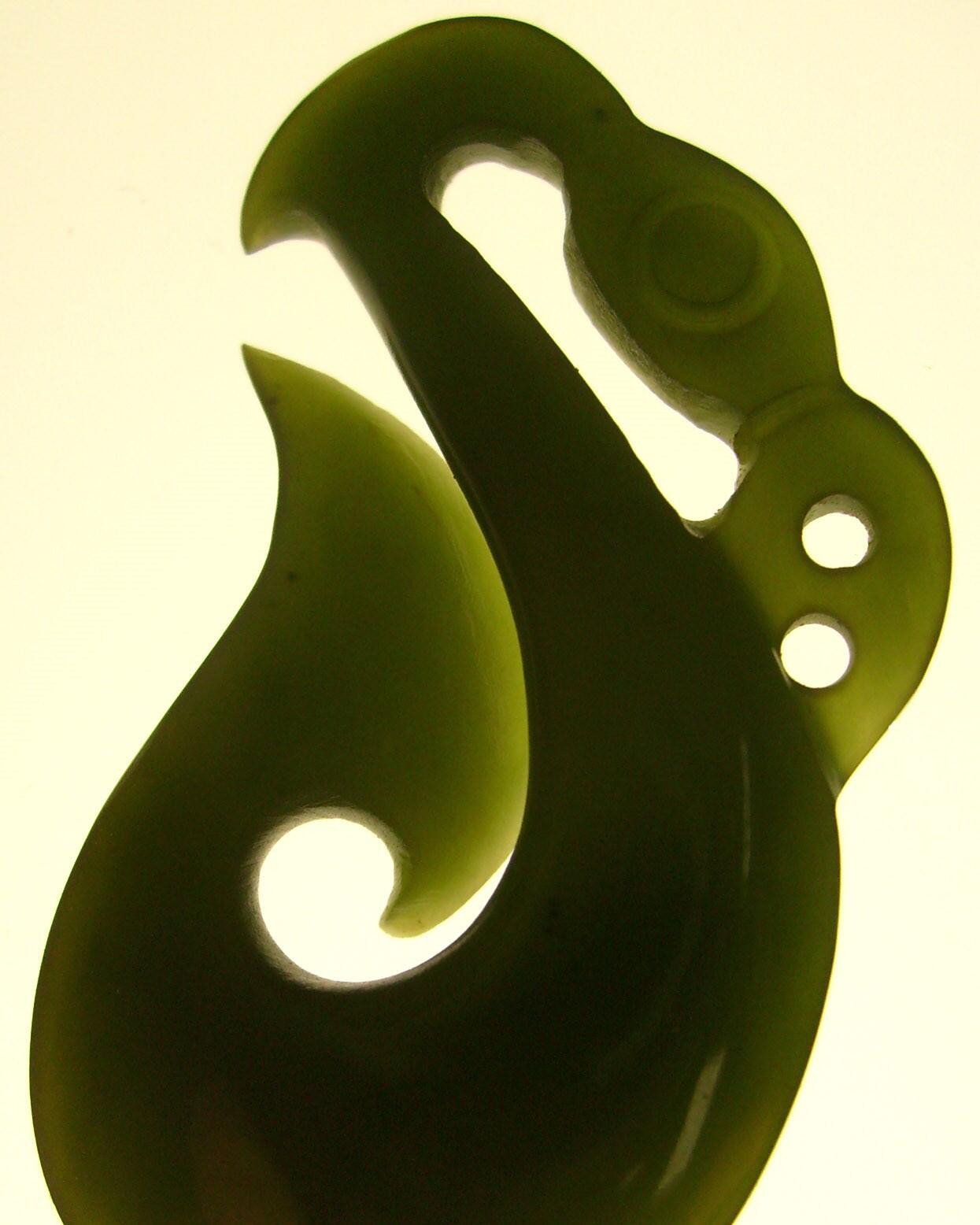
The modern use of the manaia comes with responsibility. It doesn't have a generic design, but this does mean that you have to understand its meaning and context. It can't be used without awareness, and the manaia risks being reduced to decoration rather than a guardian symbol. Thoughtfully used, it can be a powerful symbol of cultural continuity. It links past knowledge and present expression. After all, the ongoing use of these Māori traditions makes them meaningful as the world around them changes.
In contemporary Māori life, manaia continue to appear in carving, jewellery, and design, often alongside discussions of cultural identity and continuity. Their use carries responsibilities, particularly around respect for meaning and origin.
Manaia are not generic symbols. Understanding their cultural context is essential, especially when they appear in modern art, education, or public spaces. Their presence today reflects a living tradition rather than a historical relic.
Summarise with AI:
Did you like this article? Leave a rating!

 Loading...