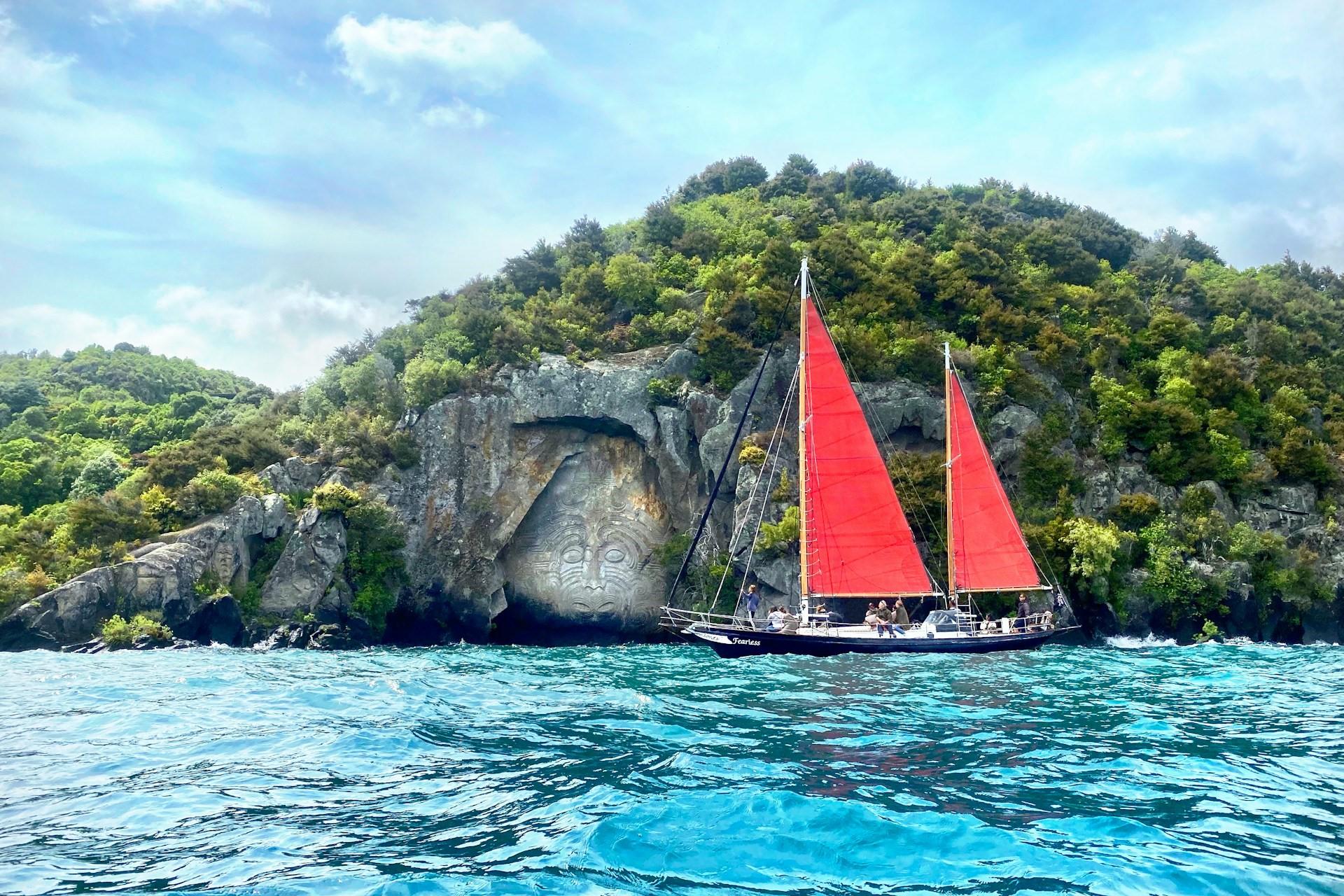

The Māori first arrived in New Zealand from Polynesia in the 14th century. Since then, their contribution to art, society, history, cinema, sports, and much more has made many Māori people particularly famous.
While we can't name all the most famous Māori people, and the most famous would likely include actors, musicians, and other celebrities, we think we have a relatively good list of important Māori people here.
We've put them in order of birth, with the earliest famous Māori people at the start rather than ranking them.
We've included a mix of important Māori in terms of their contribution to Māori society, their cultural impact, their promotion of things like the Māori language and issues, as well as Māori individuals who've achieved great things, been great leaders or served as famous role models to both Māori and Pakeha people.


Te Puea Hērangi (1883–1952)
Te Puea Hērangi, or Princess Te Puea, was a Māori leader in the Waikato region of New Zealand.
She worked to revitalise Māori culture in New Zealand. She established the Tūrangawaewae Marae at Ngāruawāhia, a type of Māori communal and sacred space and the headquarters of the Māori King movement (Te Kīngitanga).
Like many other great Māori leaders, she fought for Māori rights and land in New Zealand.
Sir Āpirana Ngata (1874–1950)
Sir Āpirana Ngata was one of the most important Māori politicians to serve in the New Zealand parliament in the 20th century.
In addition to establishing the Young Māori Party, he was the first Māori to complete a degree at a New Zealand university. While promoting Māori culture and language, he also advocated for a break away from certain Māori traditional practices, particularly those that were at odds with certain aspects of science, particularly sanitation. His Pakeha approach to certain things made him somewhat controversial.
He was in the New Zealand parliament from 1905 to 1943. He represented three political parties during this time: The New Zealand Liberal Party, The United Party, and The New Zealand National Party.
Sir Peter Buck (Te Rangi Hīroa) (1877–1951)
Sir Peter Buck, or Te Rangi Hīroa, was a Māori doctor, anthropologist, and politician. He was born in Urenui, Taranaki, New Zealand in 1877.
His research made significant contributions to the understanding of Māori and Polynesian events, cultures, and practices.
He served in the New Zealand Parliament between 1909 and 1914 for the Northern Māori electorate for the New Zealand Liberal Party. He served as a medical officer during the First World War.
He was also of European descent through his father, William Henry Buck, an Anglo-Irish immigrant.
Dame Whina Cooper (1895–1994)
Dame Whina Cooper was a Māori elder famous for fighting for Māori and Indigenous people's rights, particularly for Māori women.
She led the 1975 Māori land march, which covered over 1,100km, at the age of 79! The march began in the Northland Region, travelled the length of the North Island, and finished at the New Zealand Parliament building in Wellington.
The march lasted from 14 September 1975 to 13 October 1975. It started with around 50 people but grew to around 5,000 people!
While probably the most significant and memorable event in her life, Dame Whina Cooper's life was full of Māori activism.
Hone Tuwhare (1922–2008)
While many of our famous Māori people are known for politics and activism, Hone Tuwhare is most famous for his poetry. His 1964 publication "No Ordinary Sun" is likely his most famous work.
Though he was born in Kaikohe in the Far North District, he spent much of his later life in The Catlins, in the southeastern corner of the South Island.
His poetry earned him many awards and accolades, including the Robert Burns Fellowship from the University of Otago (twice) and the University of Auckland Literary Fellowship. In 2003, while he was still alive, the Arts Foundation of New Zealand named him one of New Zealand's greatest living artists.
Billy T. James (1948–1991)
Billy T. James was an entertainer of Māori and European descent. He famously joked about his half-Māori, half-Pakeha (Scottish) origins in a routine you'll have to read elsewhere.
He had his comedy sketch show, "The Billy T James Show," and was named New Zealand Entertainer of the Year in 1981, the same year his show launched.
He also released music, appeared in the 1985 film "Came a Hot Friday," and provided a voice for "Footrot Flats: The Dog's Tail," one of New Zealand's most popular animated films. In 1985, he was also named Entertainer of the Decade.
Merata Mita (1942–2010)
Merata Mita was a Māori filmmaker and documentarian whose work mainly focused on Māori and indigenous issues. Her works represented Māori people and their culture while also addressing decolonisation and indigenisation.
Her most famous films include "Patu!" and "Bastion Point: Day 507." She was also a co-producer of the 2010 film "Boy," directed and written by Taika Waititi, another famous Māori filmmaker.
Dame Kiri Te Kanawa (1944–)
Dame Kiri Te Kanawa is a Māori opera singer and one of her generation's most famous and respected singers. She announced her retirement from singing in 2017.
She was born in Gisborne, New Zealand, to a Māori father and a Pakeha mother (the daughter of Irish immigrants). She was adopted by Ngāti Maniapoto family.
She spent over five decades living in the United Kingdom after initially moving there after receiving a grant to study in London. After studying at the London Opera Centre, she had a successful international opera career performing worldwide, including in Chicago, Paris, Sydney, Vienna, Munich, and Cologne.
Witi Ihimaera (1944–)
Witi Ihimaera was also born in Gisborne. He's a Māori author whose works include the novel "The Whale Rider", which was later adapted into a famous film. Through his writing, he often explores Māori culture and identity while highlighting contemporary issues affecting Māori and indigenous people.
In addition to “The Whale Rider”, his other famous works include “Pounamu Pounamu”, a collection of short stories, “Tangi”, and “The Matriarch”.
Dame Tariana Turia (1944–)
Dame Tariana Turia is a Māori politician who was a member of the New Zealand Parliament for both the New Zealand Labour Party and then the Māori Party, which she co-founded in 2004.
She focused on justice, health, and education for Māori communities during her political career.
Sir Mason Durie (1938–)
Sir Mason Durie is a Māori academic and professor. He is famous for his work in Māori studies, particularly his contributions to Māori health. He currently works at Massey University.
He has championed Māori health and higher education, and the New Zealand government has recognised his contributions to both.
Mahé Drysdale (1978–)
Mahe Drysdale is a rower born in Melbourne, Australia, to New Zealand parents. In the single sculls, a one-person event, he won gold medals at the Olympic Games in 2012 in London and 2016 in Rio de Janeiro.
He's also a five-time world champion in the same event, having won gold medals at the World Rowing Championships in 2005, 2006, 2007, 2009, and 2011.
Taika Waititi (1975–)
Taika Waititi is a Māori filmmaker and actor famous for New Zealand films like "Boy" and "Hunt for the Wilderpeople" and Hollywood films like "Thor: Ragnarok" and "Thor: Love and Thunder."
He was born in Wellington and grew up in the Aro Valley suburb of Wellington and Raukokore in the Bay of Plenty.
His birth name, Taika David Cohen, comes from his mother, who is of European descent. He's used his father's family name, Waititi, professionally for most of his life.
Lisa Carrington (1989–)
Lisa Carrington is a canoeist of Māori and European descent. She's New Zealand's most successful Olympian thanks to her five gold medals from the 2012, 2016, and 2020 Olympic Games.
She's also won 15 gold medals at the ICF Canoe Sprint World Championships.
Stan Walker (1990–)
Stan Walker is a singer of Tūhoe, Ngāi Te Rangi and Ngāti Porou descent. He was born in Melbourne, Victoria, Australia, but grew up on a marae in Mount Maunganui, New Zealand.
He's famous for winning the seventh series of Australian Idol in 2009.
He released his sixth album in 2021, his first in te reo Māori, the Māori language.
Consider learning some basic te reo greetings.
Learn More About Māori Culture and Language with a Private Tutor
Whether you're of Māori, Pakeha, or any other descent, Māori and Polynesian culture traditionally promotes the importance of education, and you can learn more about it from a private tutor.
You can learn about Māori and Polynesian history, culture, traditional practices, or dance. While the haka is probably the most famous Māori cultural tradition to those outside of Māori and Polynesian culture, you'll find that there's so much more to the story of Polynesian and Māori people than that.
Search for Māori on the Superprof website today for more information.
Summarise with AI:
Did you like this article? Leave a rating!

 Loading...