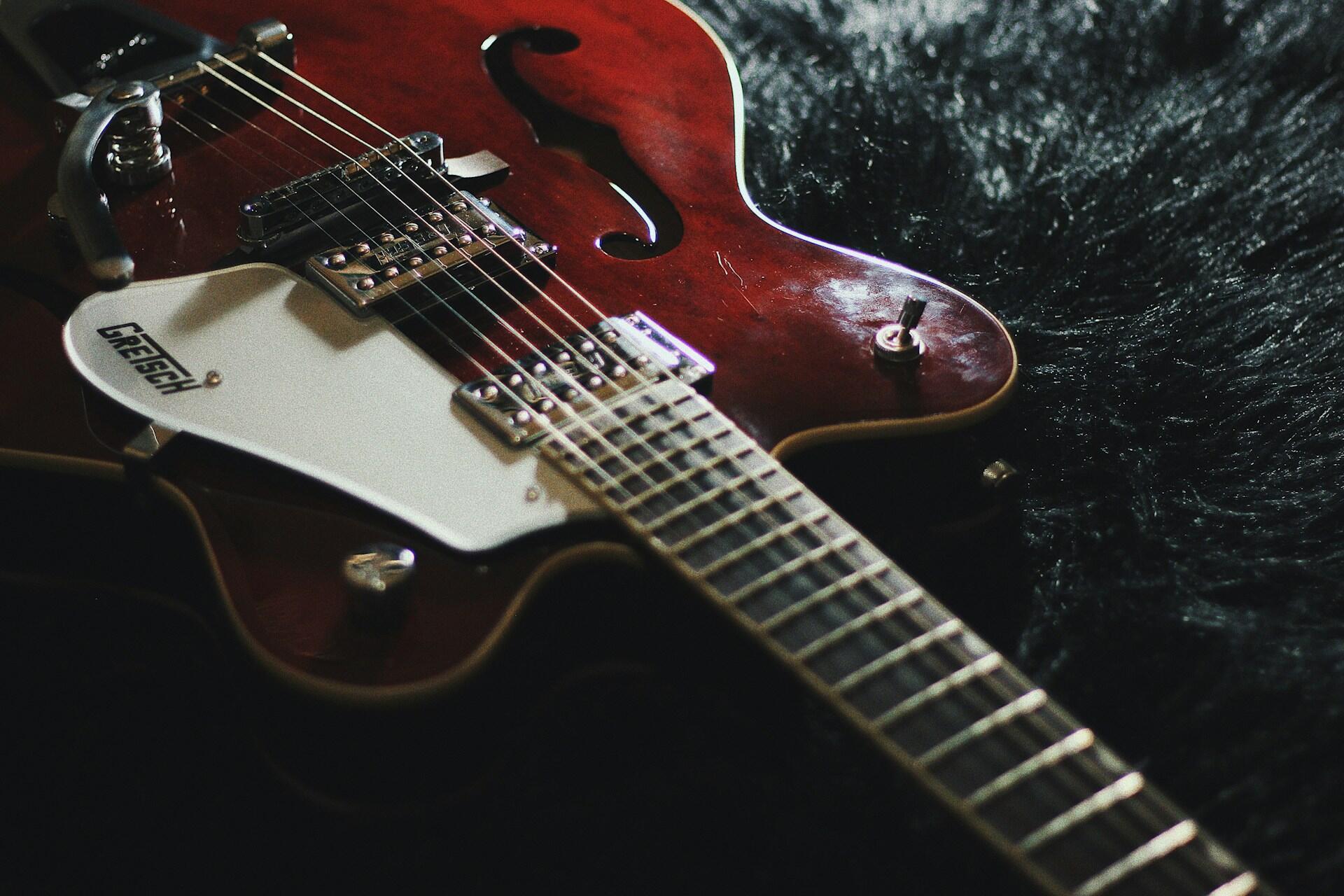

Want to buy a guitar pack but are not sure how to choose one? Ibanez, Cort, Gresch, Fender, brand new or vintage style, rosewood or ebony, guitars come in a multitude of forms and materials. And whether you’re lefty or right-handed, an advanced or beginner guitar player, your choice of guitar is important for playing well and improving your skills…
Key Takeaways
- Choosing the right electric guitar starts with understanding its components, including the body, neck, pickups, bridge, and number of strings. Each part directly affects tone, comfort, and playability.
- Playability matters as much as sound, and factors like neck profile, fretboard material, setup quality, and scale length determine how easy a guitar feels in the hands of beginners and advanced players.
- String configuration changes the instrument’s range and sound, from the standard 6-string to the heavy-metal-focused 7-string, the rich-sounding 12-string, and the foundational 4-string bass.
- Pickups shape the core tone of an electric guitar, with single-coils offering brightness, humbuckers delivering warmth and power, and mixed systems giving maximum versatility.
- The guitar’s body construction influences resonance and feedback, with hollow-body models providing warm acoustic qualities, solid-body guitars delivering stability at high volume, and semi-hollows striking a balance between both worlds.
- Bridge type affects tuning stability and expressive techniques: fixed bridges excel for reliability, while floating/tremolo systems allow dramatic pitch bends and vibrato effects.
- Neck characteristics significantly change playability, including neck length, fret spacing, tonewoods, and whether it uses a bolt-on or set-neck construction.
- Choosing the best electric guitar depends on your style, skill level, and goals, and guidance from teachers, luthiers, or knowledgeable sales staff can make the process much easier.


How Guitar Types and Components Influence Your Playing
The string instruments that require guitar lessons fall into several categories. Whether you play the folk, acoustic, electro-acoustic, bass or even the classical guitar, be sure to pay attention to the components of these instruments - and to their playability, the word guitarists use to describe whether their instruments are, simply, easy to play.
in 2022 and is projected to reach USD 7.62 billion by 2030.
Guitars might be classed by several manufacturing characteristics, which often vary. Whether you choose a famous guitar brand like a Fender Stratocaster or Telecaster, or an Epiphone Les Paul, you’ll need to decide on other elements such as the number of strings and rods and the type of pickup or bridge. The same goes for the fact that you must choose the specific amplifiers and accessories (tuners, pedals…) to achieve certain tones and guitar effects with your finger or pick.
Guitarists use the term playability to describe how comfortable and easy an instrument feels. Neck shape, fretboard material, action, and setup all affect whether a guitar feels smooth, stiff, fast, or awkward to play.
Are you lost? Don’t panic, luthiers and salespeople are skilled at giving advice according to what you’d like to do with your guitar. For instance, those who plan to go on stage or play gigs will need a different guitar - and different bits of equipment, from a gig bag to a concert-ready guitar amplifier - than those who prefer playing around a campfire with friends. So, to decide, you can always take inspiration from the biggest guitarists in the world. Discover which electric guitars led Jimi Hendrix, Eric Clapton and Keith Richards to success.
Understanding the Different String Options on an Electric Guitar
Guitars can be classed according to the number of guitar strings they have. However, in general, electric guitars, like acoustic guitars, have steel strings, while nylon strings are generally reserved for the classical guitar. Discover the free online guitar lessons available here. You can also learn guitar online at your convenience.

The Classic 6-String Electric Guitar
Of course, most players use the classic six-string guitar that you all know! This is composed of three low strings (the top ones) and three high strings (the last three). They conventionally represent the notes E, A, D, G, B and E. However, there are many other different tunings that more experimental bands use - although you won't need to worry about these too much if you are one of those guitar players who want just to play pop songs, or if you are a beginner electric guitar player. Some good brands to get are Elixir, Ernie Ball (with their famous 'Slinky' range), and D'Addario.
The 7-String Guitar for Heavy and Experimental Styles
Some guitar gods dare to play with seven strings. Yes, you heard right. You might know these gods as Korn or Limp Bizkit. So as you might have guessed, this string variation mainly concerns hard rock groups, heavy metal, and experimental rock music - and is only worth thinking about if you are an advanced player.
But how different could it be? Simply put, a low string tuned to B is added to a typical 6-string guitar. And if you can picture the sounds of hard rock, you’ll understand that this extra string is key. The 6-string guitar is definitely a part of the history of the electric guitar, as is the seven-string guitar too!
The 12-String Guitar for Bigger, Richer Sound
Another type of guitar often used by music groups is the twelve-string guitar. Perhaps you’ve seen one at the concert of a famous band? Or in your local luthier workshop or guitar shop? On this type of guitar, all the strings on the six-string guitar are doubled. This means that you’ll find two E strings, two A strings, and so on. These guitars are particularly used in concerts, as they double the guitar's sonic volume. Folk groups notably use these guitars to achieve a warmer, louder, and more resonant sound. For personalised guidance in West Auckland, consider booking guitar lessons West Auckland.
The 4-String Bass Guitar
The last guitar category is the four-string one. We call it a bass guitar. The electric bass guitar was first commercialised in 1951 by Fender. They are tuned to one octave lower than classic electric guitars. Their strings are much thicker and tuned in E, A, D, G. They are notably used for the rhythmic base of a piece of music or to lend a deeper feel to the tune. Curious as to which guitar is best for you? A teacher giving guitar lessons can help! Alternatively, consider taking a guitar lesson in New Zealand for tailored advice.
Exploring the Different Types of Pickups
When you want to get an electric guitar, you’ll also need to choose the type of pickup (pickups are part of the guitar’s components, just like the strings and neck) you’d like. This is something that the classical guitarist does not need to worry about. Electric guitars differ in their pickups. These pickups vary the guitar's sound and effects when plugged into a guitar amp.
Single coils, humbuckers, and mixed pickup systems each colour your tone differently. Brightness, warmth, sustain, and gain all depend on the pickup type and where it sits on the guitar body.
Yet, it is a bit more complex than this, too. The guitar pickups' sound depends upon where they are placed on the body and neck of the guitar. Usually, one is placed near the bridge - this is called the bridge pickup - one near the neck, and one in the middle. The one by the bridge provides a much brighter sound than the one at the neck. You can flick between these pickups using the pickup selector or a toggle switch, which can be either a 3-way or a 5-way switch.
Single-Coil Pickups
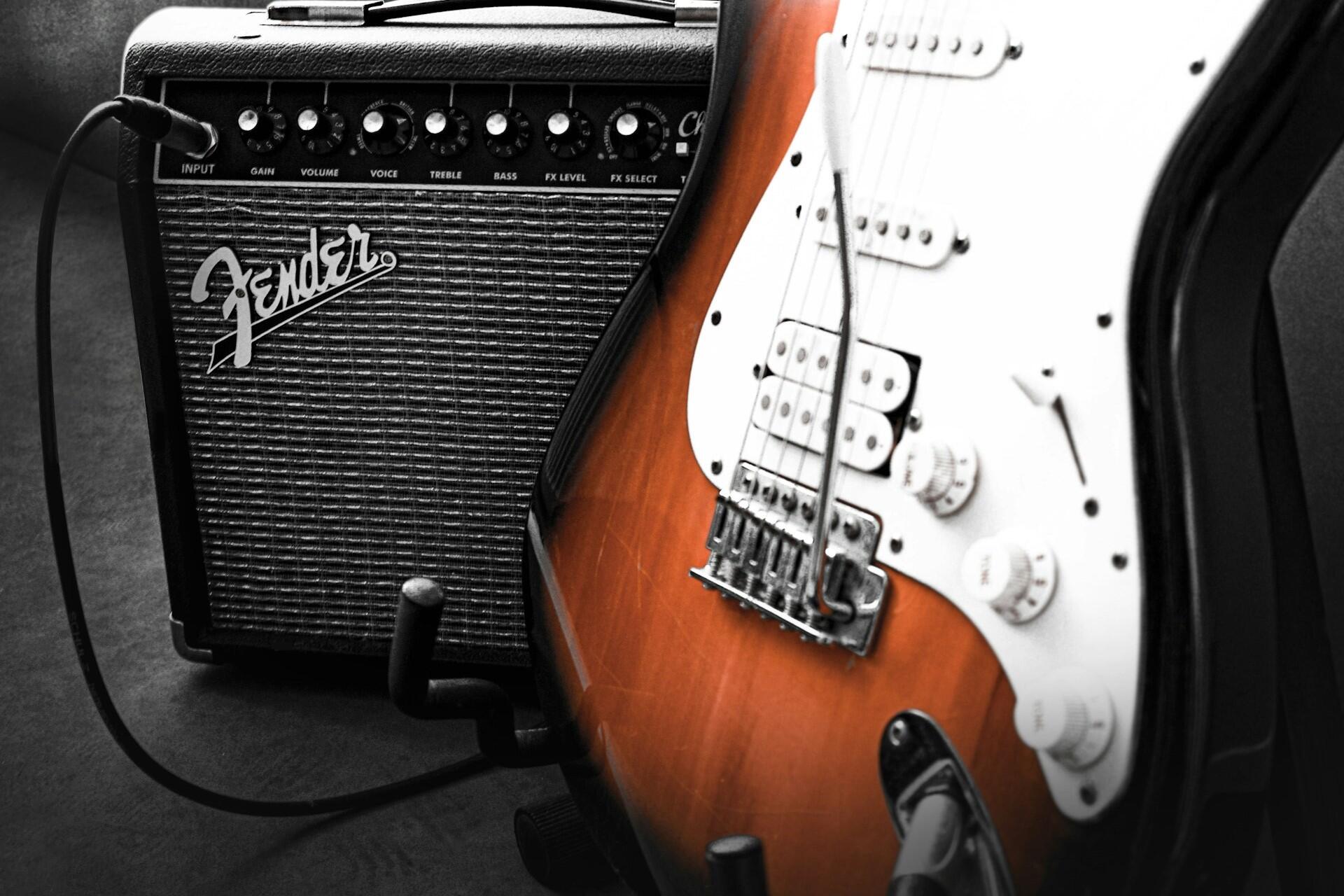
Single-coil pickups were the first pickups used to create electric guitars. They’re notably found on Fender Stratocaster and Telecaster guitars and are primarily used for country, blues, and rock’n’roll. Whilst they provide a vibrant and versatile sound, with good treble and midrange, they have always been plagued by hum. Hence, the next type of pick up...
Dual-Coil Humbucker Pickups
To achieve a fuller sound than with single-coil pickups, some musicians prefer dual-coil or “humbucking” pickups. These 'buck' the hum of the single coils - hence the name humbucker - by using two coils together. They are often found on Gibson Les Paul guitars, as well as on guitars played by heavy metal guitarists. Whilst any beginner guitar will probably come with single coils, this pickup can be helpful for anyone who wants to play on stage.
Guitars That Combine Single and Dual-Coil Pickups
To take advantage of the two types of pickups, you can even buy a guitar that combines them. You will, however, need a bigger budget for this purchase. They offer greater versatility in sound, allowing you to play rock guitar, jazz guitar, and crisp rhythm guitar chords on the same instrument. What about other guitar components that might change the sound of your playing?
Soundbox and Body Types That Shape Your Tone
Like classical guitars, electric guitars can have different types of soundboxes. Each one will give you a different tone quality. So it's essential to choose the one you need to innovate your own sound!
Hollow-Body Electric Guitars
When we speak of the electric guitar, we often imagine a contoured guitar chamber with no interior space, in contrast to the classic guitar. Imagine the shape of the classic acoustic-electric or acoustic instruments, with bodies like dreadnought, parlour, or jumbo. However, specific electrics are made with a hollow cabinet, too, with their own soundhole.
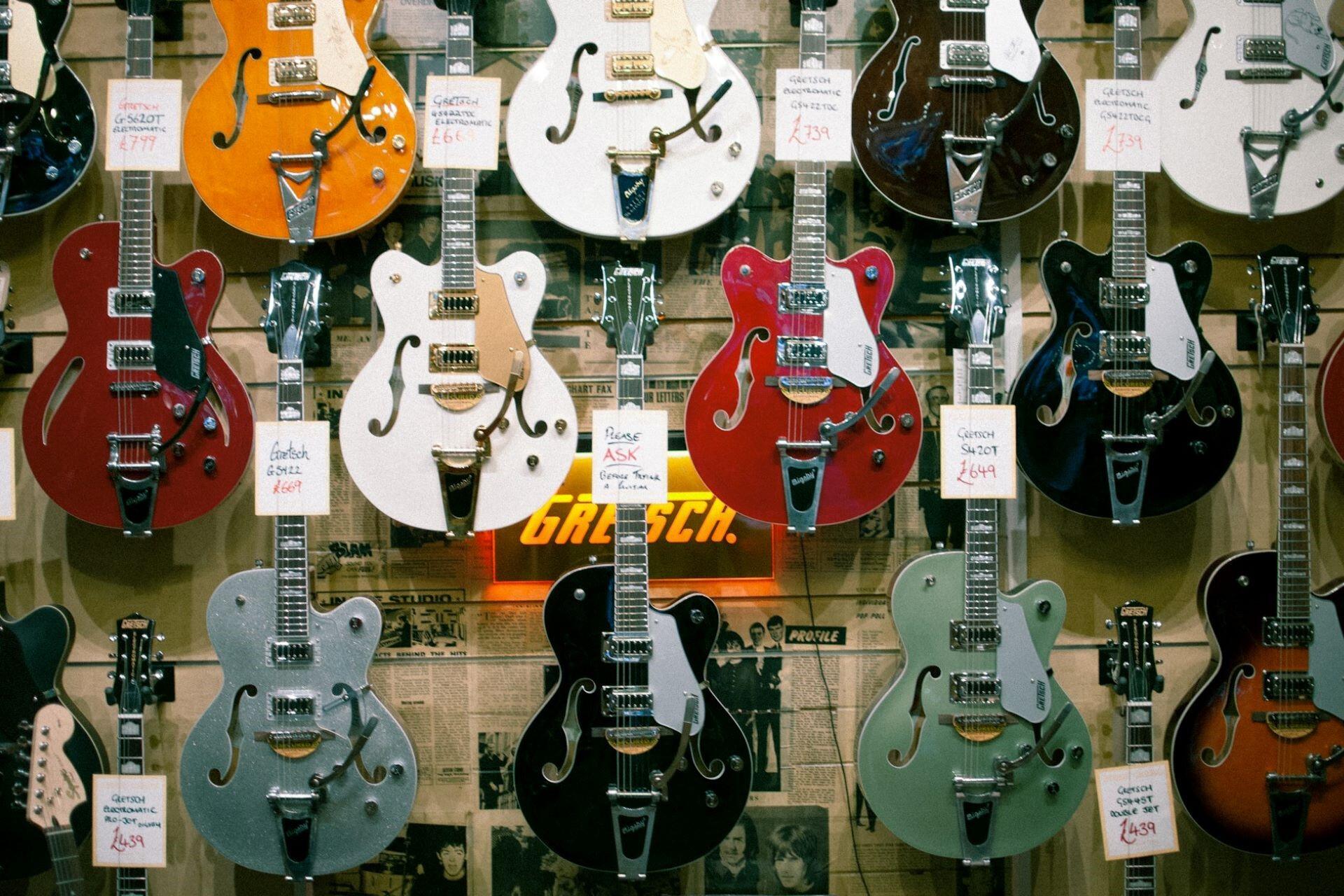
But what’s the difference? Some musicians prefer this type of hollow-cavity cabinet for the woodier sound it produces. And the sound resonates easier - meaning that you can play it unplugged. Jazz guitarists often prefer these guitars. They feature two holes in the shape of an “f,” similar to those found on violins, placed on either side of the strings. This is notably the case of the Gibson ES-150.
Solid-Body Electric Guitars
Solid-body guitars appeared in the 1950s. They are notably appreciated by rockers, who wish to minimise and control the feedback effect on the sound. This is your classic guitar sound and shape, with the pronounced cutaway, the selector switch, and the volume knobs. Everything from the Yamaha Pacifica to the Squier by Fender to the Gibson USA and the Fender Telecaster is a solid body electric guitar.
Semi-Hollow Electric Guitars
As with pickups, some guitars combine the two types of soundboxes. These allow you to add acoustic resonance to the sound without using the high-volume feedback effect. The wood used to make this guitar is also an essential factor in the guitar's choice. For example, an instrument made of mahogany and oak will have different acoustics. As we said before, it is essential to know when you are looking through different guitar brands to find your first guitar, a new guitar, or the best guitar for you. How can you learn to play your guitar heroes' riffs?
The Types of Bridges Found on Electric Guitars
Bridges play a vital role in the instrument's tonal accuracy. It is located at the base of where the strings are attached, and connects their vibrations to the soundboard. This attaches the electric guitar strings, which run across the fingerboard, to the guitar's body. There are two main types of bridges for the electric guitar.
Fixed Bridges
These are the most common bridges and, as the name indicates, they are affixed to the soundbox and can’t move. Their immobility means it isn’t possible to change the pitch of the notes that you play.
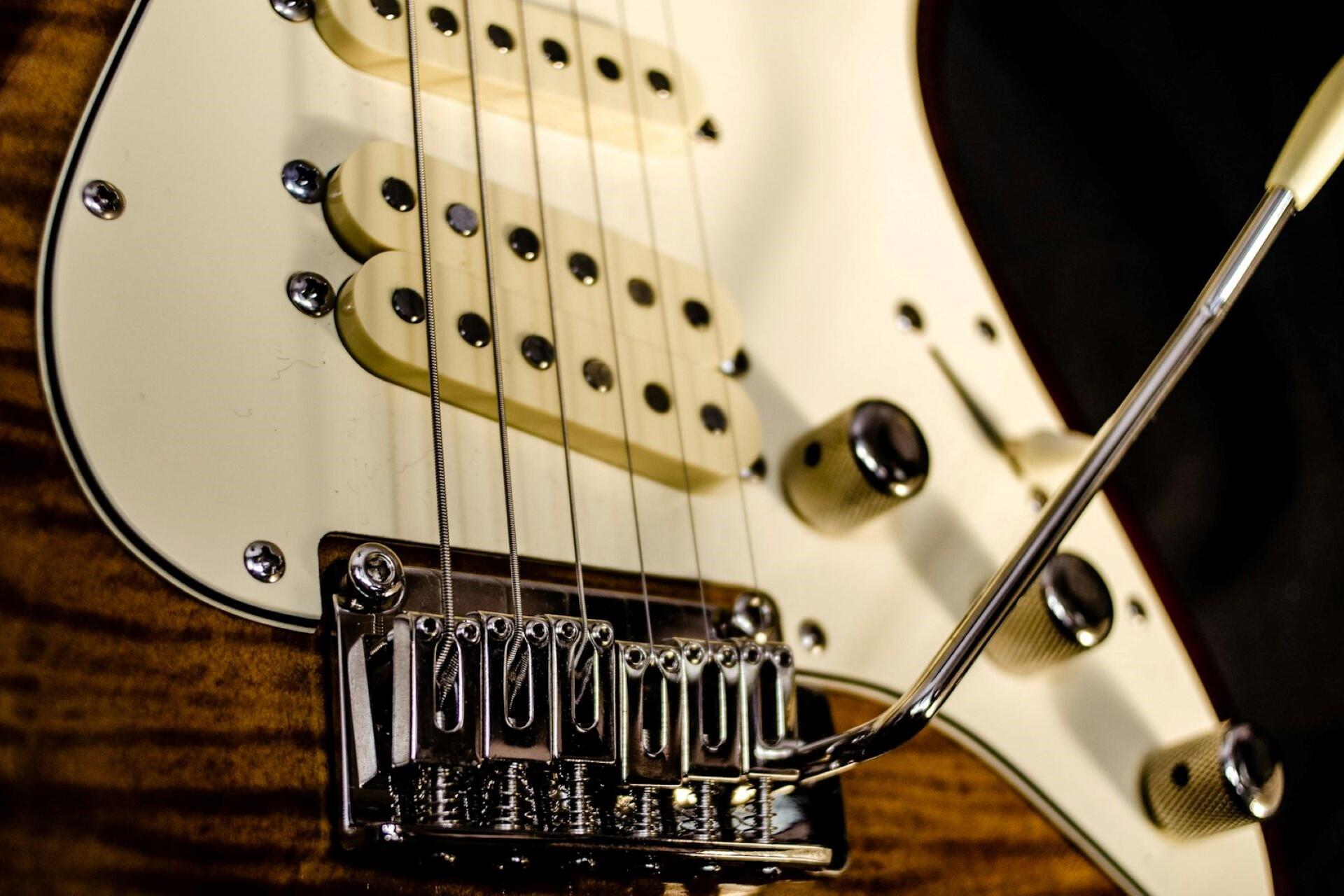
The advantage of choosing a fixed bridge is that the strings are better maintained and get untuned less easily. If you are not interested in massive solos or the extended techniques of the electric guitar, then this is the best option for you.
Floating and Tremolo Bridges
The opposite of fixed bridges - floating bridges - can be moved with the help of a tremolo bar or whammy bar. Moving the bridge from up to down allows you to vary the pitch of notes. To obtain lower notes, move the bridge towards the top. Move it to the bottom to obtain high-pitched notes. This system is mainly used by hard rock and metal groups. However, there are two categories of floating bridges.
This is an excellent addition to your guitar if you are interested in exploring the different effects it can produce. However, if you are looking for your first electric guitar, don't bother with this. Because, whilst the best electric guitar will be professionally made, cheaper versions of the floating bridge can be a bit flimsy. So, watch out if you are buying a beginner guitar package. Do you know the different playing techniques of the electric guitar?
Choosing the Right Neck for Your Guitar
When choosing your guitar, pay attention to the neck length. This varies according to the model you choose. The neck is one of the key areas where guitarists interface with their instrument, so it's pretty important.
Shorter necks reduce string tension and make frets easier to reach, while longer necks increase tension, clarity, and note separation. Choosing the right scale length affects both tone and comfort.
Neck Length and Scale Length Explained
The average neck length is about 63 cm. This can sometimes change by one or two centimetres. Although you might think this won’t change the guitar's acoustics, guitar necks affect the tautness of the strings and thus how the instrument plays. When the neck of a guitar is longer, the tautness of the strings increases. There will be more spaces between the frets, and playing will be more animated. As such, guitars with shorter necks, although their sound is less clear, will play more easily because there is less tension in the strings. The frets are closer together, making it especially easy to play for those with small hands.
Tonewoods Used for Guitar Necks
Another thing to consider is the neck's tonewood. This is an important term that we have explored elsewhere. It refers to the different types of solid wood from which guitars can be made. For example, you might want to consider a maple neck - a particularly common tonewood choice - or a spruce neck.
Bolt-On Necks vs Set Necks
There are two ways that the neck of the guitar is attached to the body, called either a 'set' neck or a 'bolt on' neck joint. One is bolted to the body's wood, and the other is glued in.
Double-Neck Guitars
And for the craziest players, there is the guitar with two necks for your next gig! This, as you might expect, is called a double-neck guitar. If you are feeling confident, try out a double-neck in the shop before you buy it. This guitar has a neck with twelve strings on one side and a neck with six strings on the other. This type of guitar allows the musician to alternate between the two types during one music piece. This is the guitar type you have seen the Led Zeppelin guitarist Jimmy Page play! A neck could equally have more or fewer sections and frets in function of its length.
Iconic Electric Guitars That Shaped Music History
To help you choose your dream guitar, take a look at the most famous guitars in the music world. The Hard Rock Café displays the most beautiful guitars. It’s possible to find them all over the world, in every big city. And even though some struggle to find a buyer, others sell for thousands of dollars. Now let’s admire some of the guitars played by our music idols - from the standard Stratocaster to a Gibson custom. These are not for those of you looking for the cheapest electric guitar pack. Here are four of the most expensive guitar models on the market.
of the US guitar market share.
Jimi Hendrix’s Stratocaster
This model was used by the famous left-handed guitarist Jimi Hendrix, notably at Woodstock. It's the right-handed full-size guitar that Hendrix flipped upside down, giving it its iconic inverted body style. The original guitar is worth 2 million dollars today. The most recent models are valued at well over $3000.
Bob Marley’s Washburn 22 Series Hawk
This is one of the seven guitars Bob Marley used during his lifetime. To donate the money to a good cause, Bob Marley’s technician sold it for over $1 million.
Eric Clapton’s ‘Blackie’ Stratocaster
In 1970, Eric Clapton decided to switch from his Gibson guitars to a Stratocaster. By combining the best parts of three different guitars, he obtained “Blackie,” his fetish guitar. And this altruist doesn’t hesitate to put his guitars up for auction for a worthy cause.
The Beatles’ 1964 Gibson SG Standard
The Beatles used this guitar model between 1966 and 1969 on the albums “Revolver” and “White Album.” Now that you know all about the different electric guitar parts, from the amp and pickguard to the headstock and fretboard, we can focus on tuning and acoustics! For electric guitar lovers, or those fascinated by different guitar models, find out more about the components, sounds and other aspects of the electric guitar here.
Summarise with AI:
Did you like this article? Leave a rating!

 Loading...