
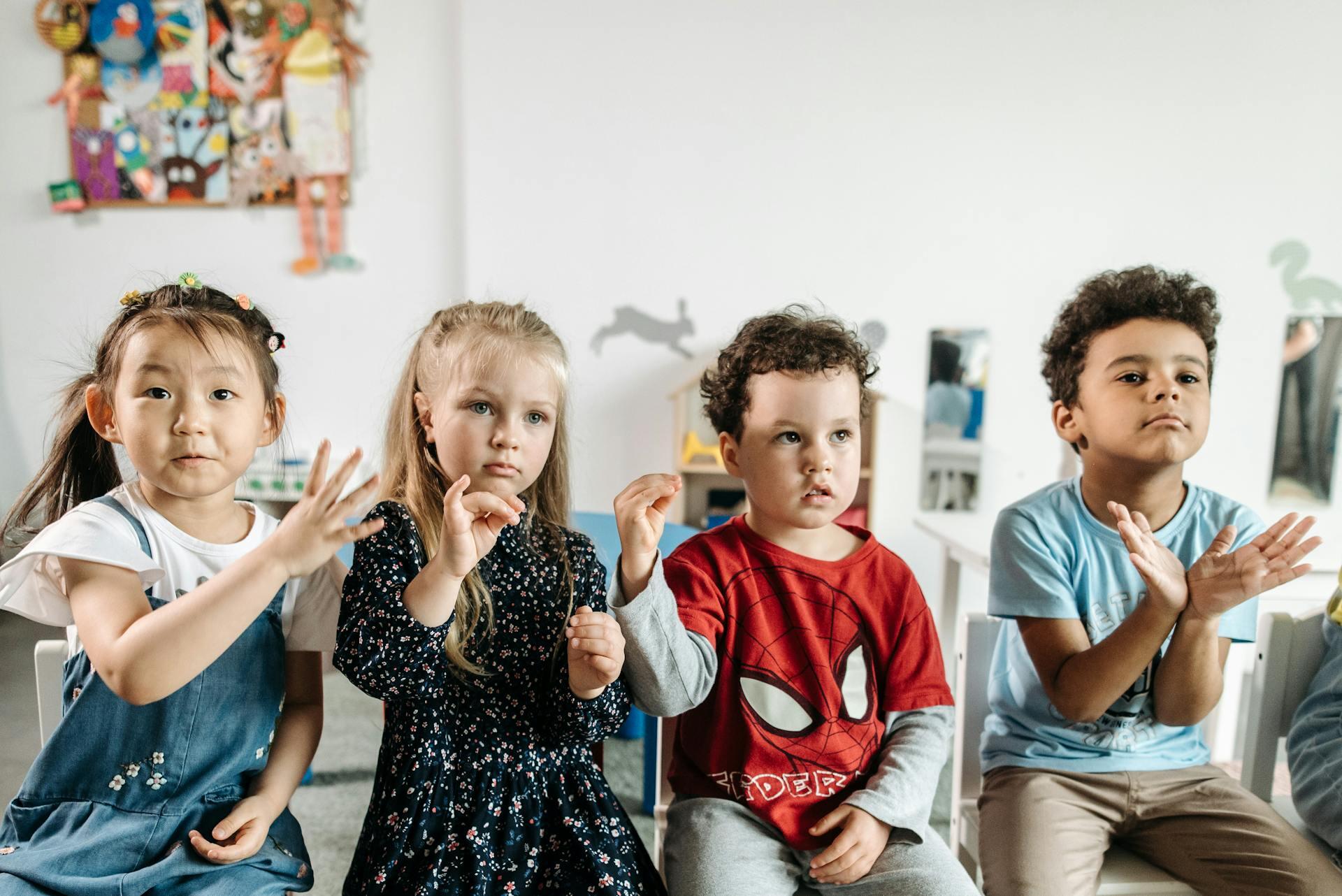

Many people might be surprised to learn that there is no single universal form of sign language and that even in countries where the same language is spoken, their individual sign languages can differ. There are more than 300 different sign languages around the world, and they're shaped by the culture, history, and community that use them. Like spoken languages, sign languages can have their own grammar, vocabulary, and unique versions of the sign language alphabet. From New Zealand Sign Language to American Sign Language, British Sign Language, and International Sign, each is a product of its users. Let's explore some of the main types of sign languages around the world.







What Are the Different Types of Sign Language?
Sign language is a fully developed visual language that uses hand movements, facial expressions and body language to communicate. It is primarily used by Deaf and hard-of-hearing individuals. Are there different types of sign language? Despite common misconceptions, there isn’t a single, universal sign language. Instead, hundreds of distinct sign languages exist.
They are each shaped by the culture, history and linguistic tendencies of their region. Each version of sign language operates with its own internal structure. Some share ancestral roots or developed in response to similar educational or social systems. Others evolved independently, with no overlap in vocabulary or grammar. This article outlines and compares eight widely recognised sign languages, from American and British to Japanese and International Sign!
🌍 Common Types of Sign Language
- New Zealand Sign Language (NZSL)
- 📍 Region: New Zealand
- 🧬 Origin: Developed from British Sign Language (BSL) and Auslan; recognised as one of New Zealand’s three official languages in 2006
- American Sign Language (ASL)
- 📍 Region: USA, parts of Canada
- 🧬 Origin: Developed from French Sign Language (LSF)
- British Sign Language (BSL)
- 📍 Region: United Kingdom
- 🧬 Origin: Independently developed; uses a two-handed fingerspelling alphabet
- Australian Sign Language (Auslan)
- 📍 Region: Australia
- 🧬 Origin: Closely related to BSL and New Zealand Sign Language (NZSL)
- Irish Sign Language (ISL)
- 📍 Region: Ireland
- 🧬 Origin: Historically had gender-specific variations; influenced by LSF and BSL
- French Sign Language (LSF)
- 📍 Region: France
- 🧬 Origin: One of the earliest formal sign languages; influential in Deaf education worldwide
- Chinese Sign Language (CSL)
- 📍 Region: China
- 🧬 Origin: Based partly on Chinese written characters; varies by region
- Japanese Sign Language (JSL)
- 📍 Region: Japan
- 🧬 Origin: Native to Deaf communities in Japan; includes mouthing and regional signs
- International Sign (IS)
- 📍 Region: Used globally
- 🧬 Origin: A simplified sign system for cross-border communication, especially at events and conferences
There are over 300 sign languages worldwide. Each one reflects the people, culture, and history of its community. Like spoken languages, no two are the same!
New Zealand Sign Language (NZSL)
Let's start with New Zealand Sign Language (NZSL). This is the native sign language of the Deaf community in Aotearoa / New Zealand. NZSL is unique in that it was given official language status in 2006 alongside English and Te Reo Māori. The recognition as an official language means that NZSL is better integrated into national education, government services, and media for the Deaf community in New Zealand.
New Zealand Sign Language is one of only a few sign languages worldwide to be recognised as an official national language. Since 2006, it has held equal status with English and Te Reo Māori, meaning government agencies, schools, and media outlets must provide access for Deaf communities.
NZSL is part of the BANZSL family that includes British, Australian, and New Zealand Sign Languages. This means it shares roots with British Sign Language and Auslan (more on both of them soon), but it has developed its own character. For example, over time, local influences, including those from the Māori culture, have shaped New Zealand Sign Language. There are signs that reflect concepts, traditions, and place names that are unique to the country.
official languages: English, Te Reo Māori, and New Zealand Sign Language.
NZSL is not only used in Deaf schools and clubs, it's also used in public institutions, on television broadcasts, and in community events. It plays a vital role in ensuring that tens of thousands of people across New Zealand are included.
American Sign Language (ASL)
There are many sign language types, but to start, let's talk about American Sign Language! ASL has become a cornerstone of Deaf communication in the U.S., and its use extends far beyond just the Deaf community. Many hearing people (parents of Deaf children, educators and interpreters) actively use ASL in their daily lives. It has grown into a cultural identity as much as a communication tool. One of its unique aspects is how it uses space and direction to indicate subjects and objects. Signing “I give you” versus “you give me” relies on the movement and orientation of the hands.

British Sign Language (BSL)
Let's move on to British Sign Language. BSL is spoken by tens of thousands of people across the UK, and like ASL, it has grown into more than just a language. It represents the Deaf community’s history and resilience. The grammar of BSL is visually structured, with a focus on word order that differs from English. For instance, the verb may come at the end of the sentence.
Facial expressions aren’t just emotional cues; they carry grammatical meaning. Raised eyebrows can turn a sentence into a question, while a slight head tilt can change the intent of a sign entirely. This makes sign languages uniquely expressive compared to many spoken languages.
BSL also relies heavily on facial expressions and non-manual features, like raised eyebrows or a head tilt, to add context. Signs can vary depending on the region, much like accents in spoken English, making some signs unfamiliar to users from other parts of the UK. There's also growing integration of BSL into UK public life, from news broadcasts to parliamentary sessions.
Sign language is not a substitute for speech. It is a genuine language, a rich and fully expressive one.
Oliver Sacks, Seeing Voices: A Journey into the World of the Deaf (1989)
Australian Sign Language (Auslan)
Auslan is a living language that continues to evolve alongside Australia’s Deaf community. While its roots are linked to British Sign Language, it has formed its own identity. Different parts of the country use slightly different signs; for example, Melbourne might use a different variation than Brisbane. These differences are respected and accepted as part of the language.
Many sign languages include a manual alphabet, enabling users to spell out names, places, or words that lack established signs. For example, ASL uses a one-handed alphabet, while BSL and NZSL use a two-handed version. These alphabets vary across the world, showing that even the way people spell with their hands is shaped by cultural and linguistic traditions.
Auslan includes signs that reflect Australian culture, nature and slang, making it uniquely local. Deaf Australians often grow up bilingual or even trilingual, using Auslan at home, English in writing, and possibly another sign language dialect, depending on their community exposure. Access to Auslan is increasing thanks to improved education policies and representation in Australian media. Here is a fun interactive video on the differences between Auslan and ASL!
Irish Sign Language (ISL)
ISL is distinctively Irish, shaped by both the country’s Catholic history and its divided education systems. One of the most unusual aspects of ISL is its legacy of gendered sign variations. Men and women were taught in separate schools and developed slightly different vocabularies. This is rare among sign languages. While today’s younger generations don’t maintain this divide, older speakers still use gender-specific signs in some areas. ISL includes many signs tied closely to Irish culture, making it feel deeply local. Even signs for food, family, and religion can differ significantly from those used in ASL or BSL.

French Sign Language (LSF)
LSF is one of the earliest sign languages to be formally documented, largely due to the efforts of the Deaf educator Abbé de l'Épée in the 18th century. His work established one of the first formal schools for the Deaf and laid the foundation for sign language education globally. LSF is expressive, visual and deeply integrated into French culture. Unlike some other sign languages, LSF places strong emphasis on facial grammar. A raised eyebrow or pursed lips can completely alter the meaning of a sentence.
LSF is not just used in educational settings! Deaf communities in France maintain rich traditions of storytelling, poetry and theatre using LSF, keeping it alive and culturally relevant.
Chinese Sign Language (CSL)
Chinese Sign Language is less internationally known, but it plays a vital role in the daily lives of millions of Deaf people across China. CSL is shaped by regional diversity, much like China’s spoken dialects. People from Beijing might use different signs than those in Shanghai. However, national standards are being encouraged to improve communication and educational consistency. CSL often incorporates gestures that resemble Chinese characters, making it visually distinct from Western sign systems. It’s also influenced by the Confucian cultural context, where formality and hierarchy can affect language. Public recognition of CSL is growing, with more interpreters appearing on national TV and greater inclusion in schools and social services.

Japanese Sign Language (JSL)
Japanese Sign Language is linguistically complex and emotionally expressive. It’s not just hand movements, JSL combines mouth shapes, facial expressions and even head tilts to convey grammar and emotion. Unlike Signed Japanese, which tries to mirror spoken Japanese, JSL developed organically within the Deaf community. Many JSL users take great pride in their language and its cultural roots. In fact, JSL is often used in art forms like sign language theatre, storytelling and song interpretation.
recognise a form of sign language as an official language, including Japan.
There’s a growing effort in Japan to teach JSL in public education, include it in official broadcasts and promote it as part of Deaf culture rather than just an accessibility tool. Here is an introduction to JSL on YouTube!
International Sign (IS)
International Sign is less a formal language and more a practical bridge, used when people from different signing backgrounds come together. You’ll see IS used during international conferences, at the United Nations or among tourists in Deaf communities. It draws heavily from widely known signs, especially those from ASL and LSF and simplifies grammar for quick understanding.
However, it’s not a native language and isn’t suitable for conveying complex ideas or engaging in lengthy conversations. That said, it plays an essential role in international advocacy, diplomacy and solidarity among Deaf people across cultures. Many seasoned signers adapt to it quickly, using gestures and shared visual logic to connect.
Globally, it's estimated that over 70 million Deaf and hard-of-hearing individuals use sign languages as their primary means of communication!
Understanding the different types of sign language is more than an academic exercise!

It’s a key step in supporting inclusive communication. From classrooms to hospitals and digital platforms, recognising the structure and cultural value of each sign language can lead to more effective services and deeper cross-cultural appreciation.
Whether you’re looking to learn ASL for personal use, curious about the origins of LSF or attending a conference where International Sign is used, knowing the distinctions between these languages enhances both communication and connection!
in the world whose national sign language is given some form of legal recognition.
Learn sign language with Superprof and unlock a whole new way of communicating. Whether you’re interested in NZSL, ASL, BSL, or another form of sign language, you can choose the one that fits your goals best. Start learning today with a tutor who suits your style and pace!
References
- ASL Bloom Article
ASL Bloom. (2025, June 16). Exploring different sign languages used around the world. https://www.aslbloom.com/blog/different-sign-languages - Alpha Academy Article
Alpha Academy. (2020, February). What are the different types of sign language? https://www.alphaacademy.org/types-of-sign-language/ - Sign Solutions Article
Sign Solutions. (n.d.). What are the different types of sign language? https://www.signsolutions.uk.com/what-are-the-different-types-of-sign-language/ - InclusiveTeach – Supplemental (on sign language and autism)
InclusiveTeach. (2023, September 13). Signing for autism: A comprehensive guide. https://inclusiveteach.com/2023/09/13/signing-for-autism-a-comprehensive-guide/
Summarise with AI:
Enjoyed this article? Leave a rating!

 Loading...
