

Understanding how the cosmos acts are the core objective of one of science's most fundamental fields, physics. Physics is the study of matter, including how it behaves and moves through space and time as well as the proportions of energy and force. Heat, light and other radiation, sound, mechanics, electricity, magnetism, and the composition of atoms are some of the subfields of physics.
One of the main unsolved challenges in Physics is the search for a "theory of everything" which is the subject of continuous research. This potential theory ought to offer a conceptual framework that unifies and completely explains all of the physical properties of the cosmos. The underlying mechanisms in other sciences are frequently explained by novel theories in physics, and these theories may also suggest new research areas, just like in the NCEA level 1 physics guide.
Calculus, for instance, was influenced by developments in mechanics. The emergence of new technologies frequently occurs concurrently with advancements in our understanding of physics. For instance, improvements in our understanding of electromagnetic and nuclear physics have led to the development of contemporary things like television, computers, and home appliances.
A theoretical foundation and useful experimental work are combined in physics. Students should be able to test out ideas at all levels to see how the fundamental theory may be put into practice. Numerous employment choices are available to those who study physics.





Internal Assessment Papers'

Understanding the relationship between theory and practice
This achievement level entails doing a real-world physics inquiry that calls for the mathematical and pictorial representation of a linear relationship with direction.
With direction, it is meant that the investigation's general guidelines will be laid down in writing, and direction will be provided in the form of a goal, a method's flowchart, and the equipment and/or materials to be used. The student will be given a template or other acceptable framework to plan the investigation using. You must make an effort to defend the spring's management, which has made an effort to justify an unforeseen outcome of the analysis of the findings. Practising past papers can help you understand the pattern.
Demonstrate understanding of the physics of an application
You must show thorough understanding, which entails connecting concepts to combine the pertinent physics of the chosen application with its use. This can be done by describing, elaborating, justifying, related, assessing, contrasting, or analysing.
This requires linking concepts together to link the pertinent physics of the selected application with its use. It might be necessary to define, elaborate, defend, relate, evaluate, contrast, or analyse this. By describing how a generator operates and connecting the kinetic energy input to the electrical energy output of the generator, you have shown a solid command of the subject.
External Assessment Papers

Assessment of electricity and magnetism
This paper introduces electricity and magntism with the typical undergraduate physics curriculum for the semester. It starts with the electric potential, the forces between charges, the electric field, and the electric charge in the matter. Resistance and electric current are introduced, after which DC circuits are explained, along with time-dependent behaviour involving resistors and capacitors.
The forces acting on charged particles in magnetic fields will require your full attention. You will look at various methods for estimating the magnetic field as well as learn about simple direct current (DC) circuits, resistance, and current concepts.
Assessment of understanding the aspects of wave behaviour
You'll need to provide evidence that you are aware of some facets of wave behaviour. It is necessary to demonstrate knowledge of how fundamental characteristics of things like events, thoughts, or concepts connect to specific circumstances to do this. This could imply applying techniques for fixing wave-related issues. It's possible to evaluate written, numerical, visual, or diagrammatic evidence.
You'll need to analyse wave behaviour from a physics perspective. It defines key terms and principles while illustrating various wave shapes. Learn about the five main wave parameters, the operation of a refracted wave, and the fundamentals of electromagnetic waves in this chapter on wave attributes and behaviour. Additionally, you can explore the various varieties of sound waves and view examples of ray diagrams.
Understanding the properties of heat
This course will walk the students through each essential principle of thermodynamics in a straightforward manner, starting with a basic grasp. The Kinetic theory of gases, which connects the macroscopic and microscopic worlds, is covered in the first section of the course. Here, we've also covered the theory of specific heat, the behaviour of real gases, and the transport phenomena related to ideal gases.
The course focuses on helping students comprehend the basic laws of thermodynamics and how they apply to various thermodynamical processes and systems. An explanation of the black body as a thermodynamic system has also been added. This achievement criterion calls for the demonstration of knowledge of many aspects of heat, as well as the potential use of techniques when resolving associated issues.
Assessments for NCEA Level 1 Physics
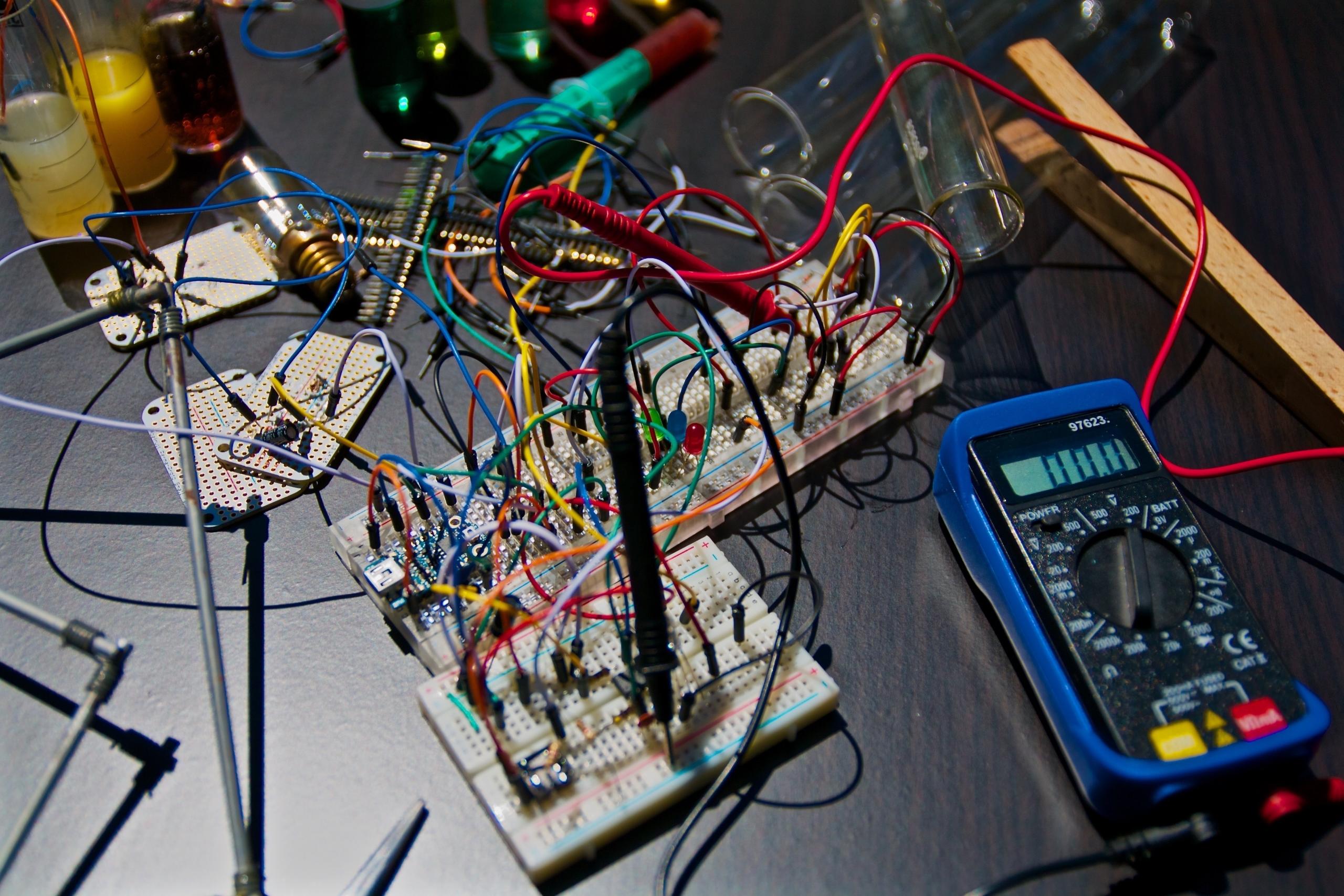
A wide range of standards in science is available at Level 1 for NCEA level 1 physics. From a list of 16 possible achievement standards, you should typically study for five standards totalling 18–20 credits in a year.
You should be able to study several facets of science due to the large range of standards. Your interests and objectives will guide your choice of science standards and topics. You may, for instance, select standards in genetics, microorganisms, acids and bases, life processes, and the effects of using carbon-based fuels if you're interested in medical research.
You are advised to get in touch with your lecturers as soon as possible after enrolling to talk about topic preferences and whether they wish to have work evaluated both internally and externally.
If you're committed to a career in science, you should think about enrolling in a second NCEA Level 1 specialised science course. The course combines computer-based exercises, research studies, and practical experimental work. It offers excellent preparation for Level 2 science study.
You will have the chance to demonstrate success at each of the three levels of performance—accomplishment, excellence, and achievement with merit— able to give complete, exact answers to all of the questions. It's possible that providing accurate answers alone won't be sufficient to demonstrate that you have reached the standard level through constant revision tricks for better learning.
You need to have obtained a minimum of 80 credits to move on to the next level of the NCEA. Despite this, the prerequisites that must border to enrol in any of the Year 12 and Year 13 courses, and many university programmes demand a particular minimum number of students to receive credit, you must demonstrate competence in both the NCEA Level 1 physics internal assessments given all year long and the NCEA Level 1 physics external exams given in November and December.
You will be provided with a course overview for each of your topics at the start of the academic year. You can find out from this outline which standards are being tested throughout each term, how many credits each standard is worth, a broad sense of when the assessment will occur, and a description of the process used to evaluate the standard. Your instructors will clarify the precise dates for each assessment with you.
Want to NCEA Level 1 Physics syllabus even better?
We are confident—and we hope you will be just as confident—that once you comprehend the syllabus, you will pass your NCEA Physics Level 1 physics exam, even with Merit or Excellence. But we are the first to admit that reading notes casually one day and cramming the next is not an effective study strategy for math. Practice, practise, practise will lead to true perfection, and just like a study guide for NCEA level 1 physics will lead you to excellent merits.
But what if, before you reach the golden practice period, you need someone to confirm that the type of exercise you're performing is accurate or if you have problems or places you don't understand and need help with? Maybe you need some guidance on how to begin your journey toward excellence or how to appropriately increase your chances. We at Superprof are here for precisely that reason. We have a variety of skilled instructors who can help you accomplish your objectives. Please allow us to help you. Please reach out to us immediately.
NCEA students can benefit greatly from a skilled tutor, but where can you find one? Let us recommend Superprof, a highly powerful tool. You can get local or online NCEA support classes from Superprof's excellent network of Physics tutors from all over New Zealand. You may find out about the places, costs, backgrounds in education, and student levels of tutors on our website. With the help of all that information, you may choose the expert whose services best fit you and schedule your first class with them.
Summarise with AI:
Did you like this article? Leave a rating!

 Loading...