

There's been news that an increasing number of students in New Zealand are failing their university courses with the completion rates dropping to 86%, the lowest they've been since 2014.
It's not a particularly inspiring statistic and the numbers are lower for Māori and Pacific students. It's believed that this slump is the result of the cost-of-living crisis, increased online learning, and the pandemic.
Universities are naturally making efforts to rectify this, but we'll have to save how effective these methods are for another article because today we're looking at the courses in New Zealand that are difficult.
Certain courses tend to be more difficult than others, despite all degrees technically being equal as they're standardised by the New Zealand Qualifications Authority (NZQA) as part of the New Zealand Qualifications and Credentials Framework (NZQCF). However, education in New Zealand and abroad has a difficult job trying to ensure every course is equally challenging with so many different options for students to study.
Whether you're concerned about struggling with a particular degree or relishing a challenge, these are some of the degrees that students tend to find quite challenging.


Advanced Mathematics and Statistics
If you hate numbers, mathematics and statistics won't be for you. However, even for gifted students with an aptitude for maths, advanced mathematics and statistics degrees can be particularly challenging.
In addition to being really good with numbers, maths and statistics students need to understand increasingly complicated and abstract mathematical concepts and apply mathematical reasoning and problem-solving to maths.
There's a lot to learn but also a lot you already need to know and many advanced maths and statistics degrees have a lot of requirements for students including knowledge of calculus, linear algebra, probability theory, etc.
Even once you've made it onto your course, you'll be expected to work really hard and while the best programs will provide students with a lot of support, you also need to remember that you have to do a lot of work and study outside of your classes.
Basically, advanced mathematics and statistics aren't for the faint of heart so make sure you consider this when choosing what to study at university.
In New Zealand, Auckland University of Technology is considered to be one of the best for advanced maths as well as other maths and science courses.
Architecture
Architecture is a field of study that's demanding all over the world. What makes architecture particularly difficult is the set of skills that it requires and the broad range of topics on the syllabus.
As a multidisciplinary field, architecture draws upon maths, science, and art, and to succeed in it, you need to have a lot of different skills and talents.
For example, architecture students will learn about the theory and history behind architecture while applying their knowledge to accurate technical drawings.
Architecture is a difficult profession to get into because the barriers to entry are quite high, too. In New Zealand, for example, you need to complete a bachelor's degree, then a two-year Master of Architecture, and finally, two years of professional practice under the supervision of a registered practising architect.
In total, this amounts to at least 7 years of study and professional experience so while your undergraduate degree mightn't be any more difficult than any other, your route to becoming an architect is going to be a long and difficult one.

Be sure to make sure that you look into the best jobs for the future before you embark on a lengthy course as you won't want to graduate and find you've spent years working towards a dying industry. Fortunately for potential architects, architecture is a fairly future-proof industry.
In New Zealand, the following universities are highly recommended for studying architecture:
- University of Auckland
- Auckland University of Technology
- Victoria University of Wellington
Biomedical Science
Much like architecture, biomedical science is another interdisciplinary degree choice that means you need to master several complicated fields of study.
Biomedical science combines biology, chemistry, physics, and medicine – all subjects that are fairly famous for being quite complicated. Students also need to have more than a passing knowledge in these areas and the depths to which they'll study these subjects may be quite astounding. Biomedical science puts the theory into practice, too, so you'll need to be good at both to pass your degree.
There's also the human side of biomedical science since it focuses on human health and medicine. Much like with medicine, you need communication skills and even a good bedside manner as patient interaction may be a part of your education.
Last but not least, biomedical science is also a quickly advancing field so as soon as you've mastered a certain part of it, you may find that the knowledge is out of date. If you're committing to studying biomedical science, you'll be committing to becoming a lifelong learner!
Some of the best universities in New Zealand for biomedical science are the University of Auckland, the University of Otago, and Victoria University of Wellington.
Computer Science
Computer science is another field of study where you'll need to be on your toes. Much like biomedical science, advances in computer science mean that computer science students and graduates will constantly need to update their knowledge.
Computer science also requires a good knowledge of maths including algorithms and logic. You'll need problem-solving skills, too, and will have to regularly think outside the box and abstractly to find solutions.
Every computer science student will also need to learn how to program in at least one particular programming language, though it's likely that they'll need to be familiar with a few different ones.

Finally, don't get us started on debugging and troubleshooting. If you've ever done any programming before, troubleshooting can be some of the most tedious work you'll ever do in your academic or professional career, but for computer science students, it's non-negotiable so be ready for it.
The universities with some of the best computer science courses in New Zealand include the University of Auckland, Victoria University Wellington, Massey University, and Auckland University of Technology.
Dentistry
If you choose to study dentistry, you've chosen a lengthy academic career. The Bachelor of Dental Surgery from the University of Otago is the only Faculty and School of Dentistry in the country, which naturally makes the barrier to entry much higher for students in New Zealand who are interested in dentistry.
Aspiring dentists will need to complete the Health Sciences First Year Programme and then the four-year Bachelor of Dental Surgery.
Like with biomedical science and medicine (more on that shortly), dentistry is another subject where communication skills need to be combined with sound scientific knowledge and expertise.
Similarly, dentists need to be constantly learning and staying up-to-date with the latest and most effective practices while adhering to ethical and professional standards, which you'll have to learn about and master during your studies.
Since there's no room for error when it comes to dentistry, attention to detail is key and is something expected of every single student studying dentistry degrees.
While there's only one bachelor's degree available across the 8 universities in New Zealand, the good news is that there are plenty of jobs in dentistry (and the other medical sciences) so graduates will find that they're really employable!
Engineering
If you want to do engineering, you'll need to understand a lot of maths, regardless of which kind of engineering you choose to do. Engineers also need to be natural problem-solvers with an excellent understanding of their specific area of engineering.
On an engineering course, you'll likely need to understand things like physics, mechanics, thermodynamics, materials science, etc., though to what extent will likely be dictated by the program, courses, and major.
Engineering is another field of study that combines both theory and application and students need to have an understanding of both.
When you study engineering, you also need to have an eye for detail and remain astutely aware of regulations, ethical considerations, and safety.
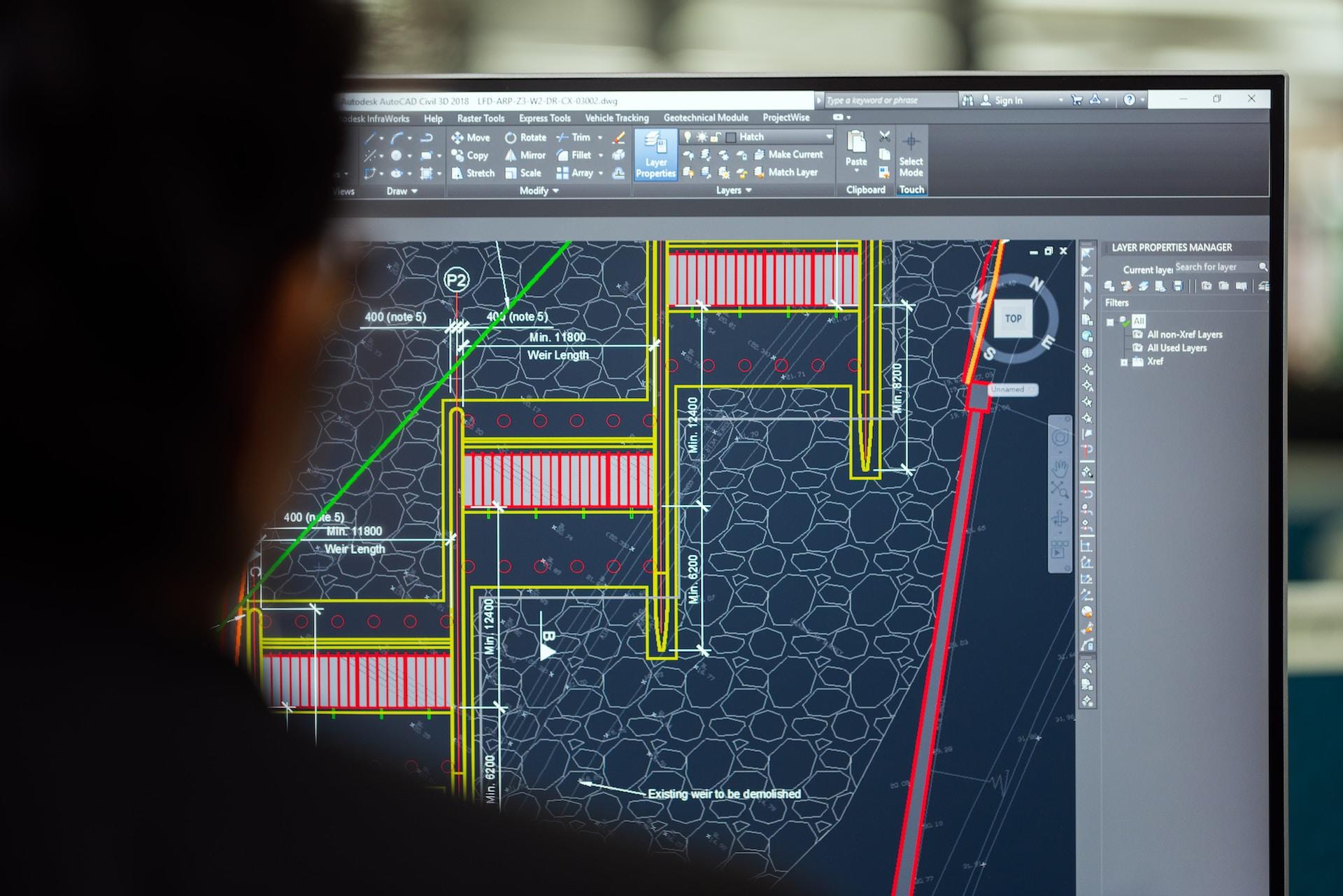
In New Zealand, the best universities for engineering include the University of Auckland, the University of Canterbury, and Auckland University of Technology.
Law
Law is famously a difficult subject, which may be one of the reasons why legal professionals are paid so well. Another reason they earn so much is because so few people can do what they do. After all, law degrees are difficult to get onto and even harder to pass, making them some of the best degrees to study.
Law is notoriously difficult to understand and law students have to understand legalese, research cases, write in a particular way, and spend years studying just to be allowed to practice law.
Law is another area of study that requires an eye for detail and your reading comprehension skills need to be excellent as everything down to punctuation can completely change the meaning of legal texts.
In New Zealand, you need to study for at least four years to become a lawyer, though you'll probably study for five to get your Bachelor of Laws (LLB).
Many universities in New Zealand offer law degrees, but the best places to get your education in law include the University of Auckland, Victoria University of Wellington, and the University of Waikato.
Law graduates from New Zealand can naturally work and practice law in New Zealand, but there are also agreements that make it quite simple to practice law in Australia. If they want to work in other places like Canada, the USA, and the UK, they usually have to complete further studies and gain professional experience abroad.
Medicine
Medicine is probably the course that most people would say is the most difficult and they'd be right. Much like biomedical science and dentistry, medicine combines several complicated sciences like anatomy, physiology, biochemistry, pharmacology, pathology, and clinical medicine.
The courses are also incredibly selective and only the highest-performing students are allowed to study medicine. However, the work doesn't stop there and medical degrees are lengthy and difficult with many things to learn over a long period.
Beyond the courses, there are also licensing examinations that medical graduates are required to take before they can start practising medicine.
However, once you're finished with academia and professional training, you'll be on your way to one of the best careers in New Zealand.
The universities with the best courses in medicine include the University of Auckland, the University of Otago, Auckland University of Technology, and Victoria University of Wellington.
Pharmacy
Pharmacy, like medicine, is another hugely challenging subject area. Everything we said about medicine can also be applied to pharmacy so if you're looking for a challenge, you've found it.
Pharmacy students are also multidisciplinarians and need to have a strong foundation in sciences like chemistry, biology, and anatomy.
Much like with law and medicine, pharmacists from New Zealand can work abroad in places such as Australia, the USA, Canada, and the UK, but they may need to do an exam, get their qualifications, recognised, and complete their registration with the relevant pharmacy boards or bodies. Don't forget to look also into the visa requirements for each country if you're planning on working abroad.
The best pharmacy courses in New Zealand are offered by the University of Auckland, Massey University, the University of Otago, and the University of Canterbury.
Physics and Mathematics
Last but not least, we have physics and mathematics. Physics or maths are difficult enough subjects in their own right and you may have noticed that most of the other areas of study that are difficult tend to include them.
Maths is one of the reasons most students find these other subjects so difficult so choosing to study mathematics on its own will naturally be difficult.

The sciences are famously difficult and physics is arguably the one with the most maths. If you find numbers tricky, physics is going to be pretty much impossible.
So while degrees in any of these subjects would be challenging anywhere in the world and not just in New Zealand, don't forget that you can always get help in any area from a private tutor!
Fortunately for you, there are plenty of experienced and talented ones on the Superprof website. Even if you can't find any tutors in New Zealand, you can broaden your search to include tutors from all over the world!
Summarise with AI:
Did you like this article? Leave a rating!

 Loading...