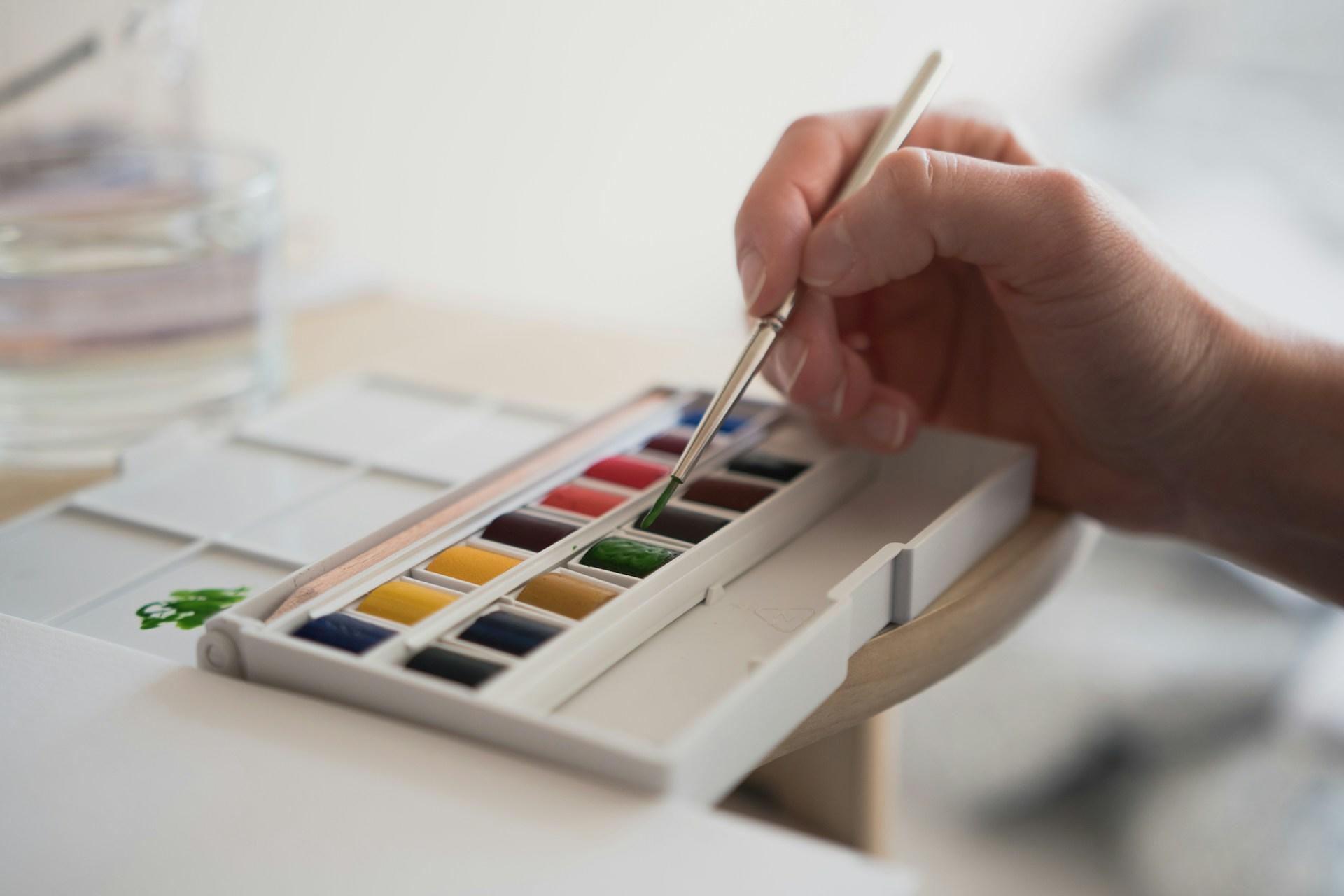

You might remember paint-by-numbers kits and toys as a child. These typically come with gouache, a type of enhanced watercolour paint that uses a binder to make the paint more workable.
While paint-by-numbers can be fun, the real joy of painting with watercolours lies in the adventure of experimenting with this unique medium. Once you overcome the initial challenge, you'll find it just as enjoyable as any other form of art.
After all, watercolours are notorious for running into one another and quite unpredictable if you're unfamiliar with them.
If you're new to watercolours, here's our quick guide!


Buying Watercolours and Supplies
It might seem quite obvious what you need to start painting with watercolour. However, the important question isn't about buying watercolour paint, brushes, and paper, but which of these you should get.
Walking into any art store, you'll instantly be met with various watercolours, colours, brushes, and sets.
Like any new hobby, it's important to match the price and quality of the materials to your level. If you're just starting out, there's no need to break the bank on an expensive set of watercolours, a palette, and lots of costly brushes. Remember, these won't necessarily make your paintings any better.
Instead, look for affordable paints, brushes, and paper. The paper is particularly important with watercolours because of how wet painting with watercolours is.
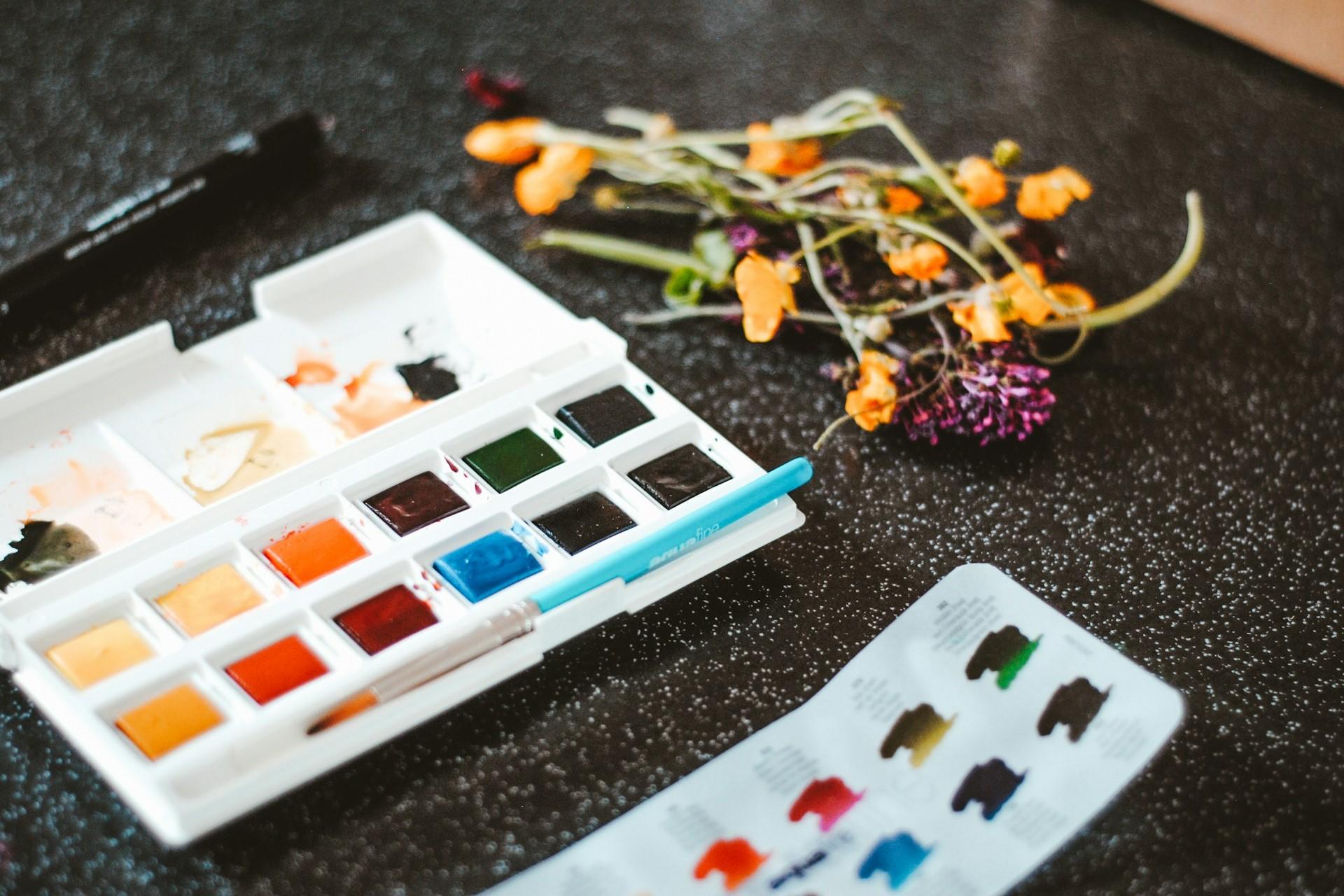
Watercolour Paper
There are plenty of different types of paper available in art shops. It's easy to get lost looking at washi paper (used for origami), onionskin paper (for kites and gliders), copy paper, or sketchpad paper.
For watercolour paintings, you need to opt for specific paper. This usually comes at a price, but almost every other type of paper is wholly unsuitable for watercolour painting.
Watercolour Brushes
Again, don't go out and buy the most expensive brush you can find just because you want to paint beautiful watercolours.
These expensive brushes won't improve your paintings. You need to start by choosing affordable and workable brushes appropriate to your level and the watercolour paints you intend to use.
That said, don't just buy a brush for the lowest price. Brushes typically fall into two main categories: artificial and natural fibre brushes.
The former is usually cheaper and worthwhile investing in if you're new to painting. Suppose watercolours turn out to be right for you. In that case, you can always replace your artificial fibre brushes with natural ones.
For starters, a set of paint brushes with small, medium, and large round brushes is best. Make sure to also get a mop brush and a flat brush.
Don't get craft brushes, as the bristles on these brushes are too rough for watercolour paints.
Watercolour Paints
The paint is the most important thing when it comes to watercolour paints. If you're familiar with colour theory, you'll know you will only need so many colours to start.
While a watercolour set or palette will likely feature a range of colours, you only need the primary colours (red, yellow, and blue) and black. Since watercolours are mixed with water, they can start out very pale, so it's rare that you'll even need white paint.
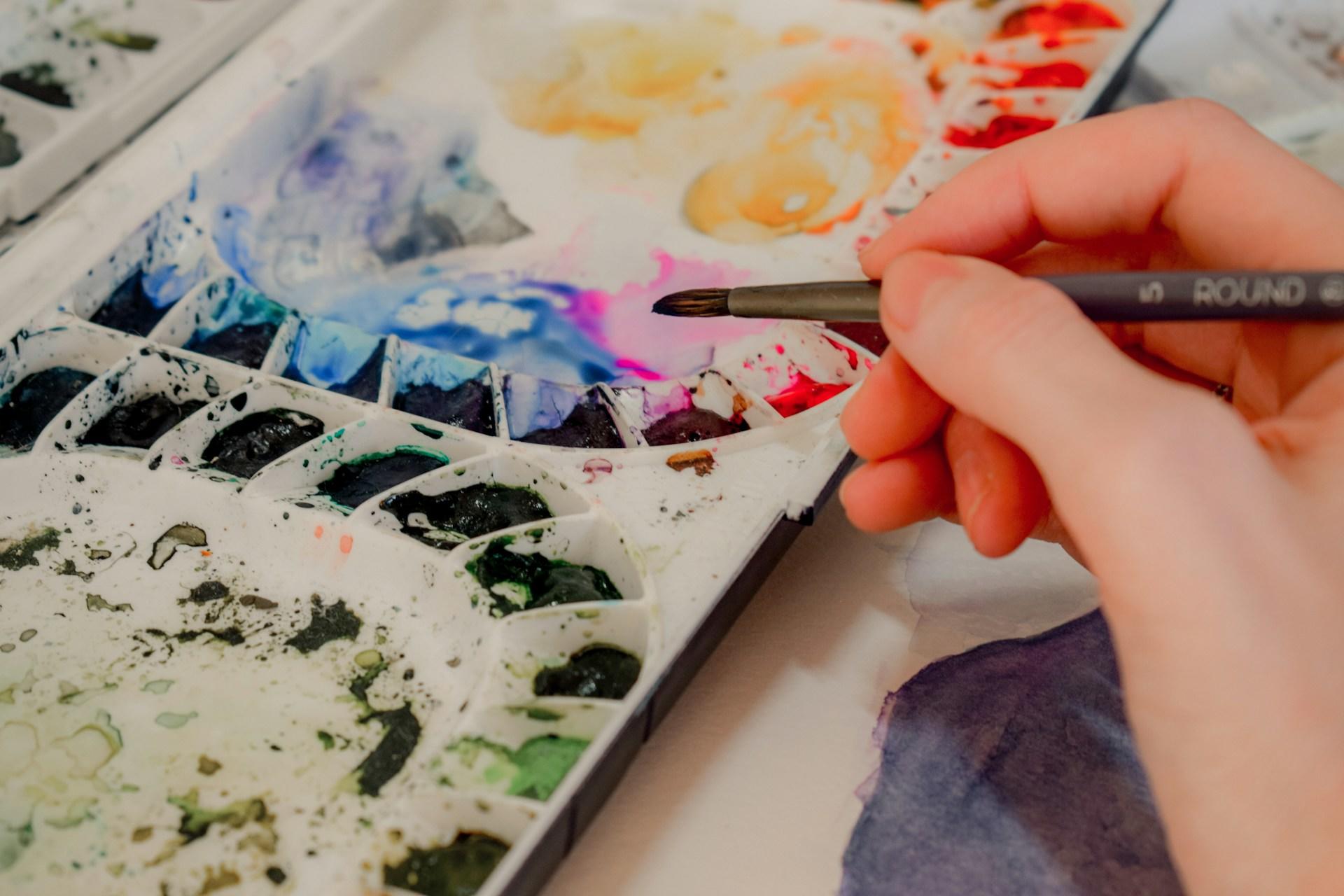
In addition to your watercolour paints, it helps to invest in the following, too:
- Palette: Technically, any flat or shallow surface will allow you to mix paints. Unlike a flat wooden palette used for acrylic and oil paints, a watercolour palette can often be a small plastic dish with recesses to mix the water and paints in.
- Drafting tape: You can use any tape to attach your paper to your draft board, but it's recommended to use it because it won't tear your watercolour paper.
- Tote boards: A tote board looks like a big clipboard, which you can get in different sizes.
- Pencils and erasers: You can start your painting with a sketch, which helps outline things.
You can also buy masking fluid and other tools for texturing. Still, a beginner will only necessarily need to know how to create texture in their watercolour paintings once they get the hang of painting first.
Prepare a Space to Paint with Watercolours
The typical imagery of an artist's workshop is a space covered in splashes of paint, easels, and tarps strewn all over the place.
However, watercolours are fluid and fast and require a reasonably tidy space. It would be best to always have sponges, paper towels, and clean water ready. Clutter won't help you effectively clean up your mistakes; ample space is essential.
Give yourself ample elbow room while ensuring your brushes, colours, water pots, and other tools and accessories are within reach. It's recommended that they're all within reach of your dominant hand without being right next to you. You won't want to know over your water pot!
Keep a small towel handy to dry your brushes as needed. Some artists hang a towel from a waistband or belt, and some keep paper towels up their sleeves.
There are plenty of great resources for anyone wanting to paint with watercolours.
The Advantage of Using Two Water Pots
Ensuring you have two water pots will only add a little to the price of getting started with watercolours. Since you must always have clean water for watercolours, two pots are better than one.
One pot will be for your clean water, and you'll mix the water and watercolour paint on the palette. The other pot of water will be used to clean off your brushes. This system ensures that you always have clean water for your paints, preventing them from getting muddy. Otherwise, you'll need to regularly change your water as soon as it gets dirty, which can be quite often.
Similarly, having two sheets of watercolour paper to hand can be helpful. You can use one to test how your watercolour is mixed before applying it to your painting.
Mixing Watercolour Paints
As the name indicates, watercolour is simply a mix of water and watercolour pigment. The ratio of water to paint will dictate how rich the colour is. Still, it pays to be patient if you're working with several colours and mixing them.
Since the pigment from watercolours is floating in water, it's literally watered down, and it can take a while to reach the exact colour you want through careful mixing.
Start with a small amount of pigment and gradually add water, mixing it thoroughly. Take your time and build towards the colour you're looking for. This is much easier than adding a whole heap of pigment and ruining the colour you're trying to mix.
Take your time and build towards the colour you're looking for. Patience is key in watercolour painting. It's much easier to achieve the perfect shade by gradually adding pigment than by rushing and potentially ruining your mix.
Learn How to Paint with Watercolours from a Private Tutor
Painting with watercolours can be a fun and rewarding experience, but it requires patience, skill, and trial and error. If you're struggling to get started on your own, consider learning from a private tutor. They can provide personalised guidance, help you develop your skills faster, and give you the confidence to continue painting on your own.
Watercolours can easily bleed into one another. The more you paint, the more familiar you become with this phenomenon and how the medium behaves.
However, a private tutor can quickly guide you and show you how to paint with watercolours, other types of paint, or even sculpt.
Art classes are also helpful for learning how to paint with watercolours. Still, they have one major downside: the lessons aren't tailored to each student.
With a private tutor, you can ensure that every session is tailored to your level, what you want to learn, and what you'd like to paint.
On the Superprof website, plenty of talented and experienced art tutors specialise in watercolours and different artistic styles.
You can learn face-to-face, online with tutors worldwide, or with friends and family. There are pros and cons to each kind of tutoring.
Face-to-face tutoring is typically the most effective and cost-effective but is usually the most costly per hour.
If face-to-face tutoring is too expensive or you can't find suitable local tutors, online tutoring is almost as effective and usually cheaper.
Group tutoring is much cheaper than one-on-one tutoring, but it comes with the same downsides as art classes. However, you can get group tutoring for much smaller groups.
If you'd like to learn to paint with watercolours from a private tutor, visit the Superprof website.
You can browse the tutors' profiles, see what painting tutoring they offer, read reviews left by their other students, and even arrange a trial session.
Most tutors on the Superprof website offer free first lessons, so you can try several tutors before choosing the one that's right for you and your artistic aspirations.
Summarise with AI:
Did you like this article? Leave a rating!

 Loading...