

When in Rome, do as the Romans do
Italy's capital city, aptly nicknamed the Eternal City, is one of Europe's most popular tourist destinations. This is because it's home to history, culture, archaeological sites, Roman and Etruscan ruins, Renaissance and Baroque architecture, historic monuments, museums, and much more. After Paris and London, it's the third-most-popular city in Europe, with 9.7 million foreign tourists visiting in 2017. The cradle of European civilisation and the Latin language, Rome is now home to 2.87 million inhabitants. Are you going to visit Rome? Here are the attractions you have to see!







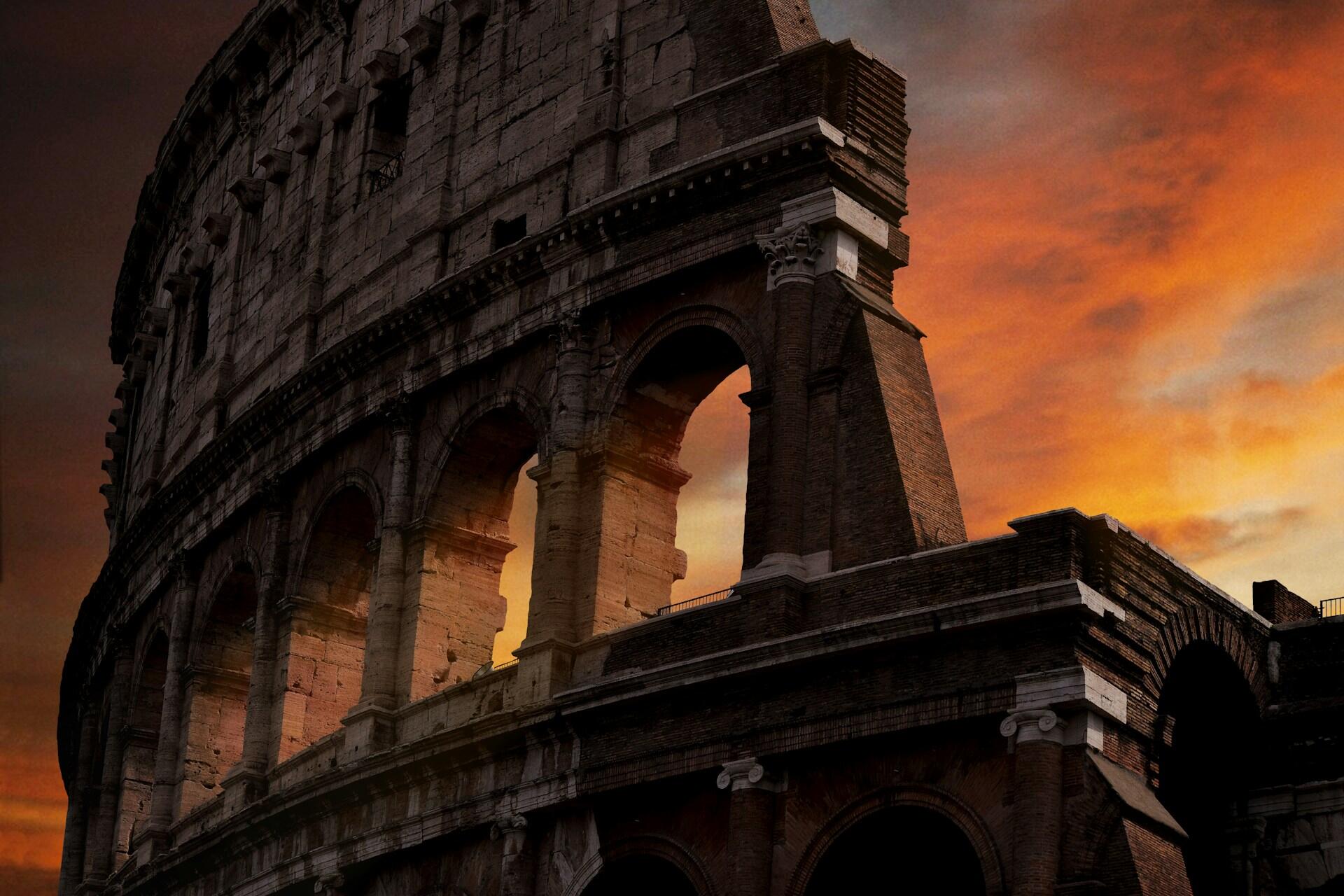
1. The Colosseum
The Colosseum, a large amphitheatre from the Roman Empire, is one of Rome's most famous monuments. Its construction was ordered by Emperor Vespasian (9-79) and finished under Titus (39-81). It could hold up to 50,000 spectators and hosted gladiatorial combats and blood sports. It was used for nearly 500 years, with its last games taking place in the 6th century. It's among the most popular Roman ruins in the city. It's 86 metres long, 54 metres wide, 4 stories high, and has over 80 entrances. It's a testimony to Roman construction and a symbol of Rome's Imperial power.
2. The Ruins of the Roman Forum
This archaeological site retraces the history of Rome and is one of the oldest remaining in the city. Its oldest ruins date back to the 7th century BC, under the Roman Kingdom (which existed between 753 and 509 BC). This was the main square in Rome under the monarchy and the Republic until the fall of the Empire in 476AD. It includes the Temple of Romulus, the Arch of August, the Temple of Caesar, the Basilica Aemilia, the Argiletum, the Temple of Concord, the Temple of Saturn, and the Arch of Septimius Severus.
3. Palatine Hill
Palatine Hill is one of the seven main hills of Rome and an open-air museum. It was the centre of Ancient Rome and overlooks the Roman Forum and the Circus Maximus. It was the residence of the emperors. It's an interesting place if you like Roman ruins and the Villa of Livia, Flavian Palace, Stadium of Domitian, and Farnese Gardens.
4. Public Baths of Caracalla
Inaugurated under Caracalla (188-217) in 216, the public baths of Caracalla were the largest and most luxurious ever constructed in Rome. They cover 11 hectares, 64 cisterns, 80,000 litres of water, and accommodate 1,600 bathers. This is a great way to learn how the wealthy Romans lived!
The Baths of Caracalla were more than just a place to bathe; they were a social hub complete with gyms, libraries, and gardens. Built in 216 CE, the complex once featured towering marble columns and elaborate mosaics that survive to this day. Visitors can now walk through the ruins and even attend summer opera performances staged within the ancient baths.
5. The Pantheon
Built in the 1st century between 27 and 125 CE, the Pantheon in Rome is one of the best-preserved Roman buildings in the city. The temple is dedicated to Roman gods, but became a church in 608. The Pantheon is home to the graves of Italian kings and the artist Raphael. The building includes a magnificent facade, circular interior wall, and a 43-metre-diameter dome. To visit the Pantheon, without having to wait for ages, you might want a queue-jump ticket that you can get combined with the Colosseum, Pantheon, and Piazza Navona, for example.
6. The Sistine Chapel
Built between 1475 and 1481, this majestic religious building in the Vatican was designed for the cardinals to meet when electing new popes. With its great frescoes by Michelangelo, the walls and ceiling of the chapel portray Genesis, the Creation of Man, the Original Sin, the Flood, and Judgement Day. It includes a rectangular room that is 40 metres long, 13 metres wide, and 21 metres high, the golden ratio. The room includes 12 windows.
7. The Trevi Fountain
You can't visit Rome without visiting the Trevi Fountain. There are around 2,000 fountains in Rome, and this one is the largest in all of Rome. It was built between 1732 and 1762 and is a fine example of 18th-century Roman Baroque style. It represents the benefits of water and includes the God of the Ocean, Neptune. Thousands of tourists visit and throw a coin into it to bring them good luck.
8. Piazza Navona
Piazza Navona is the most touristy square in Rome. It's built on the ruins of the 1st century, and the houses and businesses sit on top of ancient Rome. The buildings and their Baroque style reflect the Italian Renaissance of the 17th and 18th centuries. You'll find the Fiumi Fountain and the Fountain of Neptune.
9. Piazza di Spagna and the Spanish Steps
The Spanish Steps and Piazza di Spagna are one of Rome's most popular tourist attractions. You can find it in one of Rome's trendier neighbourhoods. There are 135 steps, and it's a great meeting place for Romans.
10. The Catacombs of Rome
What about visiting Rome's underground? This is a different way to see Rome, heading off the beaten path to enjoy another side of the Eternal City's history. Many tourists don't know about Rome's underground. However, it includes the catacombs and underground galleries. The Romans buried their dead here. There are frescoes and graves. Under the vestiges of ancient Rome, you can find:
The Catacombs of Rome reveal a hidden side of the Eternal City. Stretching over 300 kilometres, these underground tunnels were used from the 2nd to the 5th centuries as Christian burial sites. Many frescoes and inscriptions remain visible today, offering a rare look into early Christian art and customs.
11. The Vatican Museum
Anyone visiting Rome has to visit the world's smallest country, Vatican City. While you should try to avoid it during the high season, you have to visit the Vatican Museums. There's a vast collection of works collected by different popes from ancient Egypt, the Roman Empire, the Middle Ages, the Renaissance, and the modern era. You should also visit the Sistine Chapel with its double helix staircase, the map room, and Raphael's room.
12. Villa Borghese
Would you like to escape the chaos of Rome's city centre? Are you done with mosaics, fountains, ruins, UNESCO World Heritage Sites, and temples? This municipal park covers 80 hectares and includes museums, and should be included if you're visiting Rome for a while. The gardens of the Villa Borghese are a wonderful green space in the Italian capital.
Villa Borghese offers locals and tourists a peaceful break from the city’s busy streets. The park’s 80 hectares include shaded paths, museums, and the Borghese Gallery, which houses masterpieces by Bernini and Caravaggio. It’s an ideal spot for cycling, picnics, or hiring a boat on the small lake near the Temple of Aesculapius.
13. The Capitoline Museums
Another unmissable site that you can visit with the Roma Pass or a "Hop On Hop Off" bus trip are the museums of the Capitoline Hill, the Palazzo dei Conservatori and the Palazzo Nuovo. You can pass from one museum to another via the Lapidary Gallery, an underground gangway where you can see works by Caravaggio, Titian, and Rubens. The Palazzo Nuovo has sculptures including a replica of the statue of the Roman emperor Marcus Aurelius, one of the Empire's most famous.
14. St. Peter's Square and Basilica
The symbolic monument of the Catholic Church, St Peter's Basilica, attracts thousands of tourists and is worth considering for your itinerary when budgeting a trip to Rome. Catholics from all over the world gather here. It overlooks St Peter's Square and its Egyptian obelisk which was brought to Rome by Caligula in the 1st century.
15. The Appian Way
After you finish visiting Rome, consider heading along the Appian Way, a Roman road that's nearly 500km long. From Rome, it runs along the Tyrrhenian coast, crosses Campania, and heads to Apulia in the southeast of Italy. Construction began in 312BCE, and it's a popular route for walkers. Some sections date back to the Roman era. Imagine how long journeys took in the age of the Romans!
Now you know a bit more about the Italian capital and spending time there. If you want to learn more about the Italian language, consider getting in touch with one of the many talented Italian tutors on Superprof! There are three main types of tutorials on the platform: face-to-face, online, and group. Each type has advantages and disadvantages, and what might be right for one student may not be right for another.
Face-to-face tutorials are between the tutor and the student and are the most cost-effective option. This is because your tutor spends every minute of the lesson focusing on you, and the lessons and course are tailored to you.
Online tutorials are similar to face-to-face tutorials but take place remotely thanks to the internet. If you have a webcam,a mic, and a decent internet connection, you can learn Italian online. Since the tutor doesn't have to travel and can schedule more tutorials per week, they can charge less per hour.
Finally, group tutorials are helpful if you're on a budget. Since multiple students are paying for the tutor's time and expertise, each student ends up paying less per hour. If you and some friends want to learn Italian on a budget, group tutorials might be a perfect choice. Of course, you'll get less individual attention from your tutor.
Summarise with AI:
Did you like this article? Leave a rating!

 Loading...
